












Embrace the Midnight Sun
The midnight sun is one of those things you have to experience to really believe. Iceland shares this phenomenon with other places near the Arctic Circle — from late May to early August, the sun simply refuses to set. The longest days cluster around the summer solstice, typically June 21st, when bright skies stretch well past what your body tells you should be bedtime.
It has left a real mark on Icelandic culture. Midsummer’s Night, or Jonsmessa, falls on June 24th and is considered the most enchanting night of the year. The old stories are wonderfully strange: cows speaking like humans, seals shedding their skins to dance on sandy shores, elves and trolls out and about under a sun that never quite disappears.
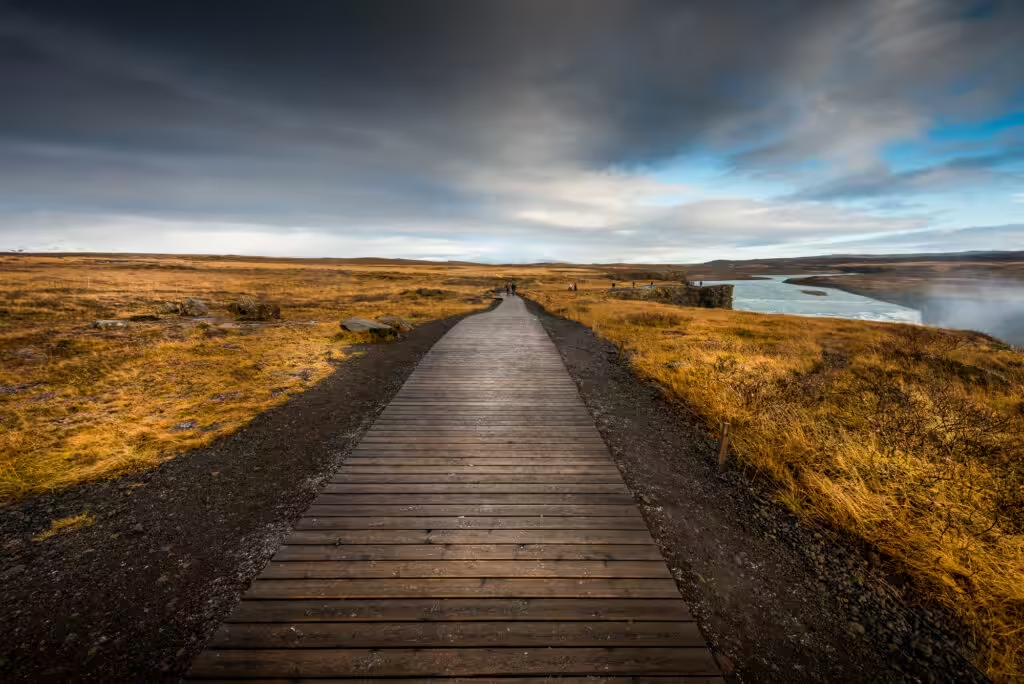
Beyond the folklore, the extended daylight is genuinely useful. Landscapes that are striking by day take on something altogether different at 1 a.m. when the light is golden and the world feels half-asleep — it draws you outside at hours that would make no sense anywhere else.
For those keen on wildlife, a midnight sun whale-watching tour is hard to beat. Watching whales surface against a sky that glows orange and pink at midnight is the kind of thing that stays with you. If you want something more active, a two-hour ATV tour fits the bill, or try kayaking beneath the distinctive silhouette of Mt. Kirkjufell — both work beautifully in that soft, lingering light.
Uncover Reykjavik in Summer
Summer suits Reykjavik. The city opens up — parks fill, café terraces appear, and locals who spent months huddled against wind and darkness seem genuinely pleased to be outside. There is a lot to take in, from historic buildings to a food scene that has grown considerably in recent years.
Perlan is worth your time. It sits atop six geothermal hot water tanks, its rotating glass dome visible from much of the city. Inside you’ll find a restaurant, an observation deck, and a solid range of exhibitions. The hill it sits on is ringed by woodland, and the views over Reykjavik in summer are excellent.
Hallgrimskirkja Church is the other landmark that stops most visitors in their tracks. At 245 feet (74.5 meters), it is Iceland’s tallest church, its stepped facade echoing the hexagonal basalt columns found across the country. The tower lift takes you up to views that make the small queue entirely worthwhile.
The food is genuinely good. Icelandic cooking leans heavily on seafood and lamb, both of which the country does well — eating at some of Reykjavik’s better restaurants will tell you more about the place than any museum.
Experience Nightlife in Broad Daylight
Reykjavik has a reputation for its nightlife, and summer only amplifies it. The sun staying up does nothing to slow things down — if anything, the surreal brightness seems to encourage people to stay out longer.
What makes it work is the scale. The main venues are all within easy walking distance of each other, there are rarely entrance fees, and the taps run with a good range of Icelandic beers. The one thing to watch: time moves strangely here. You will look up and it will be broad daylight, the clubs will be closing, and you will have no idea where the night went.
Cultural Events in Iceland’s Summer
Iceland runs events year-round, but summer is when the calendar really fills up. The long days and warmer weather give everything a different energy. A few worth knowing about:
- Independence Day is celebrated each June 17th, marking Iceland’s separation from Denmark in 1944. Parades and public festivities run across the country.
- Merchant’s Weekend or Verslunarmannahelgi, takes place on the first weekend in August and is a favorite among Icelanders. The most famous festivities occur on the Westman Islands, where concerts and a massive bonfire attract tens of thousands of visitors.
- The Viking Festival in Hafnarfjordur offers a lively experience, recreating the spirit of the Viking Age. Attendees can watch engaging reenactments, taste traditional fare, and explore a market showcasing handmade crafts.
- Reykjavik Culture Night, held on the third Saturday of August, celebrates the city’s artistic spirit, featuring events citywide and culminating in a spectacular fireworks display.
- Reykjavik Pride, taking place on the second weekend in August, has blossomed into one of the largest cultural events, where the LGBTQ+ community and allies celebrate love and acceptance.
Catching even one of these gives you a different angle on the country — less postcard Iceland, more how people here actually spend their summer.
Discover the Westfjords
The Westfjords is the part of Iceland that most visitors never reach, which is part of what makes it worth the effort. The peninsula in the northwest is all deep fjords, steep mountains, and cliff edges that drop straight into the sea. Roads wind along the water at a pace that forces you to slow down — not a bad thing.
Isafjordur is the largest town in the region, and a good base. It has a real history as a fishing hub, and the seafood reflects that — straightforward, fresh, and very good. Start here and work outward.
One day is not enough. The distances are deceptive and the roads demand attention, so plan ahead and book accommodation before you go.
From Isafjordur, sea kayaking is one of the better ways to see the coastline up close. For wildlife, the Hornstrandir Nature Reserve runs arctic fox-watching tours — the arctic fox is the only land mammal that was living in Iceland before humans arrived, and the reserve gives you a real chance of seeing them at close range.
Two other highlights are non-negotiable: the Latrabjarg sea cliffs, the westernmost point of Iceland and home to large puffin and seabird colonies, and the waterfall series at Dynjandi, which deserves more time than most people give it.