












Experiencing the Icelandic Horse in a Distinctly Icelandic Landscape
The sky was putting on a show. In early November, my companions and I headed east, leaving Miðbær behind for the steaming hillsides of Hveragerði. A white rainbow — that strange, ethereal thing that appears when sunlight filters through fog — arched over a vivid blue sky above Reykjavík, seeing us off as we dropped down through the Hellisheiði mountain pass into the valley below.
Hveragerði has plenty to offer a day-tripper, but we had one thing in mind: the horses.
Let’s Not Call Them Ponies
The Icelandic horse is a genuinely remarkable animal. These creatures have been part of this landscape since the earliest days of settlement, descended from horses the first settlers brought over between 860 and 935 AD, along with ponies from Norse waves arriving from Ireland and Scotland. Alþingi, recognising how distinct the breed had become, passed legislation in 982 that banned the import of any other horses into Iceland.
That law still stands. No foreign horse breeds may be imported, but the reasoning goes beyond protecting genetic purity. Horses that leave Iceland cannot come back either — a precaution against the veterinary diseases the breed has, so far, managed to avoid entirely. This is also why visiting riders must use locally provided gear. Your own saddle and tack stay at home.
I share all of this with my riding companion as we drive, sprinkling in bits of Icelandic horse lore picked up over years spent writing about this island — yes, someone had to write all those blog posts before the AI boom — and reminding her, for what must be the tenth time, that they are not ponies.
She has the better end of the deal when it comes to actual horsemanship — a competitive rider since childhood, and it shows. What she hadn’t experienced before were the gaits unique to Icelandic horses. Most horses manage three: walk, trot, canter. The Icelandic horse adds the tölt, and the finest examples can also break into a flying pace.
Tölt is a smooth, four-beat lateral gait — the kind of ride that makes you wonder why every horse doesn’t move this way. We pull into the Eldhestar parking lot with that prospect very much on our minds.
Tea and the Crew
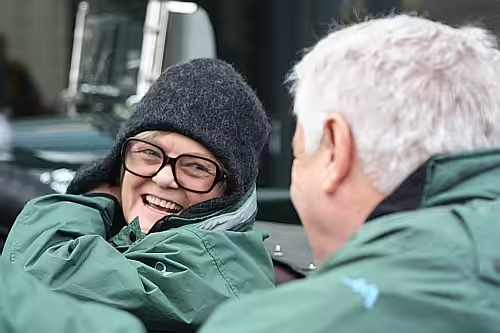
We were met by Tea — an energetic young Swedish woman spending her gap year here before starting law school — who helped us into coveralls and helmets before leading us out to the paddock to meet our horses for the afternoon.
I was paired with Hljómar, a gentle giant, and quietly hoped he would forgive a first-timer. For all the time I’ve spent writing about Icelandic horses, patting them over roadside fences, and packing my child off to horse camp every summer, I had never actually ridden one. My companions got Rauðhetta and Skessa.
A few laps around the paddock, a quick lesson on holding the reins and using your legs, and we were off — up the mountainside behind the town.
The Horses and Hotsprings tour delivers exactly what it promises. Hveragerði sits on top of serious geothermal energy; steam rises from the ground in every direction, and greenhouses dot the valley floor. The trail wound through this bubbling landscape — mud pits, steaming fumaroles — while Tea talked us through the geothermal activity and mentioned the notable increase in heat following the 2008 earthquakes.
The Joy of Tölt
Hljómar was no Sleipnir. Tea handed me a gentle stick to nudge him along when he lost interest in keeping up, though I mostly stuck to words of encouragement — I was hoping for some kind of connection. When the tölt finally clicked, though, it was something else entirely. The bumpy trot dissolved into what I can only describe as floating; this large, solid animal barely seemed to touch the ground.
Moving through a small forest at the edge of the geothermal zone felt quietly surreal. My companion, more than capable by this point, was given the nod to break away from the group and ride properly. Watching her, you could see exactly how much she was enjoying herself.
The white rainbow had long since faded when the sun started dipping toward the horizon. We trotted back to the paddock, dismounted onto muddy ground, pulled off the saddles, and watched the horses wander off into the field. Then it was back over the mountain pass to Reykjavík, and whatever comes after magic.
Eldhestar is located in Hveragerði, just 47 km from Reykjavík. To book your riding tour, visit Eldhestar.is.