














On Wednesday, August 12, 2026, a spectacular total solar eclipse will sweep across the Northern Hemisphere, marking the first total solar eclipse visible from mainland Europe since 1999 . For the first time since 1954, Iceland will find itself in the path of totality, offering a once-in-a-lifetime opportunity to witness this celestial phenomenon amidst some of the world’s most breathtaking landscapes .
During a total solar eclipse, the Moon passes directly between the Earth and the Sun, completely obscuring the solar disk and briefly transforming daylight into an eerie, twilight darkness . The 2026 eclipse is particularly notable because it occurs about 2.2 days after lunar perigee, meaning the Moon’s apparent diameter will be relatively large, ensuring a dramatic and encompassing totality .
The Path of Totality
The path of totality—the narrow track where the Sun is 100% obscured—will begin in remote northeastern Siberia, cross the Arctic Ocean and the Greenland ice cap, and then clip the western edge of Iceland before continuing over the North Atlantic Ocean to northern Spain and Portugal .
In Iceland, the path of totality covers the western portion of the country, including:
•The Westfjords
•The Snæfellsnes Peninsula
•The Reykjanes Peninsula
•The Capital Region (Reykjavík)
Areas outside this path, such as eastern and northern Iceland, will still experience a deep partial eclipse, with over 90% of the Sun covered by the Moon .
Timing and Duration
The eclipse will take place in the late afternoon and early evening of August 12, roughly four hours before sunset . The exact timing and duration of totality depend on the observer’s location within the path.
| Location | Partial Eclipse Begins | Totality Begins | Totality Ends | Partial Eclipse Ends | Duration of Totality |
| Ísafjörður (Westfjords) | 16:43:17 GMT | 17:44:08 GMT | 17:45:39 GMT | 18:43:59 GMT | 1 min 31 sec |
| Látrabjarg (Westfjords) | ~16:43 GMT | ~17:43 GMT | ~17:45 GMT | ~18:44 GMT | 2 min 13 sec |
| Reykjavík | 16:47:11 GMT | 17:48:16 GMT | 17:49:17 GMT | 18:47:40 GMT | 1 min 01 sec |
| Keflavík | 16:47:11 GMT | 17:48:05 GMT | 17:49:44 GMT | 18:47:54 GMT | 1 min 39 sec |
Note: All times are in Greenwich Mean Time (GMT), which is the local time in Iceland year-round.
The longest duration of totality on land in Iceland will be experienced at the Látrabjarg cliffs in the Westfjords, lasting approximately 2 minutes and 13 seconds .
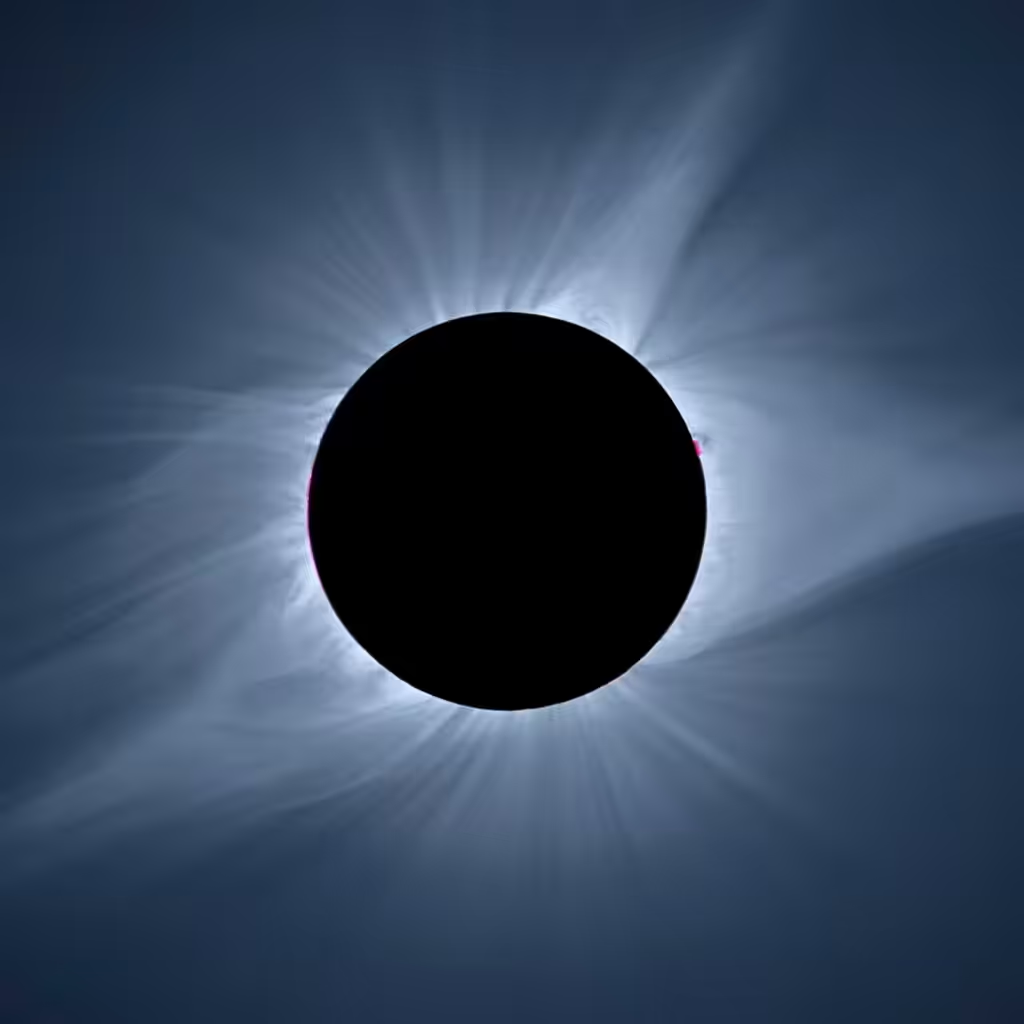
What to Expect: The Eclipse Experience
Witnessing a total solar eclipse is a multi-sensory experience. As the Moon gradually covers the Sun, the environment will undergo profound changes:
1.Midday Darkness: As totality approaches, the sky will darken dramatically, mimicking deep twilight. The temperature will drop noticeably, and the wind may shift.
2.The Solar Corona: During totality, the Sun’s outer atmosphere—the corona—becomes visible. This pearly white halo of plasma is normally hidden by the Sun’s intense glare .
3.Baily’s Beads and the Diamond Ring: Just before and after totality, sunlight shining through the rugged lunar valleys creates bright spots known as Baily’s Beads. The final, brilliant flash of light before totality is the famous “Diamond Ring” effect.
4.Visible Planets and Stars: The darkness of totality will reveal bright planets and stars. Observers in Iceland may be able to spot Venus to the east, while Mercury and Jupiter will be positioned to the west of the eclipsed Sun. Bright stars like Capella, Pollux, Arcturus, and Vega may also be visible .
5.Animal Behavior: The sudden onset of darkness often confuses wildlife. Birds may return to their nests, and nocturnal animals might briefly emerge.
Weather and Viewing Conditions
Iceland’s weather is notoriously unpredictable, and cloud cover is the primary concern for eclipse chasers. In August, the island generally experiences mild temperatures, but coastal areas are prone to fog and convective clouds .
According to meteorological data, the western peninsulas (Westfjords, Snæfellsnes, and Reykjanes) often see clouds building along their mountainous midlines during the day, while the coastal edges remain clearer . Therefore, the best viewing strategy is to stay mobile and monitor the Icelandic Meteorological Office’s cloud cover forecasts in the days leading up to the event. Coastal locations with unobstructed views of the southwestern horizon (where the Sun will be positioned at an altitude of about 24-25 degrees during totality) are highly recommended .
Top Viewing Locations in Iceland
1.Látrabjarg Cliffs (Westfjords): Offering the longest totality in Iceland (2m 13s), these towering sea cliffs provide a dramatic, unobstructed view over the Atlantic Ocean. However, roads can be narrow, and large crowds are expected .
2.Snæfellsnes Peninsula: Known as “Iceland in Miniature,” this region offers iconic foregrounds like the Snæfellsjökull glacier and Kirkjufell mountain. Towns like Hellissandur and Rif are excellent vantage points .
3.Reykjavík and the Reykjanes Peninsula: For those seeking convenience, the capital city offers a full minute of totality. The nearby Reykjanes Peninsula, home to Keflavík Airport and the Blue Lagoon, provides up to 1 minute and 39 seconds of totality and easy access .
Safety and Preparation
•Eye Protection: It is absolutely crucial to wear ISO-certified solar eclipse glasses during the partial phases of the eclipse. Looking directly at the Sun without proper protection can cause severe and permanent eye damage. The only time it is safe to remove the glasses is during the brief period of totality .
•Travel Logistics: Due to the rarity of the event, accommodations, rental cars, and flights to Iceland are expected to book up well in advance. Travelers should secure their arrangements as early as possible .
•Mobility: Given Iceland’s variable weather, having a rental car to chase clear skies on the day of the eclipse is highly advantageous.
References
[1] Wikipedia. “Solar eclipse of August 12, 2026.”
[2] Exploratorium. “Guide to the 2026 Total Solar Eclipse.”
[3] Guide to Iceland. “2026 Solar Eclipse in Iceland: The Complete Guide.”
[4] Arctic Adventures. “Iceland Solar Eclipse 2026: Where and When to Watch.”
[5] Time and Date. “August 12, 2026 Total Solar Eclipse in Reykjavik, Iceland.”