












Thinking about a trip to Iceland? This unique island, renowned for its rugged landscapes and stunning contrasts, promises an adventure like no other. Read on to discover our essential tips for making the most of your visit.
Whatever your dream itinerary looks like, a little forethought goes a long way in Iceland. The weather can shift without warning, the terrain varies wildly, and the infrastructure has its quirks — especially if this is your first time here.
Guide to Iceland stands as a reliable resource for travelers, assisting millions each year. Our content is crafted and vetted by locals who possess an intimate knowledge of the country. Depend on us for trustworthy, current travel guidance.
Browsing top-rated tours and vacation packages early on is a good way to start shaping your itinerary.
Below are our top Iceland travel tips — covering safety, packing, and getting the most out of every day on the road, whether you prefer a guided tour or the freedom of going it alone by car.
Key Takeaways for Your Trip to Iceland
-
Plan Smart, Pack Right — Iceland’s weather can shift rapidly, so dress in layers and be prepared for all seasons, even in summer.
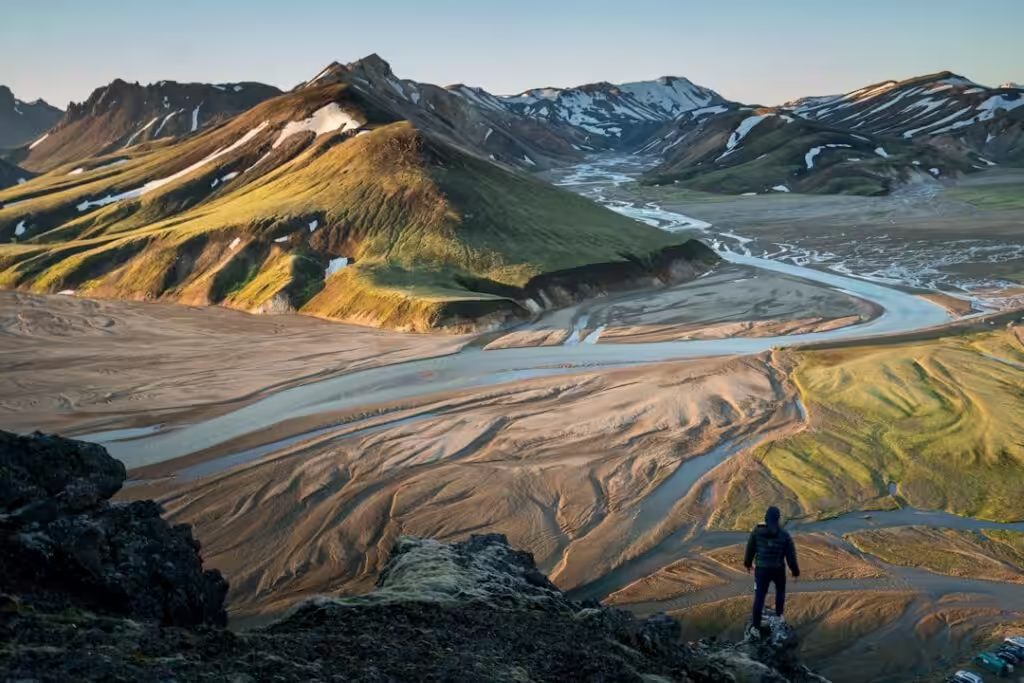
Photo: “Hundreds of miles with nothing but your backpack and a change of clothes. Would you do it?” by Joshua Sortino on Unsplash -
Travel Off-Peak or at Night — Skip the crowds by visiting popular attractions during the midnight sun or heading to quieter corners like the Eastfjords, Westfjords, and Highlands.
-
Budget Wisely — Eating out adds up fast. Shop at grocery stores, cook your own meals when you can, and stock up on duty-free alcohol at the airport.
-
Respect Nature — Stick to marked trails, stay off unpaved tracks that aren’t designated for vehicles, and leave no trace. Iceland’s environment is both spectacular and surprisingly fragile.
-
Connect With Locals — Chat with people at festivals, community pools, or rural farms. It’s one of the best ways to get a feel for what Iceland is really like.
10. Get to Know the Locals
Iceland may have a cold climate, but its people are another matter. Ask a local for directions and you’ll often end up hearing about their grandmother’s favourite hiking spot. It happens more than you’d think.
Most Icelanders speak excellent English — they’ve been learning it since primary school — so conversation flows easily, whether you’re at a bakery counter or sitting in a geothermal pool. The local swimming pools, in particular, are genuine community hubs where people of all ages gather and talk. If you want an honest window into Icelandic life, that’s where to find it.
A simple “hallo” (hello) or “takk” (thank you) is always appreciated. Icelanders tend to respect personal space, so a friendly smile rather than an enthusiastic handshake is usually the right call.
For something more immersive, look into staying in traditional Icelandic cabins or summer houses. These retreats offer peace, comfort, and a genuine sense of how rural life moves at its own unhurried pace.
9. Don’t Expect to Buy Beer in the Supermarket
If you’re planning to have a drink or two, it pays to know how alcohol works here. Iceland had a long-standing ban on beer that only lifted in 1989, and the drinking culture still reflects that history in some practical ways.
Regular grocery stores don’t sell alcohol. Instead, you’ll need to visit the state-operated liquor stores known as Vinbudin — which keep limited hours and are closed on Sundays and public holidays. In rural areas especially, this requires some forward planning.
Supermarkets do stock low-alcohol “near-beer” — it looks exactly like regular beer but contains less than 2.25% alcohol. More than a few visitors have grabbed a six-pack expecting something stronger and been rather confused by the results.
On the bright side, it does make those early morning glacier hikes considerably easier.
Pro tip: The most cost-effective option for buying alcohol in Iceland is at the duty-free store in Keflavik Airport upon arrival. Prices are markedly lower compared to local shops, and even many locals take advantage of this. If you anticipate wanting wine, spirits, or stronger beer during your stay, consider stocking up at the airport.
Bonus Tip: Don’t Fall for Bottled Water
Skip the bottled water — Icelandic tap water is among the purest and freshest in the world. It comes straight from natural springs and is completely safe to drink.
Bring a reusable bottle and fill it from the tap, your guesthouse sink, or even streams while hiking. It saves money, reduces plastic waste, and honestly tastes better than most bottled water anyway.
8. Save Money by Cooking Your Own Meals
Eating out in Iceland can be genuinely wonderful — but it can also burn through your budget at a startling rate. Restaurants in Reykjavik and other popular areas carry a hefty price tag, and adding drinks makes it steeper still.
Treating yourself to at least one good sit-down meal is absolutely worth it. But for the rest of the time, cooking for yourself makes a real difference. Most hostels, guesthouses, and campsites have shared kitchens you can use.
Here are some tips for successful self-catering:
-
Shop at economical grocery chains like Bonus, Kronan, or Netto.
-
Take advantage of weekday lunch promotions — many restaurants offer reasonably priced midday menus.
-
Explore local culinary staples such as Icelandic lamb, fresh fish, and skyr — a high-protein yogurt-like dairy product.
A few days of cooking yourself can cost roughly the same as a single mid-range restaurant meal — freeing up that money for a glacier hike or a whale-watching tour instead.
7. Rent a Car & Follow the Weather
There’s no better way to see Iceland than by car. Having your own vehicle means you can move at your own pace and, crucially, adjust your plans when the weather does something unexpected — which it will. Before you set off, it’s worth reading up on driving in Iceland: road rules, typical weather conditions, and the safety basics that apply here.
Icelanders often talk about “following the weather” — essentially, pointing the car toward wherever the sky looks clearest. Outside of summer especially, this strategy makes a real difference to what you actually get to see and do.
For reliable safety and travel information in Iceland, refer to the Icelandic Met Office for weather forecasts and consult the Icelandic Road Administration for road conditions. Don’t forget to download the SafeTravel app for real-time safety updates.
Self-drive tours afford you the opportunity to:
-
Spend more time enjoying the places you cherish
-
Steer clear of crowds by arriving at attractions early or late
-
Adapt quickly in case of road closures or weather warnings
If you’re planning to drive the Ring Road — the main highway that circles the entire country — know that it runs for 828 miles (1,332 kilometers). You could technically cover it in a couple of days, but you’d be racing past everything worth stopping for. Allow at least ten days to do it any justice.
Only got a week or less? Pick one region and focus on it properly. You’ll see far more by going deep into one area than by skimming across several.
The Snaefellsnes Peninsula, often described as “Iceland in miniature,” offers a taste of it all:
Whether you’re hoping to catch the northern lights or find clear skies for a long hike, a rental car puts you in the best possible position to make it happen.
6. Venture Beyond the Usual Stops
Some of Iceland’s best moments happen well away from the main tourist circuit. The Golden Circle and South Coast are popular for good reason — but the real character of the country often shows itself somewhere quieter, where the road thins out and the landscape feels genuinely wild.
The Eastfjords and Westfjords are worth the effort to reach. Steep mountains, small fishing villages, and trails that see a fraction of the summer foot traffic you’d find in the south. Even in July you can walk for hours without passing another soul.
For something even more remote, the Icelandic Highlands cover more than half the island and remain completely uninhabited. Lava fields, colourful rhyolite mountains, glacier-fed rivers, geothermal valleys — it’s a different Iceland entirely. If you haven’t spent time in terrain like this before, joining Highland tours with local guides is the sensible approach, particularly in summer when F-roads open up.
Going with a guide also helps protect the environment. Iceland’s highland ecosystems are genuinely delicate — vegetation here can take years to recover from a single set of footprints off the path. Off-road driving is prohibited and can result in serious fines or worse.
Iceland’s wilderness has stayed this pristine because people have largely treated it with care. That’s worth continuing.
5. Join the Party at a Village Festival
Every small town in Iceland has its own personality, shaped by geography, history, and years of doing things its own way. For much of the 20th century, many communities were genuinely isolated by the terrain and limited roads — and that isolation bred a strong sense of local identity that still shows up in how people celebrate.
Festivals happen throughout the year in towns and villages across the island, and they offer something you won’t find on a standard tour itinerary: real Icelandic hospitality, local food, live music, and traditions that actually mean something to the people keeping them alive.
Some favorites to check out include:
-
Danish Days in Stykkisholmur — Held in August, this festival honors the town’s historic ties to Denmark.
-
Lobster Festival in Hofn — A coastal celebration dedicated to Icelandic langoustine, featuring food, music, and community events.
Each festival is tied to something that actually matters to the community — heritage, the sea, the land, or simply the pleasure of getting together. There’s something on the calendar at almost every time of year, so chances are good you’ll overlap with one.
If meeting locals, eating something unexpected, or dancing in the street sounds appealing, pick a festival that fits your dates and show up. It’s one of the most memorable things you can do in Iceland.
4. Trade Hotels for a Farm Stay
If you want to experience Iceland beyond the postcard version, a farm stay is hard to beat. These countryside lodgings put you in direct contact with rural life — and with people who have a genuine connection to the land they’re living on.
Options range from shared guesthouses to private cottages, and meals made from locally sourced ingredients are often part of the deal.
Many farmers offer optional activities too: horseback riding, guided walks, or helping out with seasonal work if you’re interested. It creates a kind of connection that a hotel room simply can’t replicate.
Farm stays are popular, so book early — especially if you’re after something affordable or particularly scenic.
Here are a few fantastic options to consider:
-
Stora-Asgeirsa Guesthouse — Located in northwest Iceland, this serene farm stay accommodates up to seven guests and features a hot tub with stunning views of nearby waterfalls and countryside.
-
DalsSel Farm Guesthouse — Situated on a working farm in South Iceland, this cozy guesthouse offers ensuites and proximity to attractions like Seljalandsfoss and Skogafoss waterfalls.
-
Hestaland Guesthouse — An authentic horse farm guesthouse near Borgarnes in West Iceland, providing comfortable accommodations, an outdoor hot tub, and horse riding experiences.
3. Camp Smart & Stay Close to Nature
Waking up outdoors during an Icelandic summer — when the light barely fades and the air carries that particular cold-clean smell — is something you don’t forget. Camping gives you a closeness to the landscape that no hotel can offer, along with the flexibility to move when you feel like it.
Campsites are plentiful and reasonably priced, with most towns having designated areas for tents. From coastal cliffs to quiet valleys, the options are varied — provided you follow the rules.
What to Know Before You Camp
-
Wild camping is permitted for one night on uncultivated public land unless specific signs indicate otherwise. However, this is not allowed in Iceland’s three national parks, nor near private farms without permission.
-
If renting campervans, trailers, or collapsible campers, you must stay at official campsites each night and cannot camp wild.
-
Campsites typically operate only during the summer months (May to September), so plan accordingly.
-
Before venturing into remote areas, inform someone of your travel plans and check the weather forecast, as conditions can shift unexpectedly — even in summer. For real-time updates, alerts, and travel itinerary submissions, refer to SafeTravel.is, Iceland’s official travel safety resource.
Stick to designated camping areas, avoid off-road driving, and carry out all waste. Iceland’s vegetation is genuinely fragile and takes years to recover from disturbance.
Camping here is a real pleasure — just dress for the conditions, camp with care, and stay informed. As locals often say, “There’s no bad weather, only bad clothing.”
2. Soak in a Natural Hot Spring
Sitting in warm water under an open sky isn’t just a tourist activity in Iceland — it’s something people have been doing here since Viking times. Public swimming pools are woven into everyday life, and locals of all ages use them to unwind, socialise, and catch up on the week’s gossip.
World-famous spots like the Blue Lagoon and Sky Lagoon are worth experiencing. But there’s a particular pleasure in finding a natural hot spring out in the wild, with steam rising around you and nothing but wind or a distant waterfall for company.
A highly accessible destination is the Reykjadalur Valley, known as “Steam Valley,” near Hveragerdi, where a warm river meanders through a geothermally active area.
The hike to reach the bathing area spans about 2 miles (3.2 kilometers) each way, offering a gradual incline and breathtaking views along the journey. Expect this scenic workout to take around 45 minutes each way, culminating in a refreshing soak.
Consider some of our favorite tours, which include the opportunity to relax in a hot spring or geothermal pool:
-
Landmannalaugar Super Jeep Tour — Explore the stunning Landmannalaugar Geothermal Area on this Super Jeep excursion, where you can admire magnificent waterfalls and otherworldly crater lakes before enjoying a naturally heated pool.
-
The Golden Circle & Blue Lagoon Tour — Join this full-day tour from Reykjavik to experience Iceland’s iconic Golden Circle route paired with a revitalizing visit to the Blue Lagoon.
-
2-Hour Husafell Canyon Baths Tour — Discover the beauty of geothermal baths amidst the serene landscape of the Highlands of Iceland on this small-group tour of Husafell Canyon Baths.
Whether you find a pool in a small town or hike out to something hidden in the hills, a soak is one of those Icelandic experiences that stays with you long after you’ve dried off.
Important Etiquette
Before entering any hot spring or public pool in Iceland, you are expected to shower thoroughly without your swimsuit. This isn’t a suggestion — it’s a genuine cultural norm that locals take seriously, and rightly so.
Typically, there are gender-segregated changing facilities that are open, along with communal shower areas. Popular tourist locations like the Blue Lagoon and Sky Lagoon often provide private shower stalls.
1. Embrace the Magic of the Midnight Sun
From late May through July, the sun barely sets. That golden light sitting on the horizon at midnight, casting long shadows across the lava fields — it genuinely doesn’t get old, even after you’ve seen it several times.
It also gives you extra hours to explore that most people never think to use. Popular spots like waterfalls, canyons, and national parks can be heaving during the day, but visit them at midnight and you’ll often have the place to yourself.
The roads quieten, the villages fall still, and nature takes the spotlight in all its serene beauty. Imagine standing in solitude at Thingvellir National Park or gazing at Oxararfoss Waterfall, wrapped in gentle light and tranquility.
If you’d rather not drive or hike alone in the small hours, midnight sun tours led by local guides are a good option. Many combine the golden hour with activities like horseback riding or trekking.
One practical note: endless daylight plays havoc with sleep. Pack a sleep mask. It makes a bigger difference than you’d expect.
Ready for Iceland? Here’s to the Journey
Iceland is a place of genuine contrasts — fire and ice, remoteness and community, old traditions sitting alongside modern life. Get the basics right before you go and you’ll spend far less time dealing with avoidable problems and far more time actually enjoying where you are.
Whether you’re chasing waterfalls at midnight, sitting in a natural hot spring, or chatting with someone at a village café, these tips will help you move through Iceland with more confidence and less friction. The unexpected moments tend to be the best ones — so prepare well, then leave room for things to surprise you.