












National Geographic has named Iceland’s highlands one of the world’s top destinations for a ‘cold escape’ this summer, placing the remote volcanic interior among a short list of high-altitude and subarctic destinations that offer relief from record global heat. The endorsement, from one of travel publishing’s most authoritative voices, is already driving a surge in search interest and booking inquiries for Iceland highlands travel.
Key takeaways
- National Geographic has listed Iceland’s highlands as a premier ‘cold escape’ destination for summer 2025.
- The central highlands — including Landmannalaugar, Þórsmörk, and the Sprengisandur route — are the regions highlighted.
- The highland roads (F-roads) are only open roughly from late June to early September, and a 4WD vehicle is legally required.
- Iceland’s highland interior sits at elevations above 400–700 metres, keeping summer temperatures reliably cool even at peak season.
- Other destinations on the National Geographic list include Greenland, the Canadian Rockies, and Patagonia, according to reports.
Which parts of Iceland’s highlands did National Geographic recommend?
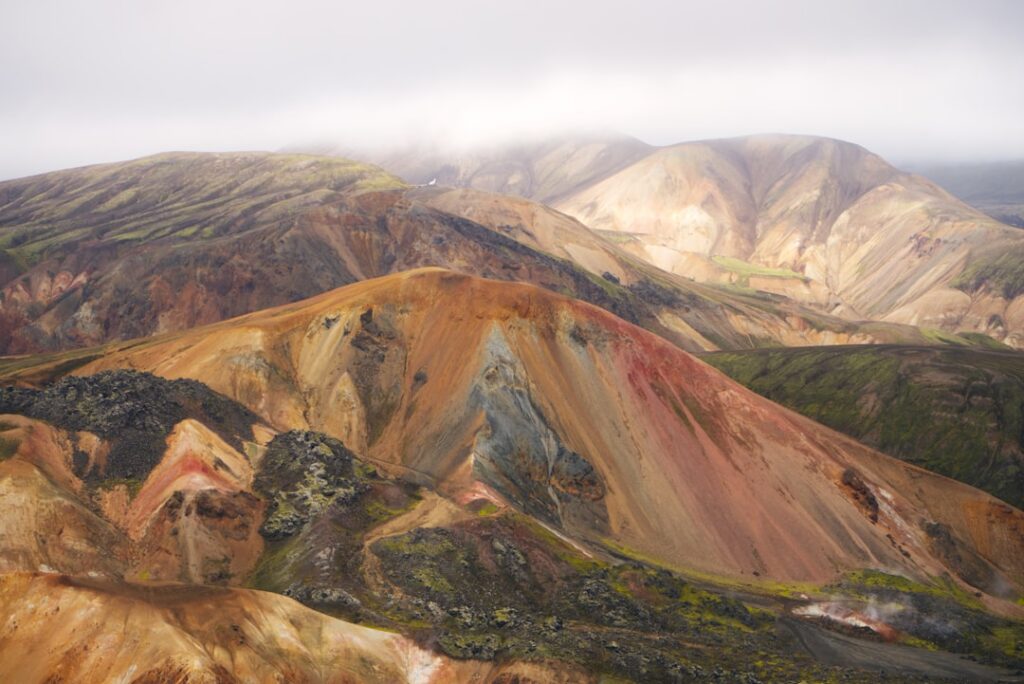
The recommendation centres on Iceland’s central highland interior — a vast, uninhabited plateau covering roughly 40,000 square kilometres, or about 40 percent of the island’s total land area. Specifically, reports indicate that Landmannalaugar, the colourful rhyolite mountain region in the southern highlands, and Þórsmörk (Thorsmork), the glacier-flanked valley that anchors the famous Laugavegur trail, received direct mention.
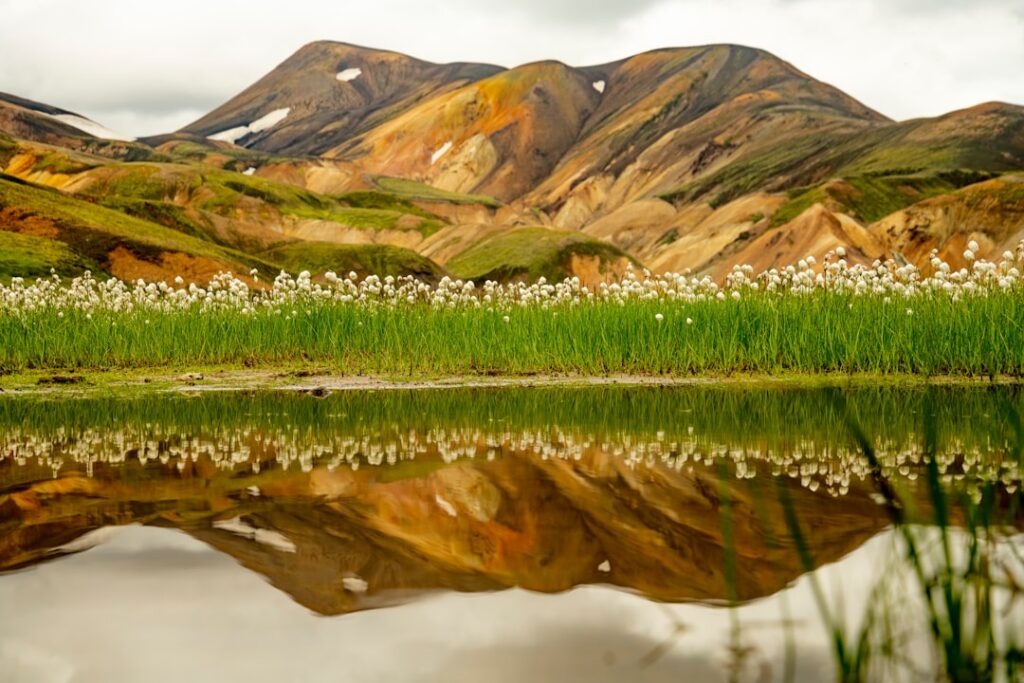
The Sprengisandur route, a stark sand desert crossing that bisects the highlands along Route F26, was also cited as emblematic of the cold, otherworldly landscape that defines the region. These are not tourist villages with cafés and guesthouses on every corner — Landmannalaugar has a single mountain hut operated by Ferðafélag Íslands (the Iceland Touring Association), basic camping, and natural geothermal pools that sit at roughly 38–40°C against air temperatures that rarely exceed 12°C in July.
Kerlingarfjöll, a geothermal mountain range in the west-central highlands accessible via Route F35 (Kjölur), is increasingly mentioned alongside these core areas. Its hot springs and snow-dusted peaks make it a strong visual draw for international visitors arriving via Reykjavík.
What is a ‘cold escape’ and why is Iceland ideal for it?
A ‘cold escape’ is a travel category gaining traction as summer temperatures in southern Europe, North America, and parts of Asia regularly exceed 35–40°C. Rather than beach holidays in heat, travellers actively seek destinations where the climate itself is the attraction — cool air, dramatic landscapes, and low humidity.
Iceland’s highlands are a near-perfect fit. The interior plateau sits between 400 and 700 metres above sea level. Even in late July, air temperatures in Landmannalaugar typically range from 5°C to 14°C. Wind, cloud, and occasional light snow are all possible. That thermal contrast — soaking in a 39°C geothermal pool while the air around you is 8°C — is the experience travellers are now actively seeking and sharing on social media.
Iceland also benefits from a near-absence of biting insects in the highlands, clean air quality, and 24-hour daylight in midsummer. For international visitors burned out on crowded Mediterranean resorts, the highlands offer genuine solitude. On a weekday morning at the Landmannalaugar hot spring, it is still possible to be one of a handful of people in the water by 7 a.m., watching steam rise against obsidian lava fields.
When is the best time to visit Iceland’s highlands?
The best time to visit Iceland’s highlands is between late June and early September — and this window is firm, not approximate. The highland interior is inaccessible in winter due to snow, ice, and dangerous river levels. The Icelandic Road and Coastal Administration (Samgöngustofa) controls access to all F-roads and only opens them when conditions are safe, typically:
- Landmannalaugar (F224/F208): usually opens late June
- Þórsmörk (F249): typically accessible from mid-June, though river crossings can close it again after heavy rain
- Sprengisandur (F26): generally opens in late June or early July
- Kjölur route (F35): the earliest to open, sometimes passable from early June
Peak highland season is July and early August. Visitors wanting fewer crowds should aim for late August, when roads remain open but international tourist volume begins to drop. Shoulder days — mid-week arrivals rather than weekend — also reduce congestion at key trailheads.
How do tourists access the highlands and what should they know?
Access to Iceland’s highland interior requires planning. The F-roads — gravel mountain tracks marked with the prefix F — are legally restricted to four-wheel-drive vehicles with high ground clearance. Driving a standard 2WD rental car on an F-road is illegal, voids insurance, and risks serious damage. Several river crossings have no bridges and require vehicles to ford moving glacial water.
For travellers who do not drive, highland buses run from Reykjavík and the Ring Road to major destinations. The ‘Highland Bus Passport’ offered by Strætó and partner operators allows multi-stop access across the interior. From Reykjavík’s BSÍ bus terminal on Vatnsmýrarvegur, scheduled summer services reach Landmannalaugar, Þórsmörk, and Kerlingarfjöll — journey times range from roughly 3 to 5 hours depending on route and stops.
Practical points every visitor should know:
- Check F-road status daily at road.is before driving — conditions change rapidly.
- Highland huts book out months in advance; Ferðafélag Íslands hut reservations open in January each year.
- Mobile coverage is absent across most of the interior; download offline maps (Maps.me or Gaia GPS work well) before leaving the Ring Road.
- Weather changes within hours. Pack waterproofs, insulating mid-layers, and wind protection regardless of the forecast.
- Camping outside designated sites is restricted in many highland areas under Icelandic nature protection rules.
What other destinations made the National Geographic list?
Iceland’s highlands appear alongside a curated set of destinations positioned as alternatives to heat-stressed summer travel. Reports indicate the full list includes Greenland (specifically the Ilulissat Icefjord area), the Canadian Rockies (Banff and Jasper national parks), Patagonia in southern Argentina and Chile, and Norway’s Svalbard archipelago. Each shares the defining qualities National Geographic associates with a cold escape: dramatic natural environments, lower visitor density than mainstream European destinations, and a climate that is genuinely cool in summer.
Iceland’s inclusion places it in strong company and underlines a shift in how global travel media frames the country — not only as a winter aurora destination but as a year-round alternative to heat. That framing matters for Iceland’s tourism industry, which has worked to spread visitor flow away from the congested summer peak at sites like the Blue Lagoon and the Golden Circle.
What this means for travellers and Iceland’s tourism sector
A National Geographic endorsement carries measurable weight in travel search behaviour. Industry observers expect an uptick in bookings for highland-adjacent accommodation — guesthouses in Hella, Hvolsvöllur, and Selfoss are already popular staging posts for Landmannalaugar trips. Travellers planning a summer 2025 highlands trip who have not yet booked transport or hut accommodation should act quickly, as capacity is genuinely limited.
For Icelandic readers, the story reflects both pride and a familiar tension: the highlands are a protected, fragile environment. Increased visitor numbers raise questions about erosion, waste management, and the capacity of highland infrastructure. The Environment Agency of Iceland (Umhverfisstofnun) and landowners continue to discuss access limits at key sites. Responsible travel — staying on marked paths, using designated toilet facilities, and carrying out all waste — is not optional etiquette in this environment. It is an ecological necessity.
Frequently asked questions
Do I need a special permit to visit Iceland’s highlands?
No special permit is currently required for most highland areas, but access is restricted to 4WD vehicles on F-roads, and some sensitive sites operate voluntary or managed entry systems. Camping requires use of designated sites, and highland huts must be booked in advance through Ferðafélag Íslands or other hut operators. Always check the latest access rules at the Environment Agency of Iceland (umhverfisstofnun.is) before your trip.
How much does it cost to visit Landmannalaugar?
Reaching Landmannalaugar by highland bus from Reykjavík costs roughly 10,000–15,000 ISK each way as of 2025, depending on the operator and route. Camping fees at the Landmannalaugar site are approximately 2,500–3,500 ISK per person per night. Hut accommodation, when available, costs significantly more and must be pre-booked; prices typically start around 8,000–12,000 ISK per person for a bunk.
Is Iceland’s highland interior safe for inexperienced hikers?
Parts of it are accessible to fit beginners, but the region demands respect. The Laugavegur trail (55 km from Landmannalaugar to Þórsmörk) is graded moderate to challenging, with river crossings, exposed ridges, and rapidly changing weather. Inexperienced hikers should join a guided group or start with shorter day walks from the Landmannalaugar base. Always register your itinerary with the Icelandic Association for Search and Rescue (safetravel.is) before setting out.
Can I visit Iceland’s highlands in June?
Some highland routes open in early-to-mid June — the Kjölur route (F35) is typically the first accessible — but many F-roads remain closed until late June or even early July. Conditions vary significantly year to year. Check the live road status map at road.is and confirm opening dates with your accommodation or tour operator before travelling. Attempting closed F-roads is dangerous and carries legal consequences.
What is the Laugavegur trail and is it related to the National Geographic recommendation?
The Laugavegur trail is Iceland’s most celebrated long-distance hiking route, running approximately 55 kilometres through the southern highlands from Landmannalaugar to Þórsmörk. It passes through coloured rhyolite mountains, volcanic deserts, glacial valleys, and geothermal areas. The trail is directly relevant to the National Geographic recommendation, as both Landmannalaugar and Þórsmörk are anchor points of the route and central to international highland travel interest.