













A reigning world champion is set to line up at the Laugavegur ultramarathon 2026, putting Iceland’s most celebrated trail race firmly in the international spotlight. The 55-kilometre highland race — routed through some of the most dramatic volcanic landscape on Earth — draws elite runners and adventure travellers alike each summer, and this year’s field is shaping up to be the most competitive in the event’s history.
Key takeaways
- A reigning world champion in trail or ultramarathon running is confirmed to compete at the Laugavegur race in 2026.
- The Laugavegur ultramarathon covers approximately 55 kilometres through Iceland’s central highlands, typically held in late July.
- International runners can enter through the official race website; entry is competitive and places fill quickly.
- The course record stands as one of the fastest times ever recorded on a high-altitude volcanic trail race in Europe.
- The race follows the same highland trail thousands of hikers walk each summer — making it a crossover hit for travellers and sports fans.
Which world champion is running the Laugavegur race in 2026?
Race organisers have confirmed that a current world champion in ultramarathon or trail running will compete at the 2026 Laugavegur Ultra Marathon. The specific athlete’s participation has been announced via the event’s official channels in the lead-up to the summer race season. Because the confirmation is recent and details continue to develop, readers should check the official Laugavegur Ultra Marathon website for the latest confirmed start list and athlete announcements.
The entry of a world-ranked champion raises the profile of a race that already attracts hundreds of international runners. Iceland’s growing reputation as a destination for endurance sports — built on its unique terrain, clean air, and long summer daylight — makes it a natural draw for elite athletes seeking both competition and spectacle.
When does the Laugavegur ultramarathon take place?
The Laugavegur Ultra Marathon traditionally takes place in late July, timed to coincide with peak summer conditions in the Icelandic highlands. The 2026 edition follows this established pattern. Late July offers the longest usable daylight — often 20-plus hours of light — and the most stable weather window before early-autumn cold returns to the highlands above 800 metres.
For travelling runners, this timing aligns with peak tourist season in Iceland. Flights into Keflavík International Airport are at their most frequent in July and August, and highland roads such as the F210 — which provides vehicle access to the Landmannalaugar start area — are typically passable by that point in the season. However, highland conditions change fast; runners and hikers should monitor forecasts via Veðurstofan, the Icelandic Meteorological Office, in the days before the race.
How long and difficult is the Laugavegur race route?
The Laugavegur ultramarathon covers approximately 55 kilometres from Landmannalaugar in the southern highlands to Þórsmörk, a glacial valley at the edge of the Eyjafjallajökull and Mýrdalsjökull ice caps. Total elevation gain is roughly 900–1,000 metres, with significant technical sections across lava fields, river crossings, and loose volcanic scree.
The route is the same trail used by the tens of thousands of hikers who walk the Laugavegur trek each summer — but runners cover in hours what most walkers take four days to complete. Key sections include:
- Landmannalaugar to Hrafntinnusker: A steep climb through rhyolite mountains with vivid red, green, and yellow slopes — visually unlike anywhere else in the world.
- Hrafntinnusker to Álftavatn: High plateau terrain with obsidian fields and sweeping views over the southern lowlands on clear days.
- Álftavatn to Emstrur (Botnar): Exposed moorland and multiple glacial river crossings; water levels vary by season and recent snowmelt.
- Emstrur to Þórsmörk: A dramatic descent through birch scrub and volcanic canyon terrain to the finish in the sheltered valley.
The difficulty is rated high by European trail standards. Altitude, rapid weather changes, and the absence of paved paths across large sections make this a serious undertaking even for experienced ultramarathon runners. In race conditions, the combination of competitive pace and technical terrain makes it one of the more demanding 55-kilometre courses on the European calendar.

How can international runners enter the Laugavegur race?
Entry to the Laugavegur Ultra Marathon is open to international runners through the official race website. The process is straightforward but demand is high — the race sells out regularly, and entries often open months before race day.
Practical steps for international entrants:
- Register at the official Laugavegur Ultra Marathon website as soon as entries open — dates are announced via the race’s social media channels and newsletter.
- Book flights into Keflavík International Airport (KEF) early; July flights from major European hubs and North America fill quickly during peak season.
- Arrange highland transport to Landmannalaugar. Scheduled bus services operate from Reykjavík, departing from the BSÍ bus terminal on Vatnsmýrarvegur; private 4WD hire is also possible but expensive.
- Secure accommodation in Reykjavík before or after the race — guesthouses and hostels in the 101 postcode book out fast in July.
- Check mandatory kit requirements on the official race page; Icelandic weather demands layers even in midsummer.
Entry fees are denominated in Icelandic króna (ISK) but payable by international card. Exact fees for 2026 have not yet been confirmed publicly; past editions have been priced in a range comparable to mid-tier European trail races. Runners are advised not to book travel until entry is confirmed, given the race’s competitive ballot or first-come registration system.
What is the course record for the Laugavegur ultramarathon?
The Laugavegur Ultra Marathon has produced some fast times given the technical nature of the course. The men’s course record has been set and broken multiple times as elite participation has grown, with recent editions attracting runners from Scandinavia, the United Kingdom, Kenya, and North America. The women’s record has similarly been pushed down as the race’s international profile has risen.
Specific record times shift as each edition is run; the most current and verified records are listed on the official race website and updated after each year’s event. What is consistent is that the course records represent elite-level performances achieved under ideal highland conditions — a benchmark that the 2026 world champion entry could realistically threaten, depending on weather and race-day conditions at altitude.
For context, finishing times for competitive club runners typically range from roughly four to seven hours, while the field as a whole — which includes first-time ultramarathon participants — finishes across a wider window. The race has a cut-off time to ensure all runners clear the exposed highland sections before conditions deteriorate.
Why this race matters beyond the result
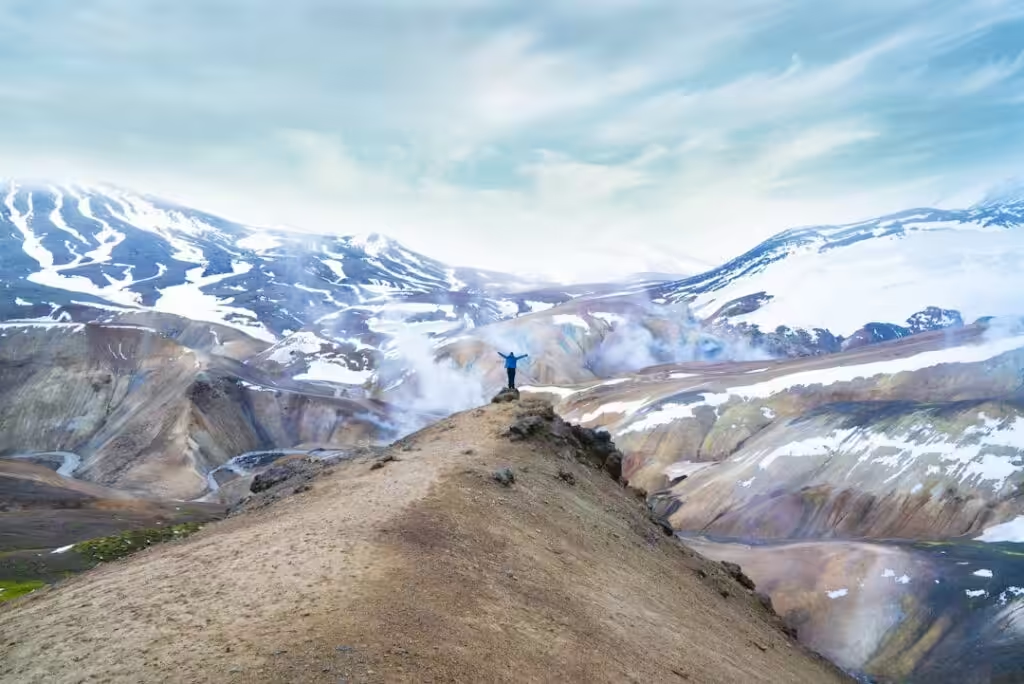
The Laugavegur ultramarathon occupies a rare space in endurance sport: it is simultaneously a serious competitive race and one of the world’s most photographed hiking trails. When a world champion starts at Landmannalaugar, the images that follow — rhyolite ridges, steam vents, the jade waters of Álftavatn lake — reach audiences far beyond the running community.

For Iceland, the race is part of a broader story about the highlands as a destination. The Icelandic Highland area — hálendið — is accessible only in summer, when F-roads open and highland huts operated by Ferðafélag Íslands (the Iceland Touring Association) fill with hikers from across the world. A world champion competing on the Laugavegur trail brings visibility to that summer window at exactly the moment when travel decisions for 2026 are being made.
Travellers who want to walk the same route without racing can book hut spaces through Ferðafélag Íslands, though the most popular nights — particularly at Hrafntinnusker and Álftavatn — book out months in advance. The four-day hike in the opposite direction, from Þórsmörk to Landmannalaugar, is also popular and considered by many to be the more scenic direction of travel.
Frequently asked questions
Is the Laugavegur race the same route as the Laugavegur hiking trail?
Yes. The race follows the same 55-kilometre Laugavegur trail that hikers walk over three to four days each summer, running from Landmannalaugar to Þórsmörk through Iceland’s central highlands. Elite runners complete the course in roughly four to five hours; most recreational participants finish between five and eight hours. The shared route makes it highly accessible for travellers who know the landscape from hiking.
Do I need a qualifying time to enter the Laugavegur ultramarathon?
The Laugavegur Ultra Marathon does not require a formal qualifying time in the way that some major ultramarathons do, but organisers do require runners to demonstrate appropriate experience for a 55-kilometre mountain race. Mandatory kit requirements must be met, and the race operates a cut-off system to manage safety on exposed highland terrain. Check the official race website for the current entry requirements before registering.
What is the best way to get to the Laugavegur race start at Landmannalaugar?
Scheduled highland bus services run from Reykjavík’s BSÍ bus terminal directly to Landmannalaugar during the summer season; the journey takes approximately three to four hours depending on the service. Private 4WD hire is possible but the F210 and F225 mountain roads require a vehicle with genuine high-clearance four-wheel drive — standard rental cars are not permitted on F-roads in Iceland. Many race participants use the official race transport arranged by the organisers.
When do entries open for the 2026 Laugavegur race?
Entry opening dates for the Laugavegur Ultra Marathon 2026 are announced through the official race website and the event’s social media channels. Historically, entries have opened several months before the July race date and have sold out quickly. Signing up for the race newsletter is the most reliable way to receive entry-opening notifications in real time.
Is the Laugavegur route safe for runners and hikers in late July?
Late July is the most stable weather window for the Laugavegur route, but highland conditions in Iceland can change rapidly at any time of year. River crossing levels depend on snowmelt and recent rainfall. Runners and hikers should carry mandatory safety equipment, check forecasts with Veðurstofan (the Icelandic Meteorological Office) at en.vedur.is, and register their journey with Safetravel Iceland before setting out.