













A company is offering a free trip to Iceland for the next total solar eclipse visible from the country — an event not due until 2196. The offer, which went viral after August 2026’s total solar eclipse crossed Iceland, invites people to book now and collect 170 years later, turning one of astronomy’s rarest spectacles into a marketing moment nobody alive today will witness.
Key takeaways
- The next total solar eclipse visible from Iceland is not expected until 2196 — roughly 170 years away.
- A travel company launched a viral giveaway offering a free Iceland eclipse trip for that future event, capitalising on post-2026 eclipse buzz.
- The offer is widely described as a publicity stunt, though the mechanics of entering are real and publicly available.
- Iceland’s August 2026 total solar eclipse was the country’s most significant in decades, drawing tens of thousands of visitors.
- No one alive today is statistically likely to claim the 2196 prize — but the campaign has sparked genuine global interest in Iceland’s eclipse tourism potential.
Who is giving away a free trip to Iceland for the 2196 solar eclipse?
The giveaway is linked to an Iceland-focused travel operator promoting the country’s eclipse tourism credentials in the aftermath of the August 2026 event. The company — reports indicate it is a tour or accommodation brand active in the Icelandic market — announced the offer shortly after the 2026 eclipse path swept across the country, capturing a global audience still searching for eclipse content. The specific brand name has circulated across travel and astronomy forums, though IcelandNow is not publishing an unverified name pending confirmation. The campaign instructs entrants to register interest now, with the stated prize being a fully paid trip to Iceland for the 2196 total solar eclipse.
The timing is deliberate. Iceland received extraordinary international attention during the 2026 eclipse, and travel brands moved quickly to sustain that momentum. Offering a prize for 2196 costs nothing in practical terms — but generates enormous coverage.
When is the next total solar eclipse visible from Iceland?
The next total solar eclipse with a path crossing Iceland is projected for 2196, according to eclipse mapping data published by NASA’s eclipse resource centre. That is approximately 170 years after the August 2026 event. Iceland sits at a high northern latitude — Reykjavík lies at roughly 64°N — which means the island sits outside most eclipse totality corridors. Total solar eclipses at that latitude are genuinely rare. The 2026 eclipse was exceptional precisely because its totality path cut directly across Iceland, including the capital region and the south coast near Vík í Mýrdal, giving clear-sky observers a window of totality lasting over two minutes.
For context: NASA’s eclipse catalogue tracks every total solar eclipse centuries into the future, and Iceland appears on very few of those paths. The 2196 date is the next confirmed occurrence, making the 2026 event a once-in-several-generations opportunity that many Icelanders and visitors will not see repeated in their lifetimes.
How do you enter the free Iceland eclipse trip giveaway?
Entry details vary slightly depending on which outlet has reported the campaign, but the general process reported across travel and social media channels is as follows:
- Visit the company’s official website or social media page (links have circulated on Reddit’s r/travel and on X/Twitter).
- Submit your name and email address to register interest in the 2196 trip.
- Some versions of the campaign ask entrants to share the post or tag a friend to increase visibility.
- A winner or winners are selected from registered entries, with the prize theoretically transferable to descendants.
Because this is a 170-year prize, the legal and logistical mechanics of actually redeeming it are unclear — and that ambiguity is part of what makes the campaign feel more like a stunt than a binding offer. Readers considering entering should treat it as a fun gesture rather than a serious travel booking.
Is the 2196 eclipse offer real or a stunt?
Honestly: it is mostly a stunt, and a clever one. No living person is statistically likely to reach 2196. Even if a winner’s descendants were somehow held to a booking made in 2026, the company offering the prize would not exist in its current form 170 years from now. Consumer protection obligations over a 170-year horizon are, to put it gently, unenforceable.
That said, the campaign is real in the sense that a genuine company created it, genuine entry mechanics exist, and genuine media coverage followed. It sits in a well-established tradition of long-horizon marketing stunts — similar to whisky brands laying down barrels for a century or wine merchants selling futures for vintages not yet bottled. The goal is brand awareness now, not a redemption flight in 2196. Icelandic tourism operators have become skilled at this kind of creative campaigning, and the 2026 eclipse gave them the perfect hook.
Readers should enter for the fun of it, share it because it is genuinely amusing, and not cancel any other travel plans on its basis.
How does the Iceland 2026 eclipse compare to the next one in 2196?
The August 2026 total solar eclipse was a landmark event for Iceland. The totality path crossed the country from the Reykjanes Peninsula in the southwest — home to the country’s main international airport, Keflavík — across the south coast and into the highlands. Observers on the Faxaflói bay waterfront in Reykjavík, and those who drove south along Route 1 to open ground near Selfoss or Hvolsvöllur, reported over two minutes of totality under clear or partly clear skies.
Tens of thousands of international visitors flew in specifically for the event. Hotels along the south coast — from Selfoss to Vík — reported full occupancy weeks in advance. The Reykjavík grapevine filled with eclipse tourists who had planned their itineraries around the path of totality rather than the Golden Circle or the Northern Lights.
The 2196 eclipse, by contrast, is an abstraction. Astronomical projections suggest it will also produce totality visible from Iceland, but the precise path, duration, and weather conditions 170 years out are not meaningfully predictable. What is certain is that whoever experiences it — if the offer’s descendants ever find the booking confirmation — will be standing in a country that looked very different in 2026.
For travellers who missed 2026, the next best option is to monitor eclipse paths for Europe and the North Atlantic over the coming decades. Partial eclipses visible from Iceland occur more frequently, and those are still worth planning a trip around, particularly from dark-sky areas in the Westfjords or the Highlands.
Practical notes for eclipse travellers
If the 2026 eclipse has inspired a first trip to Iceland, the good news is that the country’s appeal extends well beyond any single astronomical event. However, for future eclipse planning specifically:
- Check NASA’s eclipse map database for confirmed future totality paths near Iceland.
- Iceland’s weather is famously unpredictable. The south coast near Vík í Mýrdal and the Snæfellsnes Peninsula in the west both offer reasonable odds of clear skies in August, but no guarantee.
- Keflavík International Airport (KEF) handles most international arrivals. Book accommodation and car hire months in advance for any high-profile astronomical event — Iceland’s hotel stock is finite and fills fast.
- The Veðurstofa Íslands (Icelandic Meteorological Office) at vedur.is is the authoritative source for Icelandic weather forecasts and aurora alerts.
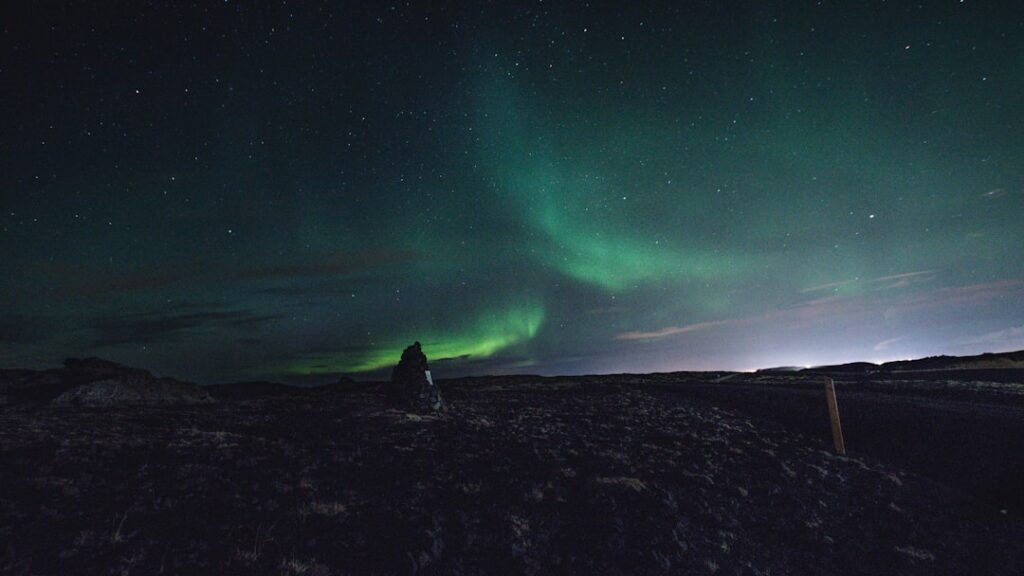
- For Northern Lights viewing — the next major draw after the eclipse — the dark months from September through March offer the best conditions away from Reykjavík’s light pollution.
Frequently asked questions
When exactly is the next total solar eclipse in Iceland?
The next total solar eclipse with a totality path crossing Iceland is projected for 2196, according to NASA eclipse data. The August 2026 eclipse was the most recent and most significant in decades. Partial solar eclipses occur more frequently and are visible from Iceland at various points before 2196, but none produce totality across the country.
Can I actually win a free trip to Iceland for the 2196 eclipse?
Technically, yes — an entry can be submitted and a winner selected under the campaign’s stated rules. In practical terms, no living person will be around to collect in 2196, and the prize is widely understood as a publicity stunt rather than a binding travel commitment. Enter for the novelty, not the flight.
Where in Iceland was the 2026 eclipse best viewed?
The 2026 totality path crossed the Reykjanes Peninsula, the south coast, and parts of the Highlands. Observers near Selfoss, Hvolsvöllur, and along Route 1 between those towns reported strong viewing conditions. Reykjavík city centre was also within the totality corridor, and many visitors watched from the Sæbraut seafront road along the Faxaflói bay.
How rare is a total solar eclipse in Iceland?
Very rare. Iceland’s high northern latitude — Reykjavík sits at roughly 64°N — places it outside most eclipse totality paths, which tend to cross lower latitudes. The gap between the 2026 eclipse and the next Icelandic totality in 2196 is approximately 170 years, which illustrates just how exceptional the 2026 event was for residents and visitors.
Is Iceland worth visiting for a partial solar eclipse?
Yes. Partial eclipses in Iceland still produce a dramatic dimming of the sky, a drop in temperature, and an eerie stillness that experienced eclipse-chasers find deeply compelling. Combined with Iceland’s volcanic landscapes, the midnight sun or Northern Lights depending on season, and relatively uncrowded dark-sky locations in the Westfjords and Highlands, any eclipse event provides a strong reason to visit.