












Iceland tipping culture catches a lot of visitors off guard — not because it’s complicated, but because it’s almost non-existent, and that can feel uncomfortable if you come from a country where leaving cash on the table is a matter of basic respect. Let me walk you through what actually happens here, what locals expect, and where a little cultural awareness goes a long way.
Iceland Tipping: Do You Actually Need to Tip?
The short answer is no. Tipping is not a standard practice in Iceland, and service staff are not dependent on gratuities to make rent. Icelandic wages are set through collective bargaining agreements negotiated by trade unions — a system that has been central to the country’s labour market for decades. Servers, bartenders, hotel staff, and taxi drivers earn a living wage from their salary alone.
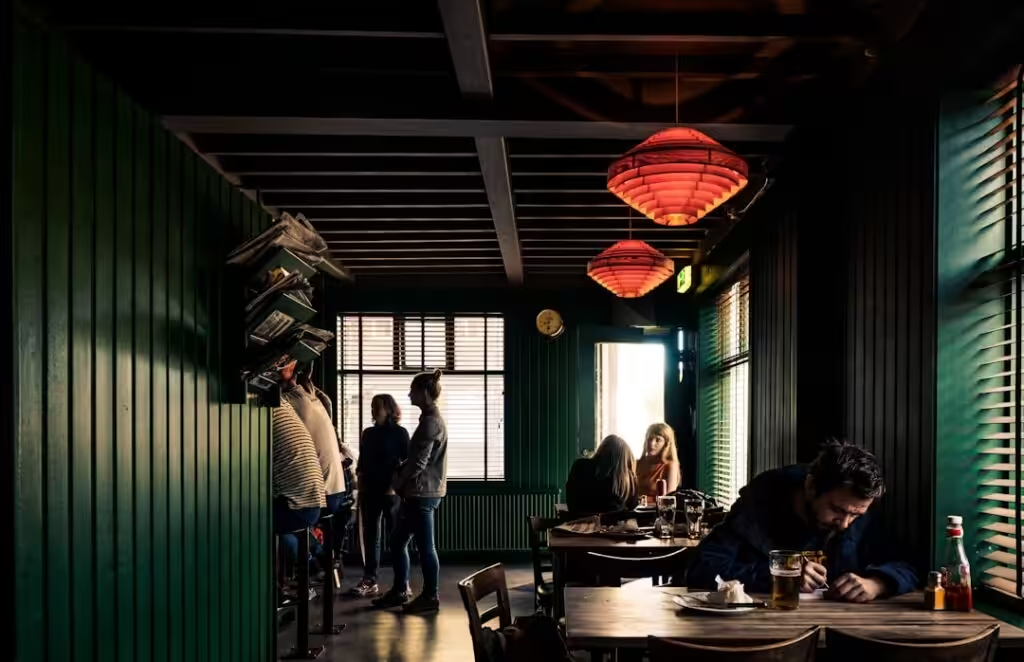
That doesn’t mean tipping is offensive or unwelcome. If you had a genuinely great experience and want to show it, leaving a few hundred krónur is a kind gesture. But nobody will hover or look disappointed if you don’t. Unlike in the United States, where tipping is effectively a mandatory surcharge on the dining experience, in Iceland it remains entirely optional.
A useful frame: think of tipping here the way you might think of applauding a street musician. You’re not obliged to, but if someone made your day better, it’s a natural way to say so.
Tipping at Restaurants and Cafés in Reykjavík
Most meals in Reykjavík already come with service included in the price — you’re not being charged a separate service fee, but prices reflect the full cost of running a business with properly paid staff. A main course at a mid-range restaurant on Laugavegur typically runs 3,500–5,500 ISK (roughly €23–37 or $25–40). That’s already a significant price point, and it reflects Iceland’s cost of living, not a base price awaiting a 20% top-up.
If you do want to leave something, rounding up the bill or leaving 300–500 ISK (€2–3) on a sit-down dinner is entirely appropriate. I’ve done it at Snaps on Þórsgata after a particularly good lamb shank, and the staff seemed genuinely appreciative rather than expectant. That distinction matters.
At café counters — places like Reykjavík Roasters on Kárastígur, or the Kaffismidjan near the harbour — there’s often a tip jar by the card machine. Dropping your change in is a nice touch, but nobody is tracking whether you do.
What About Bar Tabs?
Bars in Iceland work differently from many countries. You usually pay per round rather than opening a tab, and card payments are the norm — Iceland is one of the most cashless societies in the world, so don’t worry about having physical krónur for tipping purposes. Some card terminals will show a gratuity prompt; you can accept it, change the amount, or skip it entirely without any social friction.
Iceland Etiquette Beyond the Bill: How Locals Actually Behave
Tipping is just one piece of it. Iceland has its own set of social norms that are easy to miss if you’re moving fast. Getting these right won’t just make you a better guest — it’ll make the trip genuinely better, because locals warm up fast when they feel respected.
Queuing and Personal Space
Icelanders queue properly and expect the same in return. At the Bæjarins Beztu pylsur hot dog stand on Tryggvagata — probably the most famous street food stop in the country — there’s always a line, and it moves in strict order. Standing too close to the person in front of you will get you a look. Not an aggressive one, but a look.
In general, Icelanders maintain more personal space than many Southern European or North American norms suggest. A comfortable conversational distance is slightly larger than you might expect. Don’t read this as coldness — it’s just how space works here.
In Nature: Leave No Trace (and Then Some)
This is where etiquette becomes genuinely important, and where getting it wrong has real consequences. Iceland’s landscapes are fragile in ways that aren’t always obvious. The black sand deserts near Vík í Mýrdal, the moss-covered lava fields near Þingvellir, the geothermal vents at Geysir — these ecosystems recover slowly. Icelandic moss can take decades to regrow after a single footstep off a marked path.
Stay on marked trails. Don’t pick up rocks from black sand beaches to take home — Reynisfjara in particular has lost a measurable amount of its character to this. Don’t carve names into lava rock. Don’t drive off designated roads, which is not only ecologically destructive but also illegal and results in significant fines.
The Safe Travel Iceland website run by the Icelandic Association for Search and Rescue (ICE-SAR) covers both safety and responsible travel guidelines — it’s worth a read before you head into the highlands.
Hot Springs and Pool Etiquette
This one is non-negotiable. Before entering any geothermal pool in Iceland — the public swimming pools (sundlaugar), the Blue Lagoon near Grindavík, or any natural hot pot — you shower thoroughly, without a swimsuit, in the changing room showers. Not a rinse. A full shower, paying particular attention to the areas listed on the signs posted in every changing room in the country.
This is a public health rule, not a suggestion. The pools maintain water quality without heavy chlorination specifically because people follow it. Skipping the shower is genuinely considered rude — pool attendants will ask you to go back, and other bathers will notice. At Laugardalslaug, the big municipal pool in eastern Reykjavík, I’ve seen attendants politely but firmly redirect tourists who tried to bypass this step.
Also: keep your voice down at the pools. The sundlaug is where Icelanders go to relax and catch up, not to be surrounded by loud holiday conversation. Treat it more like a library than a waterpark.
Inside Homes and Guesthouses
If an Icelander invites you into their home, take your shoes off at the door. This is universal, and the entrance hall (or gang) of every Icelandic home has a shoe rack for exactly this reason. You won’t be told to — you’re expected to already know.
Bring something if you’re coming for dinner. Wine, a good chocolate bar from Nóa Síríus, or something from a bakery. It’s not obligatory, but it’s noticed and appreciated.
Dealing with Locals: Directness and Small Talk
Icelanders are direct. Not rude — direct. If you ask for an opinion, you’ll get one. If something isn’t possible, they’ll say so without a softening hedge. This can feel blunt if you’re used to a culture of polite evasiveness, but it means that when an Icelander says something is good, they mean it.
Small talk exists but runs on different rails. Asking someone where they work or what they earn is not particularly intrusive by Icelandic standards — income figures are publicly available through the tax authority (Skatturinn), and nobody treats it as a private matter. But asking about family too early can feel odd. Let conversation find its own level.
English is spoken almost universally in Reykjavík and in any tourist-facing context around the country. Making an attempt at Icelandic — even just takk (thank you) or já (yes) — is always appreciated, though locals may immediately switch to English once they hear your accent. Don’t take it as a rebuff. It’s their way of being helpful.
Photographing People and Places
Ask before photographing individuals, especially in smaller communities away from the capital. This applies doubly in the Westfjords or the East Fjords, where you may genuinely be the only tourist in town on a given day and pointing a camera at someone carries a different social weight.
At major natural sites like Jökulsárlón glacier lagoon in the southeast, there are often roped-off areas near the ice. The rope is there because icebergs can roll without warning and the water is lethal. Climbing onto ice at Jökulsárlón for a photograph gets people killed — it happens. Stay behind the barriers.
What to Know About Tipping Tour Guides Specifically
This is the one area where tipping has become more normalised, largely because Iceland’s tourism industry has grown rapidly and many tour operators attract international visitors who expect to tip. On guided day tours — whale watching out of Reykjavík’s Old Harbour, glacier hikes on Sólheimajökull, or Northern Lights bus tours — leaving 500–1,000 ISK per person (€3–7) for a good guide is well within the range of what people do.
On multi-day expeditions into the highlands — routes through Landmannalaugar or along the Laugavegur hiking trail — guides work hard, carry responsibility for your safety, and often genuinely appreciate the gesture. I’d lean toward tipping on those trips. Use your judgment on a single-afternoon city walking tour.
The key thing is this: nobody here expects it, nobody will make you feel bad for skipping it, and the entire interaction around money in Iceland is generally lower-pressure than in many other tourist destinations. That’s one of the things I actually like about living here.
If you’re planning a trip and want to get the most out of it, understanding how Icelanders relate to their country — the land, the pools, the dinner table — will serve you far better than worrying about the right percentage to leave on a restaurant bill. Get that part right, and the rest tends to follow.