













A Grímsey earthquake swarm has struck the small Arctic island off Iceland’s north coast, the Icelandic Met Office reported, raising attention among seismologists monitoring activity along the Tjörnes Fracture Zone.
Grímsey sits directly on the Arctic Circle, roughly 40 kilometres north of the Icelandic mainland, and lies within one of the country’s most seismically active corridors. Earthquake swarms in this region are not uncommon, but clusters of tremors can escalate quickly and are closely tracked by authorities. The island is home to a small permanent community, making any significant seismic activity a matter of local concern as well as scientific interest.
The Icelandic Met Office — known in Icelandic as Veðurstofa Íslands — issued information about the swarm through its official news channel, though specific details on the number of tremors, their depth, or peak magnitude were not immediately available at time of writing. The agency monitors seismic activity across Iceland around the clock and is the primary authority on earthquake reporting in the country.
What a Grímsey earthquake swarm means for the island’s residents
Grímsey has a population of fewer than 100 people, most of whom live in the small village of Sandvík on the island’s western shore. The community depends heavily on fishing, and the harbour and infrastructure there are exposed to any sustained ground movement. Even moderate swarms can cause anxiety among residents and prompt checks on buildings and utilities.
The Tjörnes Fracture Zone, which runs offshore to the north of Iceland, connects the Mid-Atlantic Ridge system to the volcanic zones further south and is responsible for some of the largest historical earthquakes recorded in the country. Swarms along this zone can sometimes precede stronger individual quakes, though they also frequently subside without escalating. Seismologists typically watch the sequence over 24 to 72 hours before drawing conclusions about the likely progression.
Grímsey is accessible by both scheduled flights from Akureyri — Iceland’s second-largest city, about 380 kilometres northeast of Reykjavík — and by ferry from the port of Dalvík. During periods of heightened seismic activity, transport links are monitored but are rarely suspended unless structural damage is confirmed.
Iceland’s seismic monitoring network and how it tracks swarms
Iceland operates one of the densest seismic monitoring networks in the world relative to its size. The Icelandic Met Office runs a system of sensors distributed across the island and its surrounding waters, capable of detecting tremors well below the threshold of human perception. Data is processed in near real-time, and significant events are published promptly on the Met Office website and through its alert systems.
The country experiences thousands of earthquakes every year, the vast majority too small to be felt. But swarms — sequences of many smaller quakes clustered in time and space — attract particular attention because they can signal movement along fault lines or, in volcanic areas, the migration of magma. Grímsey itself is not considered a volcanic centre, but its position within the broader North Atlantic tectonic system means swarms there are taken seriously.
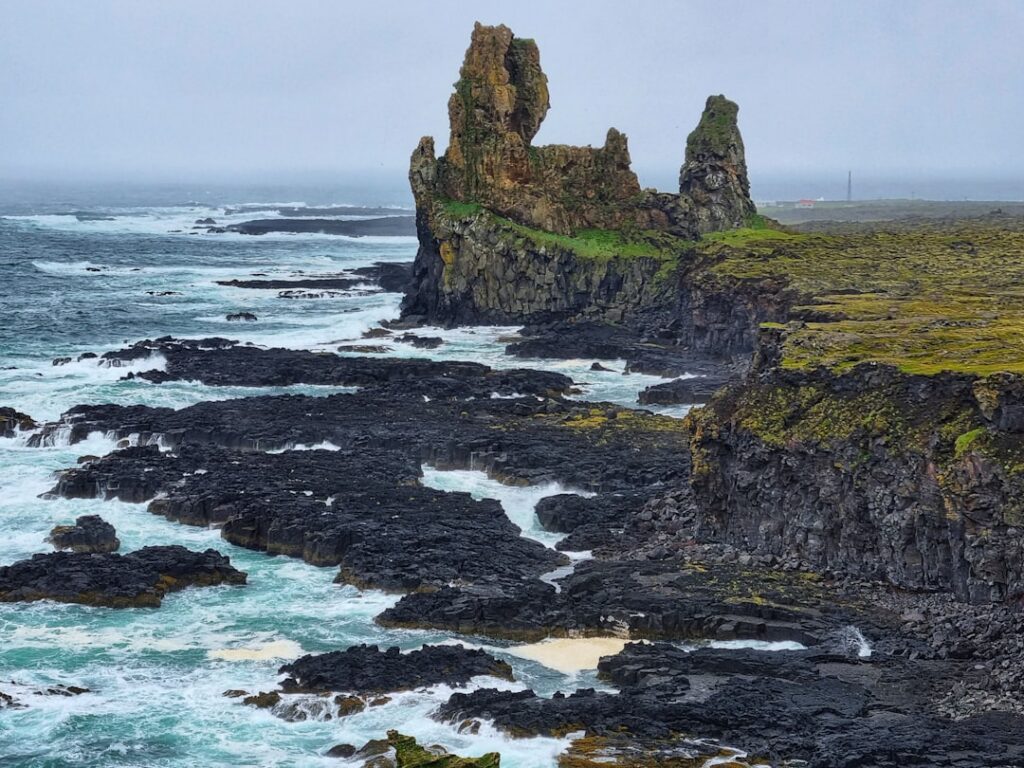
Residents across northern Iceland, particularly those in Akureyri and the surrounding Eyjafjörður area, are accustomed to periodic seismic alerts from the Grímsey region. Local civil protection authorities coordinate with the Met Office when swarms are reported, and public guidance is issued if conditions warrant.
What to watch for as the Grímsey swarm develops
The behaviour of earthquake swarms typically becomes clearer within the first few days. If tremor frequency decreases and magnitudes remain low, the sequence usually winds down without incident. A pattern of increasing magnitude or accelerating frequency would prompt a more active response from Veðurstofa Íslands and the Department of Civil Protection and Emergency Management.
Scientists and residents alike will be watching the Met Office’s real-time earthquake map in the coming hours for any sign of the swarm intensifying or shifting location along the fracture zone.
Original source: Icelandic Met Office — News