














Introduction
Of all the Icelandic songs that hint at international potential they never quite realised, “Blue Jean Queen” is one of the most convincing. It belongs to an outward-looking moment in Icelandic pop — the 1970s, when local musicians were writing and recording in English with one eye firmly on markets beyond Iceland. What makes this song particularly interesting is that it was no retrospective discovery: it was actually released in a form that signals international ambition, and its author, Magnús Þór Sigmundsson, had direct professional ties to London throughout the decade.
The Song at a Glance
| Item | Detail |
| Song | “Blue Jean Queen” |
| Artist | Magnús Þór Sigmundsson, credited on some releases as Magnus Thor |
| Format | 7-inch, 45 RPM single |
| Year | 1976 |
| Label | Fálkinn (FMS 001) |
| Release territory | United Kingdom |
| Style | Pop / Rock |
| Listening link | YouTube – “Blue Jean Queen” |
Why the Song Matters
The clearest sign of the song’s unrealised crossover potential is its original release context. Discogs lists “Blue Jean Queen – The Party Is Over” as a 1976 UK single on Fálkinn, credited to Magnus Thor. That detail matters: the song was never confined to purely domestic Icelandic circulation. It was packaged for an English-speaking market, and the title itself is catchy, memorable, and sits naturally within the international pop idiom of the mid-1970s.
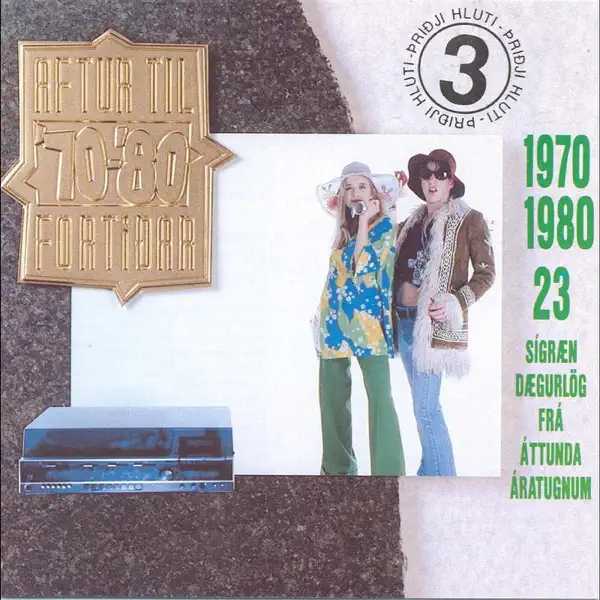
The song also appears on the later compilation Poppsaga: Iceland’s Pop Scene 1972–1977, where Magnus Thor is explicitly identified as Magnús Þór Sigmundsson. So the record has been preserved not just as a forgotten single, but as part of a broader historical picture of Icelandic musicians stretching toward mainstream Anglo-European pop. That is what makes “Blue Jean Queen” feel less like a curiosity and more like a genuine near-miss.
Magnús Þór Sigmundsson: The Author Behind the Song
Magnús Þór Sigmundsson was no accidental participant in this scene. Discogs identifies him as an Icelandic songwriter, vocalist, and producer who worked as a professional songwriter in London during much of the 1970s before returning to Iceland in the early 1980s. That single biographical fact does a lot of work when it comes to understanding “Blue Jean Queen.” It tells us the song came from someone who was not just writing pop music at home in Iceland, but was living inside the international professional environment that shaped commercial songwriting at the time.
That London connection explains why “Blue Jean Queen” sounds and looks — even from the release information alone — like a record aimed beyond the Icelandic market. Sigmundsson was part of a generation of Icelandic musicians who absorbed British and American pop language, but he did so with unusual closeness to the industry itself. He is a particularly revealing figure in Icelandic music history for that reason: a local artist whose work shows just how seriously Icelandic songwriters were already thinking about export-oriented popular music in the 1970s.
Discogs describes Magnús Þór Sigmundsson as an Icelandic songwriter, vocalist and producer who worked as a professional songwriter in London during much of the 1970s.
A Song That Could Have Travelled Further
Plenty of Icelandic songs are admired today because they eventually became famous. “Blue Jean Queen” is interesting for the opposite reason. It had the right ingredients for wider circulation and never became a major international hit anyway. The UK release, the English-language framing, the durable afterlife on later compilations — all of it supports the idea that this record had genuine export logic behind it.
That is why “Blue Jean Queen” deserves attention beyond the category of forgotten track. It is evidence of an Icelandic pop tradition that was internationally minded long before the country’s best-known global breakthroughs. And it raises a productive historical question: what might have happened if the promotion, timing, or distribution had worked differently?
Where to Hear the Song
The most convenient listening link I found is the official topic upload on YouTube:
Listen here: “Blue Jean Queen” by Magnús Þór Sigmundsson
A remastered version is also available here:
Alternative link: “Blue Jean Queen (2024 Remastered)” on YouTube
Conclusion
“Blue Jean Queen” remains a persuasive example of an Icelandic song that never fully broke through internationally, yet clearly had the credentials to do so. Magnús Þór Sigmundsson had both the professional background and the stylistic instincts to write for a market larger than Iceland, and the UK single release shows those ambitions were entirely real. Anyone who wants to understand Icelandic pop not only through its famous successes but through its compelling near-misses will find “Blue Jean Queen” well worth their time.
References
[1] Magnus Thor – Blue Jean Queen – The Party Is Over – Discogs
[2] Magnús Þór Sigmundsson Discography – Discogs