












Iceland’s GDP growth forecast for 2025 has been slashed from 7.7% to just 1.6%, according to revised figures reported by multiple financial outlets. The dramatic downward revision marks one of the sharpest forecast corrections in recent Icelandic economic history and has drawn immediate attention from analysts across Europe and beyond.
Key takeaways
- Iceland’s 2025 GDP growth forecast has been cut from 7.7% to 1.6% — a reduction of more than six percentage points.
- The tourism and construction sectors, both key growth drivers in recent years, are showing signs of significant strain.
- Inflation and high interest rates set by Seðlabankinn (the Central Bank of Iceland) continue to squeeze household spending.
- Iceland’s revised growth rate now falls well below the average for Nordic peers and the broader European Union.
- Icelanders face continued pressure on wages, mortgage costs, and everyday prices through 2025.
Why has Iceland’s GDP growth forecast been revised so sharply downward?
The revision reflects a confluence of pressures that have built steadily since late 2023. Reports indicate that weaker-than-expected export performance, a cooling tourism sector, and persistently high domestic interest rates have all contributed to the dramatic adjustment. Iceland’s economy had been projected to benefit from a strong post-pandemic rebound, but those gains have proven harder to sustain than forecasters anticipated.
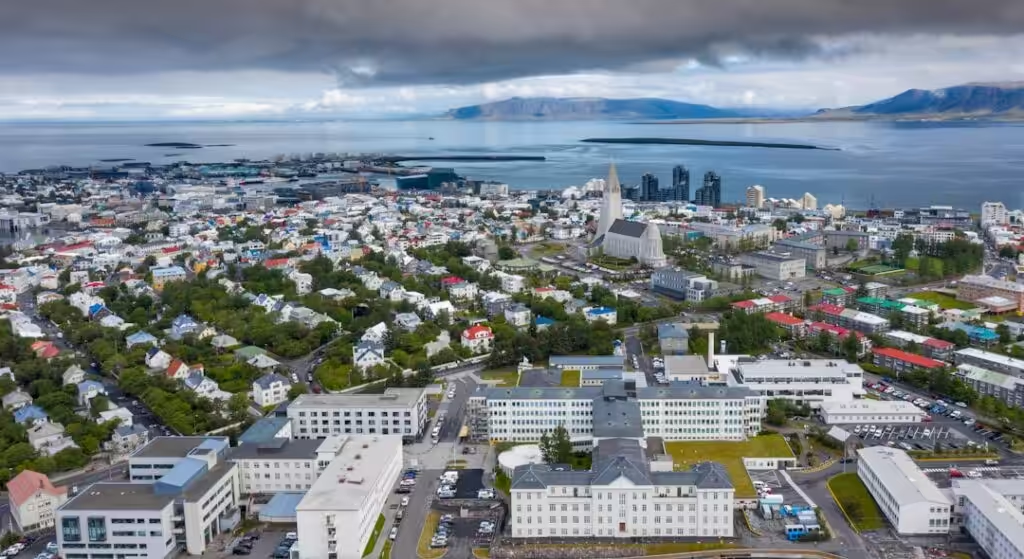
Seðlabankinn — Iceland’s central bank, headquartered on Kalkofnsvegur in central Reykjavík — has maintained elevated interest rates in an effort to bring inflation under control. That policy, while necessary, has dampened both business investment and consumer spending. Officials have also pointed to slower growth in aluminium and fisheries exports, two of Iceland’s most important revenue streams, as a contributing factor.
Volcanic activity on the Reykjanes Peninsula, which has intermittently disrupted activity around Grindavík and the broader southwest since late 2023, has added operational uncertainty for businesses and infrastructure in the region. While the direct GDP impact is difficult to isolate, economists note that prolonged geological instability carries real costs for local industry and insurance markets alike.
What does 1.6% GDP growth mean for Iceland’s economy in 2025?
A growth rate of 1.6% is not a recession — but it is a significant deceleration for an economy that had been tracking at nearly five times that pace. For context, Iceland’s GDP growth topped 6% in several post-COVID years, driven by record tourist arrivals and robust construction activity across greater Reykjavík.
At 1.6%, the economy is growing just fast enough to keep pace with modest population increases, leaving little room for real income gains or expanded public services. Government revenues will likely come in below budget projections, potentially forcing difficult choices in the Alþingi — Iceland’s parliament — around spending priorities for 2025 and 2026.
Analysts who track Nordic economies describe the revision as a warning signal rather than a crisis, but they caution that further downside risks remain if global demand for Icelandic exports softens or if interest rates stay elevated longer than expected.
How does this compare to other Nordic or European economies?
Iceland’s revised 1.6% figure puts it below the growth rates currently projected for several of its Nordic neighbours. Sweden and Denmark are both forecast to post modest but slightly stronger growth in 2025, while Norway benefits from continued oil and gas revenues. The European Union as a whole is projected to grow at roughly 1.3–1.5% in 2025, according to European Commission economic forecasts, meaning Iceland’s revised rate is no longer the standout performer it was expected to be.
The contrast with Iceland’s own prior forecast is the most striking element. A swing from 7.7% to 1.6% in a single revision cycle is unusual by any measure and suggests that original projections may have been too optimistic, possibly overweighting the pace of tourism recovery and underweighting the drag from tight monetary policy.
What sectors are driving the slowdown in Iceland?
Several key sectors are showing strain simultaneously, which is what makes the slowdown broad-based rather than confined to a single industry.
- Tourism: Visitor numbers have been softer than projected, partly due to the lingering perception of volcanic risk in the southwest and partly because of rising costs that make Iceland one of Europe’s most expensive destinations. Hotels along Laugavegur in central Reykjavík and guesthouses across the South and West have reported uneven booking patterns.
- Construction: A building boom that reshaped Reykjavík’s skyline over the past decade has slowed sharply as high interest rates make new projects harder to finance. Housing starts are down, and several commercial developments have been paused.
- Fisheries: Catch quotas and fluctuating global fish prices have weighed on one of Iceland’s oldest and most critical export industries. The sector employs thousands outside the capital, particularly in the North and Westfjords regions.
- Aluminium and energy-intensive industry: Global aluminium prices and energy cost pressures have reduced margins for smelter operations, which are a significant component of Iceland’s goods exports.
What does this mean for Icelanders’ cost of living and jobs?
For residents, the immediate concern is what slower growth means for wages, mortgage repayments, and everyday expenses. Iceland’s inflation rate has been running well above the Seðlabankinn’s 2.5% target, and while it has been easing, the pace of decline has been frustratingly slow for households carrying variable-rate mortgages — the dominant mortgage type in Iceland.
A typical Reykjavík family with an indexed mortgage on a 50–60 million ISK property has seen monthly repayments climb significantly over the past two years. Slower GDP growth does not automatically mean those costs come down quickly; in fact, if growth underwhelms expectations, the central bank may hold rates higher for longer to guard against any inflationary rebound.
On employment, Iceland’s labour market has remained relatively resilient so far. But a prolonged growth slowdown typically leads to hiring freezes before outright job cuts, and workers in tourism, construction, and retail are likely to feel the pressure first. Union negotiations in several sectors are expected later in 2025, and the revised GDP figure gives employers a stronger argument for restraint on wage increases.
What should travellers know about visiting Iceland in 2025?
For international visitors, a slower Icelandic economy does not change the fundamental travel experience — the landscapes, the geothermal pools, and the midnight sun remain. However, there are a few practical points worth keeping in mind.
Iceland remains an expensive destination. Budget travellers should expect to pay 2,500–4,500 ISK for a basic café meal in Reykjavík, and accommodation costs in the capital and along the Ring Road have not fallen meaningfully despite softer tourism numbers. The Icelandic króna’s performance against the euro and US dollar will influence how expensive the trip feels in practice — check current exchange rates before travelling.
Volcanic activity on the Reykjanes Peninsula continues to be monitored by Veðurstofa Íslands (the Icelandic Meteorological Office), which publishes real-time alerts. Travellers planning to visit the Blue Lagoon area or drive Route 43 toward Grindavík should check Veðurstofan’s site and road condition updates at road.is before departing.
Frequently asked questions
Is Iceland heading into a recession in 2025?
Not based on current forecasts. A GDP growth rate of 1.6% means the economy is still expanding, if slowly. A recession is technically defined as two consecutive quarters of negative growth, and Iceland has not met that threshold. However, the sharp revision from 7.7% signals real economic stress, and some analysts warn that further negative surprises could change the picture by year-end.
Why was Iceland’s original GDP forecast of 7.7% so high?
The 7.7% figure likely reflected optimistic projections for tourism recovery, continued construction activity, and strong export performance following Iceland’s post-pandemic rebound. Forecasters appear to have underestimated the drag from sustained high interest rates and overestimated how quickly global demand for Icelandic exports and travel would grow. Forecast revisions of this scale are uncommon but not unprecedented for small, open economies highly sensitive to external conditions.
How does Iceland’s economic slowdown affect the Icelandic króna?
A lower growth outlook can put downward pressure on a currency if it signals weaker economic fundamentals or a potential shift in interest rate policy. For travellers, a softer króna means their euros or dollars go slightly further in Iceland. However, currency movements depend on many factors beyond GDP alone, and visitors should check live exchange rates through their bank or a reliable financial service before travelling.
What is Seðlabankinn doing in response to the slowdown?
Seðlabankinn, Iceland’s central bank, has been prioritising inflation control through elevated interest rates. As growth slows, pressure will build on the bank to begin cutting rates to stimulate the economy — but officials have signalled they will not move prematurely if inflation has not returned sustainably to target. Rate decisions are announced at regular Monetary Policy Committee meetings, and the bank publishes its full forecasts in quarterly Monetary Bulletins available at sedlabanki.is.
Which parts of Iceland are most affected by the economic slowdown?
Reykjavík and the surrounding Capital Region, which account for the bulk of construction activity and service-sector employment, are feeling the slowdown most acutely in terms of job market dynamics and housing costs. However, communities in the Westfjords and North that depend heavily on fisheries, and towns across the South like Vík and Selfoss that rely on tourist traffic, are also exposed. Rural Iceland tends to have fewer economic buffers when the two pillars of fisheries and tourism soften simultaneously.