












Silfra snorkeling is one of the few experiences in Iceland that genuinely lives up to the hype — and one of the few where the hype also leaves out the most important details. The fissure sits inside Þingvellir National Park, about 50 km east of Reykjavík, and it splits the North American and Eurasian tectonic plates apart. You float between two continents. That sentence sounds like tourism copy, but when you’re actually in the water with one hand on each wall, it lands differently.
What Silfra Snorkeling Actually Feels Like
The first thing that hits you is the cold. Not in a gradual, get-used-to-it way. The water temperature in Silfra stays at around 2–4°C year-round, and no amount of reading about it prepares you for the moment it reaches the exposed skin around your mask. Your face goes numb within about thirty seconds. After that, strangely, you stop noticing it.
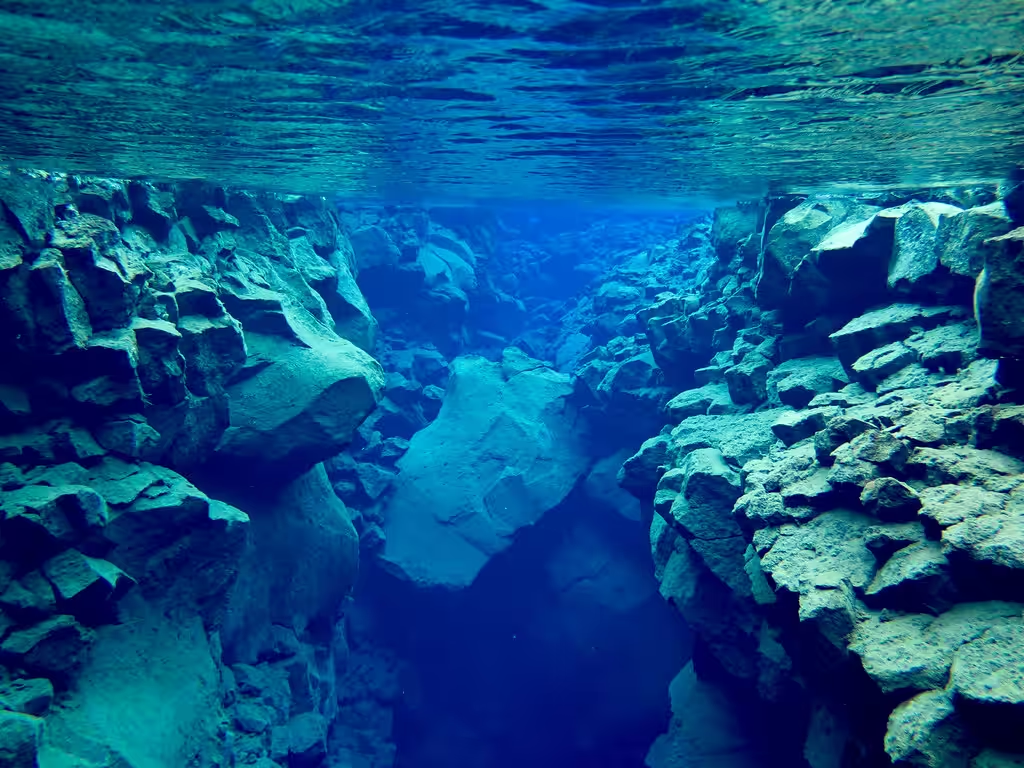
The visibility is the other thing. Silfra has some of the clearest freshwater visibility on the planet — over 100 metres in ideal conditions, according to Þingvellir National Park’s official site. The water is glacial meltwater that has been filtering through lava rock for decades before it reaches the fissure. By the time it gets to you, it’s extraordinarily pure. Looking down into the crack is like looking through glass.
The colours shift as you move through the different sections. The algae in the shallower parts — nicknamed the “troll floss” by guides — glows in greens and yellows that look almost artificial against the dark basalt. Deeper sections go cobalt blue. It is genuinely unlike anything I’ve seen underwater anywhere else.
The Three Sections of the Fissure
Silfra isn’t one long straight channel. It has distinct sections, and knowing them beforehand helps you understand what you’re looking at.
Silfra Hall is the entry point — wide, with cathedral-like walls dropping away beneath you. This is where most people get their first real look down into the deep blue crack and instinctively reach out to touch both sides. The Hall is the most dramatic section.
Then comes the Cathedral, a narrower passage with the troll floss algae thick on the walls. The light filters down here in a way that makes the whole thing feel slightly unreal. Most of the good underwater photos come from this section.
The Lagoon is where the tour ends — a wider, shallower area where you can float and look back at the surrounding lava landscape. You exit here via a metal ladder. Getting out in a dry suit with numb fingers is less graceful than getting in.
Silfra Snorkeling vs Diving: Which One Is Right for You?
Both activities happen at the same fissure, but the experience is different enough that it’s worth thinking about before you book. Snorkeling is accessible to almost anyone who can swim — you stay at the surface, the dry suit keeps you buoyant, and no certification is needed. Diving gets you deeper into the fissure and the silences down there are genuinely profound, but you need an open-water certification and ideally some cold-water dive experience. Thingvellir diving is often described as the clearest freshwater dive site in the world, and the drop-offs are more dramatic from below.
If you’ve never dived before, do the snorkeling first. If you’re already a certified diver, the diving is worth the extra cost.
Prices and What’s Included
Snorkeling tours typically run from around 19,900–22,000 ISK per person (roughly €135–150 / $145–160 USD) depending on operator and season. Diving tours cost more, usually in the range of 35,000–45,000 ISK (around €240–310 / $260–335 USD). These prices generally include dry suit rental, guides, and transport from a meeting point — though if you want hotel pickup from Reykjavík, that often costs extra.
Dry suit hire is mandatory. You cannot enter Silfra in a wetsuit — the park requires dry suits to protect the water quality and because a wetsuit simply isn’t enough insulation for 2°C water over a full tour. Most operators include the suit in the price; confirm this when booking.
How to Get to Þingvellir from Reykjavík
Þingvellir is about 50 km from central Reykjavík, roughly 45 minutes by car on Route 36. Most people drive or join a tour that includes transport. If you’re renting a car — which I’d recommend for any trip longer than a couple of days — the road is straightforward and well-signposted.
The Silfra parking area is separate from the main Þingvellir visitor centre. Your tour operator will give you GPS coordinates or a meeting point. Don’t just follow signs for Þingvellir and assume you’ll end up in the right place — it’s a large national park and the car park for Silfra is specifically at the northern end of Þingvallavatn lake.
If you’re coming by organised tour from Reykjavík, buses typically depart from BSÍ bus terminal or directly from your hotel if you’ve booked pickup. The drive takes you through the Mosfellsdalur valley and then drops into the park — it’s a genuinely good road for first-time Iceland visitors.
What to Wear and What to Bring
This is where people often go wrong. Operators provide the dry suit over the top of your own clothes, so what you wear underneath matters.
- Thermal base layers — top and bottom. Merino wool or synthetic, not cotton.
- Warm socks — your feet will thank you.
- A change of clothes for after, because you will get some water in the suit around your neck seal.
- Something warm to drink in a flask. There are no cafés at the Silfra entry point.
Leave your jewellery at the hotel. Rings can compromise the glove seals on dry suits, and operators will ask you to remove them anyway.
The Dry Suit Briefing
Every tour starts with a dry suit fitting and safety briefing. Take this seriously even if you’re an experienced snorkeler. Dry suits behave differently to wetsuits — you need to know how to control buoyancy, how to equalise air if you roll, and what to do if you get water in the suit. Guides here are good at this briefing; they do it every day and they know which bits people get wrong.
When to Go: Is There a Best Season for Silfra?
The water temperature is constant, so season doesn’t affect that part of the experience. What does change is the surface conditions and the light.
Summer (June–August) gives you the midnight sun and long golden hours of light above the water, which makes the colours inside the fissure even more vivid. Tours run later in the evening, and it stays light enough to see clearly. Summer is also peak tourist season in Iceland, so tours book out faster and the park itself is busier.
Winter tours, by contrast, have a completely different atmosphere. Snow on the surrounding lava fields, silence, and a quality of light that is harder to describe but genuinely different. January and February bookings should be made at least two to three weeks in advance because winter adventure tourism in Iceland has grown significantly.
Shoulder months — late April, May, September — are often the sweet spot. Longer days, smaller crowds, and prices that haven’t fully hit summer rates yet.
Booking: Who to Go With
Several operators run Silfra tours, and the gear and guide quality is generally consistent because the park regulates who can operate here. DIVE.IS and Arctic Adventures are among the most established names. I’d suggest reading recent reviews on independent platforms before booking, specifically looking for comments about dry suit quality and group size — smaller groups make the experience noticeably better.
You must book in advance. Walk-up entries to Silfra are not permitted. The national park controls access strictly, and the number of divers and snorkelers allowed on any given day is limited. This is a good thing — it keeps the experience from feeling like a conveyor belt — but it means leaving this to the last minute is a bad idea.
Age and Physical Requirements
Most operators set a minimum age of 12 for snorkeling, with parental consent required for under-18s. There’s no upper age limit, but you need to be a competent swimmer, be able to walk across uneven lava rock, and tolerate the cold. People with heart conditions or respiratory issues should talk to a doctor before booking — the cold water does cause a physical stress response, particularly in the first few minutes.
Þingvellir Beyond the Fissure
Given that you’re already at one of Iceland’s most historically significant sites, it’s worth building time around the snorkeling. Þingvellir is where the Alþingi — Iceland’s parliament, and one of the world’s oldest — was established in 930 AD. The Lögberg, or Law Rock, is where the law-speaker would recite the law from memory each year. It’s marked now with a flag, but standing there with the rift valley stretching out around you gives you a real sense of why this place was chosen.
The visitor centre on the eastern side of the park is worth a stop, and the walk along the Almannagjá gorge — the exposed edge of the North American plate — takes about 30–40 minutes and requires nothing more than decent shoes. If you’re driving the Golden Circle route that day, Þingvellir is the first or last stop depending on your direction, with Geysir and Gullfoss completing the loop.
Plan at least half a day here total. An hour for snorkeling prep and the tour itself, another hour or two to walk the park. Bring food — the nearest services are back towards Reykjavík or at the Þingvallakirkja church area, and neither is a full restaurant.
Book your Silfra slot before you finalise anything else on your Iceland itinerary. Everything else is flexible. This one fills up.