













Silfra snorkeling puts you between two continents — the North American and Eurasian tectonic plates drift apart here at about two centimetres a year, and you float in the crack between them. That single fact is why people fly from Tokyo and São Paulo to do this. It also sets up expectations that are occasionally out of step with reality, so let me tell you what the experience is actually like before you book.
Silfra Snorkeling: What the Fissure Actually Looks Like
The fissure sits inside Þingvellir National Park, roughly 50 km northeast of Reykjavík along Route 36. You park at the Hakið visitor centre or the dedicated dive site carpark near the lake, pull on a drysuit over your clothes, and waddle down a short path to the water’s edge.
The water is cold. Not bracing-swim cold. Roughly 2–4°C year-round — the temperature barely shifts between January and July because the water is glacial meltwater filtered through lava rock for decades before it surfaces here. Your face is the only part exposed, and most operators loan neoprene hoods and gloves. After the first ten seconds, you stop noticing your face.
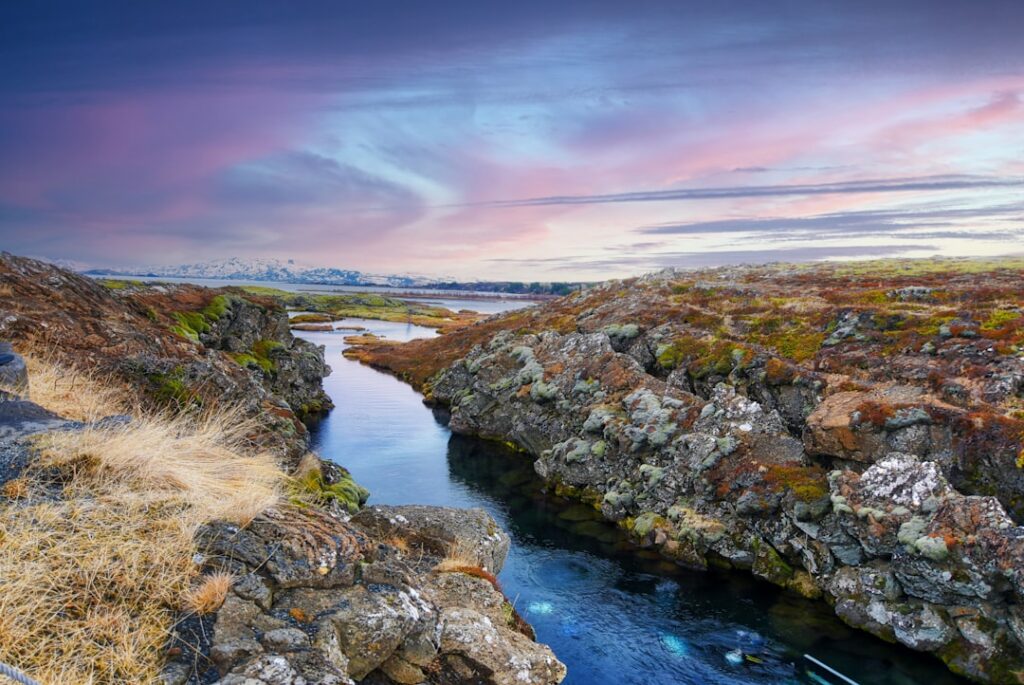
Visibility is the thing that earns Silfra its reputation. On a good day you can see 80–100 metres ahead. The water is so clear it plays tricks — the bottom looks closer than it is, and colours stay vivid at depth in a way that doesn’t happen in the ocean. The blue is a specific, impossible blue that I haven’t seen anywhere else in Iceland.
The Four Sections of the Snorkel Route
The route runs roughly north to south and takes about 30–45 minutes in the water. Most guides break it into four sections: Silfra Hall, Silfra Cathedral, Silfra Lagoon, and Silfra Lake. Cathedral is the deepest and widest stretch — the walls drop away on both sides and the light comes in from above. Lagoon is shallower and you can reach down and touch both the North American and Eurasian sides simultaneously, which everyone does once for the photo.
You drift on the current, so it’s not physically demanding. Snorkeling here is less about technique and more about staying calm and keeping your face in the water. That said, first-time snorkelers sometimes struggle with the mask seal in cold water. Practice clearing your mask before you get in.
What Thingvellir Diving and Snorkeling Tours Actually Cost
Expect to pay around 19,000–22,000 ISK (roughly $135–160 USD / €125–145 EUR) for a guided snorkel tour. Diving costs more — typically 30,000–35,000 ISK ($215–250 USD) — because you need a PADI Open Water certification and the equipment is heavier. Most tours run twice daily, and slots fill up weeks in advance in summer.
DIVE.IS and Arctic Adventures are the two operators I see most often at the site. Both are licensed, use the same access point, and run similar routes. The main difference is group size — check before booking, because smaller groups mean the guide can slow down and let you actually look at things rather than herding you through.
A few practical things worth knowing:
- You wear your own clothes under the drysuit, so pack something warm but not bulky — a fleece mid-layer works well.
- Cameras and GoPros are allowed. The visibility makes underwater footage genuinely worth the effort.
- There’s a small changing area at the site but it’s basic. Most people change at the carpark.
- If you’re coming from Reykjavík the same day, allow 90 minutes to get there — Route 36 is mostly good road, but tourist traffic near Þingvellir can slow things down in peak season.
Best Time of Year for Silfra Snorkeling
The water temperature doesn’t change much, so seasonality here is mostly about daylight, crowds, and road conditions.
Summer — June through August — means long days and easy driving. It’s also when Þingvellir is busiest. The snorkel site itself is ticketed and guided, so it never gets chaotic in the water, but the carpark and visitor trails are packed. If you can book a morning slot on a weekday, the light is better and the park is quieter.
I’ve done this in October, and it was one of the better experiences. The lava fields around Þingvellir had turned orange and rust-red, the park was almost empty, and the late-afternoon light through the water had a different quality — more amber, deeper somehow. Winter is doable but requires checking road conditions on road.is before you drive Route 36.
Should You Snorkel or Dive Silfra?
Honestly, for most people, snorkeling is the better choice. You’re on the surface, the visibility is nearly as good as from depth, and you don’t need certification or prior experience. Diving takes you deeper into Silfra Cathedral and gets you closer to the walls, but the open-water certification requirement and extra cost put a lot of people off — reasonably so.
If you’re already a certified diver who travels for dive experiences, do the dive. The Cathedral section at depth is worth it. But if you’re here primarily as a traveller who wants to see the fissure, snorkeling gets you 90% of the experience at about 60% of the price.
What to Do at Þingvellir Beyond the Water
Þingvellir is a UNESCO World Heritage Site, and not just for geology. This is where the Alþingi — the world’s oldest surviving parliament — was established in 930 AD. The Lögberg, or Law Rock, is a short walk from the Hakið visitor centre. It’s easy to rush past it on the way to the water, and most people do. Don’t.
The Öxará river runs through the rift valley and the views from the ridge above are genuinely good — you can see how the land has pulled apart over millions of years, the escarpments stepping down in layers. Give yourself at least an extra hour after your snorkel to walk the Almannagjá canyon trail. It takes you along the edge of the North American plate and costs nothing beyond the national park entry fee, which was 750 ISK (about $5.50 USD) per person when I last checked, payable at the Hakið centre.
Combining Silfra with the Golden Circle
Þingvellir is already part of the Golden Circle route — the classic day loop from Reykjavík that also includes Geysir and Gullfoss. Silfra snorkeling adds two to three hours to the day, so if you’re planning that loop, start early. Leave Reykjavík by 7:30am, do Silfra first while you have energy, then drive east through the park to Laugarvatn, Geysir, and Gullfoss. You’ll get back to the capital by early evening without rushing.
Most Golden Circle tour buses don’t stop at Silfra — it’s a separate booking — so renting a car or hiring a driver gives you the flexibility to do both in one day. The distances are manageable: Reykjavík to Þingvellir is about 50 km, Þingvellir to Geysir is another 60 km, and Gullfoss is 10 km beyond that.
Honest Caveats Before You Book
The cold surprises people even when they’ve read about it. The drysuit keeps your body warm, but your face will ache for the first few minutes. Most people adapt. Some don’t, and they spend the swim tensing up rather than looking around. If you’re sensitive to cold-water face exposure, ask the operator whether a thicker neoprene hood is available.
The algae — bright green Drepanocladus moss — growing on the rocks is genuinely beautiful, and guides will point it out. Don’t touch it. Oils from your gloves can damage it, and it grows back slowly.
Silfra snorkeling is one of the few experiences in Iceland that lives up to its reputation — but it’s a specific kind of experience. You’re floating quietly in cold, clear water looking at rock walls and light. It’s meditative and strange and oddly moving. It’s not thrilling in a heart-rate sense. Know which one you’re looking for before you book, and you won’t be disappointed.
If you’re ready to go, check availability at least two to three weeks ahead in summer. Tours sell out fast, and the date you want will almost certainly have fewer slots than you expect.