













The Reykjadalur hot spring hike is one of those rare things in Iceland — a geothermal experience that doesn’t cost you a thousand krónur in admission fees or force you to queue behind a tour bus. The reward at the end is a warm river you can actually bathe in, winding through a valley that steams in every direction. I’ve walked this trail in every season, in rain and in sunshine, and it earns its reputation every single time.
Where Reykjadalur Is and How to Get There
Reykjadalur — which translates roughly as “steam valley” — sits just outside Hveragerði, a small town about 45 km east of Reykjavík along the Suðurlandsvegur (Route 1). From the capital, the drive takes around 40 minutes under normal conditions. That proximity is a big part of the appeal. This isn’t a full-day expedition into the highlands; it’s genuinely doable as a half-day trip.
The trailhead is at the northern edge of Hveragerði. Drive through town and follow the signs toward Reykjadalur — you’ll pass some classic Icelandic suburban streets before the road turns to gravel. The parking area sits at the base of the valley. Arrive early if you’re going on a weekend, particularly in summer; the car park fills up fast, and parking on the roadside verge is both frustrating and increasingly frowned upon by local residents.
If you’re not driving, the Strætó bus service (route 51) runs between Reykjavík’s BSÍ terminal and Hveragerði regularly. From the bus stop in town, it’s about a 20-minute walk to the trailhead. Check current timetables at straeto.is before you go — schedules change seasonally and it’s worth confirming your return time, especially in winter when daylight is limited.
The Reykjadalur Hike Itself: What to Expect on the Trail
The trail is approximately 6.5 km return — about 3.2 km each way — with an elevation gain of around 250 metres. Most reasonably fit people will reach the hot river in 45 minutes to an hour. The path is well-marked and maintained, but it’s not a casual stroll either. The first stretch climbs steadily, and after wet weather the ground turns soft and muddy in places.
Proper footwear matters here. I’ve watched people attempt this in trainers and regret it by the first kilometre. Waterproof hiking boots are the right call. Trekking poles aren’t essential but help on the descent, particularly when the path is slippery.
What You’ll See Along the Way
The geothermal activity starts almost immediately. Within the first few hundred metres, you’ll notice vents hissing steam from the hillside and patches of ground that smell unmistakably of sulphur. The landscape shifts as you gain elevation — from scrubby lava fields at the base to open moorland higher up, with views back toward Hveragerði and the fjord beyond.
Around the halfway point, there’s a small waterfall that’s easy to miss if you’re focused on the path. Worth pausing for. The colours in the soil — ochre, rust, pale yellow from mineral deposits — are remarkable up close in a way that photographs don’t quite capture.
You’ll also pass a geo-monitoring station on the hillside, which is a reminder that this valley sits directly on a fault line. The 2008 earthquake that hit Hveragerði measured 6.3 and caused significant damage to the town; it also reshaped some of the geothermal vents in the valley. Iceland’s Met Office, Veðurstofa Íslands, monitors seismic and geothermal activity here continuously.
The Hot River at the Top
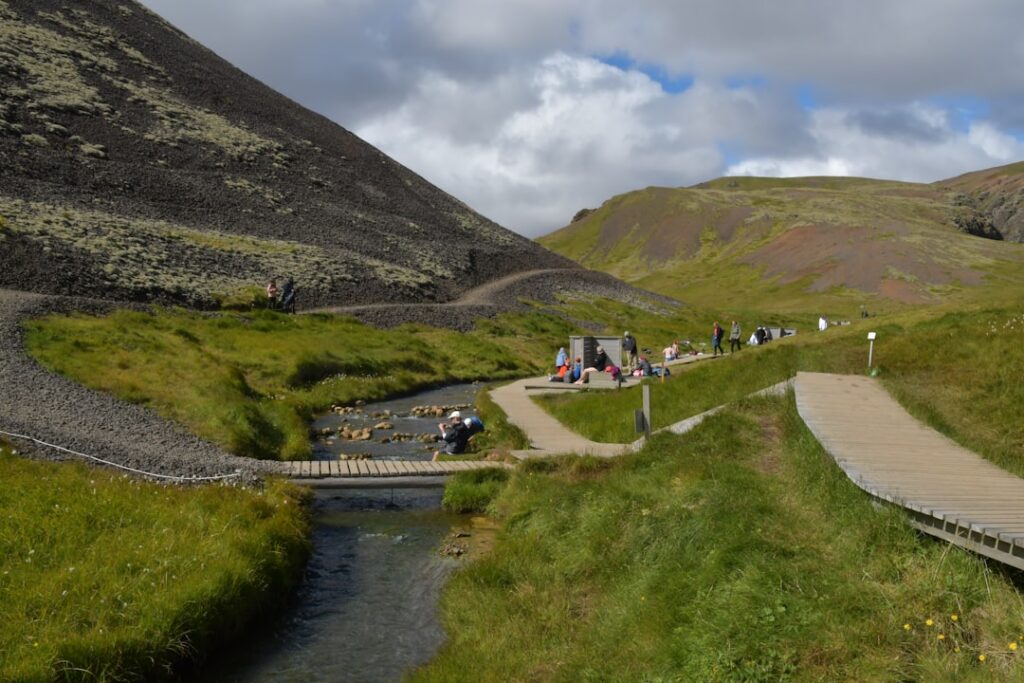
When the trail levels out and the valley opens up, you’ll see the river. It doesn’t look dramatic at first — it’s a wide, shallow stream cutting through green grass and steaming mud. But step in and the temperature tells a different story.
The river is fed by a mix of hot spring water and cold snowmelt, which means the temperature varies by section and by season. In late summer, parts of the river can be uncomfortably hot — stay downstream from the main hot inflow if you want something closer to bath temperature. In early spring, when snowmelt is high, the water further downstream can be cooler than you’d hope. The sweet spot tends to be in the middle stretch, where the two sources have had a chance to mix properly. Most people settle in at about chest-deep and just stay there.
There are simple changing areas — wooden structures that offer minimal but functional privacy. They’re not always immaculate, but they do the job. Bring a towel you don’t mind getting muddy at the edges, a dry bag for your phone, and a change of clothes for the walk back.
Best Time of Year for the Reykjadalur Hot Spring Hike
The trail is open year-round and each season has a genuinely different character. Summer — June through August — is the most popular window, and for good reason: the path is at its most accessible, the daylight is effectively continuous, and the wildflowers in the valley are worth seeing. But you’ll share the trail with more people than feels ideal.
My personal preference is shoulder season. September sees the crowds thin out while the trail is still reliably passable, the light turns golden in the late afternoon, and the hills are starting to colour. October is possible but wetter and requires more care on the trail.
Winter hiking here is genuinely rewarding but demands respect. The path can ice over, and shorter daylight windows mean you need to manage your timing carefully. Still, walking up a snow-covered valley with steam rising from the vents, then lowering yourself into a warm river while the cold air sits on your face — that’s a genuinely memorable experience. Just check conditions before you go, and don’t push the return journey into darkness if you’re not equipped for it.
Weather and Conditions — Don’t Skip This Part
Icelandic weather can shift fast. I’ve started this hike in sunshine and finished the return leg in horizontal sleet. That’s not an exaggeration — it’s just the South Iceland coast in autumn. Check the forecast at vedur.is before setting out, and dress in layers regardless of what the morning looks like when you leave Reykjavík.
A waterproof outer layer is non-negotiable. Everything else is adjustable. The valley is exposed on the upper section, and wind can make a merely cold day feel genuinely unpleasant if you’re underprepared.
Practical Details: Cost, Facilities, and What to Bring
The hike itself is free. There are no entry fees, no wristbands, no ticketing — which makes Reykjadalur an outlier among Iceland’s geothermal attractions. The car park at the trailhead charges a parking fee; as of 2024, this was around 700–900 ISK (roughly €5–6 / $5–6) for a day. Pay via the machine at the site or the app link posted on the signage.
There are toilets at the trailhead. No facilities at the top — no café, no shop, no first aid station. Whatever you need, bring it with you.
What to Pack for the Hike
- Waterproof hiking boots with ankle support
- Waterproof jacket and an extra mid-layer
- Swimwear (essential — this is the whole point)
- A towel and dry bag for your phone and valuables
- Snacks and enough water for the return trip — the hot spring activity can leave people feeling dehydrated
- Trekking poles if you have them, especially for winter or wet conditions
Don’t leave valuables in your car. Trailhead car parks, like many in Iceland, have had issues with break-ins during peak season. Take your passport and anything irreplaceable with you on the trail.
Hveragerði Town: Worth Stopping Before or After
Hveragerði itself is underrated as a stop. It’s a real Icelandic town — not a tourist hub — and it’s worth half an hour before or after the hike. The geothermal energy that powers the valley also heats the town’s famous greenhouses, where tomatoes, cucumbers, and flowers are grown year-round. You can buy direct from some of them.
For food, the Eden restaurant on Breiðamörk has solid soup and a reliable coffee, and it’s right next to one of the greenhouse operations, so the ambiance is genuinely unusual — you’re essentially eating in a tropical garden while Icelandic weather does its thing outside the glass. Alternatively, the NETTÓ supermarket in town is good for picking up supplies before the hike if you’re coming from Reykjavík and forgot to pack lunch.
A Few Things People Get Wrong About Reykjadalur
The first is underestimating the physical effort. Because the trail is short, people sometimes treat it like a stroll and show up in jeans and canvas shoes. The climb is real. The ground can be genuinely treacherous after rain. Take it seriously and you’ll enjoy it; take it lightly and you might not.
The second is timing. People arrive at midday in peak summer and are surprised to find the river crowded with other bathers. Go early — before 9am if you can manage it — and the valley is almost peaceful. By 11am in July, you’re sharing the hot river with dozens of other people.
The third is expectations about the hot spring itself. This isn’t a Blue Lagoon situation — there are no infinity pools, no silica mud masks, no swim-up bars. It’s a river in a field. The surrounding landscape is raw and the facilities are minimal. That’s exactly what makes it worth doing.
If you’re planning a broader South Iceland itinerary, Reykjadalur fits well as a morning stop before continuing east toward Seljalandsfoss or Skógafoss — both are within an easy hour’s drive and the combination makes for a full day without feeling rushed.