












Weird, Windy, and Wonderful: A Spontaneous Adventure in the Faroe Islands
It’s nearly impossible to refrain from comparisons when visiting a new country, and during my unplanned trip to the Faroe Islands one October weekend, Iceland inevitably played the role of my reference point.
So, how do the Faroes stack up against Iceland? Let me lay it out:
Landscape: Surprisingly greener than Iceland.
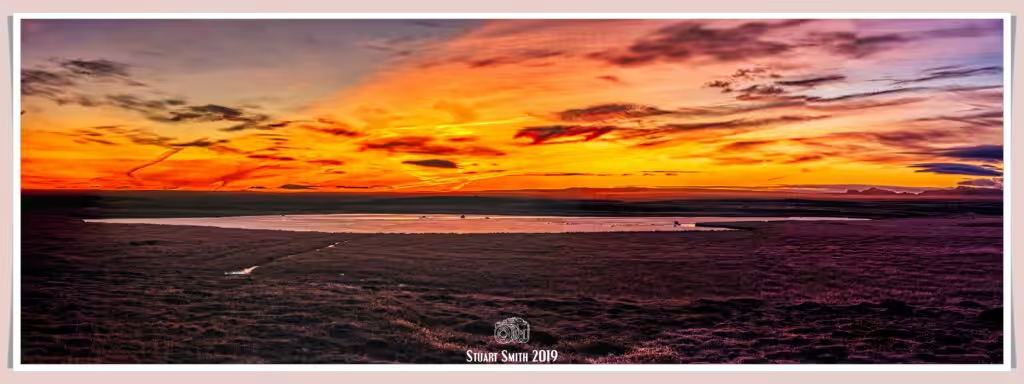
Views: At times, even more striking, reminiscent of Iceland’s East Fjords.
Weather: Notably milder; so much so that I found myself enjoying a beer outdoors at midnight in October.
Infrastructure: Impressive tunnel roundabouts linking various islands, free public buses in Tórshavn, well-maintained roads amid the mountains, and accessible helicopter routes.
Food: Limited options for plant-based dishes, yet restaurants are generally accommodating.
Pools: No geothermal hot springs (Iceland takes the win here).
“It felt as though we had just departed Tórshavn, yet also as if we had been journeying through these hills and clouds for an eternity.”
Bonus: A surprisingly better selection of goods than their Icelandic counterparts. What’s the story behind the Bónus in the Faroes? How does one Bónus in Klaksvík boast the latest Lego sets while my local shop in Reykjavík struggles to keep fresh produce in stock?
There’s so much more to the Faroe Islands than my initial, somewhat naive impressions suggested. Fortunately, the country’s small size made it feasible—despite mainly attending a music festival—to set foot on several islands in just under three days. Here’s how it unfolded..
A Compact Capital
Tórshavn, boasting a population of around 14,000, is among the smallest capitals globally. Everything appears remarkably close-knit: the venue for the Skrapt festival sat conveniently across the street from Hotel Tórshavn, where I and the Grapevine’s photographer were staying. Coffee was swiftly sourced from Brell Café and Roastery, just a quick three-minute walk away, and freshly baked local treats awaited at Breyðvirkið, a bakery only nine minutes from our hotel. The iconic bar and music venue Sirkus, along with the charming harbor and old town, lay a mere five-minute stroll from our base.
During our stay, the weather leaned towards gloom with sporadic rain. However, one morning, as the clouds parted and sunlight pierced through, I wandered through the quaint old neighborhood of Reyn. The wooden houses seemed intentionally scaled down, as if to match the charming smallness of this capital, their grass roofs rippling in the wind like wild manes. These 14th-century homes remain lived in, with their black-tarred exteriors contrasting against brightly painted letterboxes and potted flowers. I imagine summer brings a throng of tourists, prompting many locals to post signs requesting privacy.
At the end of Reyn lies Tinganes, one of the oldest functioning parliaments worldwide—perhaps even older than Iceland’s own Alþingi.
But what would a visit to the Faroe Islands be without venturing into its natural wonders? My lack of time to research made planning challenging, but a YouTube video I had watched a few years back sprang to mind. One place from that video lingered in my thoughts—the village of Gjógv, dubbed “the introvert’s paradise.” Thankfully, it was only an hour’s drive from the capital. Off we went!
Winding Roads to Gjógv
The journey to Gjógv was remarkable in itself. As we traversed narrow, winding roads with visibility dwindling beneath wisps of fog, we found ourselves contemplating the precariousness of driving close to unfenced edges and avoiding the multitude of sheep roaming freely. The road, though single-lane, welcomed the occasional local speeding toward us, showcasing their familiarity with the winding route. It felt as though we had transitioned from Tórshavn to a different world.
After navigating a final turn, we gazed down upon Gjógv. This scene seemed pulled from a work of art; it hardly seemed possible that people inhabit such breathtaking beauty. Nestled in a gorge, its vibrant houses stare towards the sea and surrounding mountains.
“How does a Bónus in Klaksvík stock the latest Lego sets while my local Bónus in Reykjavík can barely manage fresh vegetables?”
Suddenly, a leisurely goose made its way across our path, unhurried and matching the relaxed pace of life in Gjógv.
Descending into the village provided a completely new perspective. Moments ago, we had been looking down on the colorful homes; now we found ourselves weaving through even shorter streets among them.
“What is she doing?” my companion asked, pointing at a woman in her yard, clad only in a t-shirt and wielding a hose. She was cleaning a sheep’s head.
In those moments, the stark reality of Faroese life became evident. With the nearest grocery store miles away, the small community of just 23 inhabitants (according to the latest statistics) relies heavily on fishing and farming. The harbor lies down a steep cliff, requiring boats to be hoisted up on ramps, leaving Gjógv isolated during harsh winters—residents often depend on a helipad for emergencies.
Many hiking trails start from Gjógv, but with the thick October mist and Google reviews advising, “if it’s foggy and you’re unfamiliar with the trail, avoid it,” I decided to keep any hiking adventures for my summertime return.
A Cozy Museum Experience
The downside of visiting during the off-season is the limited daylight hours. I aimed to make the most of the brief light available, embarking on road trips without a specific destination before heading indoors to prepare for the evening festival. The Listasavn Føroya, or The National Gallery of the Faroe Islands, provided a perfect refuge.
“The wooden houses appeared smaller than average, as if they were intentionally shrunk to fit the scale of this miniature capital.”
The museum showcases an array of works—paintings, sculptures, textiles—by Faroese artists from the 1830s to present day. I appreciated the thematic divisions highlighting “rocks and stones,” “animals,” “landscape,” and “the ocean,” the latter an enchanting blend of blues and deep greens.
In particular, I was drawn to Jóannis Kristiansen’s ethereal landscapes of Leirvík, a harbor town on the east coast of the second-largest island, Eysturoy. His impressionistic depictions perfectly capture the blue hour, and though the weather outside remained snow-free, his work transported me straight to a Faroese winter.
One of the museum’s standout pieces is “Whale War”—a life-size sculpture of a pilot whale constructed from 32,000 toy soldiers. Edward Fuglø’s mixed media installation allows viewers to listen to voices from disparate perspectives—renowned environmentalists as well as Faroese locals, each sharing their views on the island’s long-standing whale hunting traditions.
Additionally, the museum houses the largest collection of Sámal Joensen-Mikines paintings. One particular piece, “Home from Funeral,” depicts a group of eight men returning from a funeral, rendered in dark tones but brimming with emotional depth, illustrating both the sorrow and strength inherent in Faroese life.
To Be Continued
Sprinting through the Faroe Islands for a mere 72 hours while also attending a music festival made it challenging to form a thorough impression. Nevertheless, this brief adventure offered a tantalizing introduction to the Faroes—the breathtaking cliffside villages, the vivid greenery unlike any I’ve seen before, and the remarkable positivity of its people.
The Faroes taught me that exploration can thrive without a rigid plan; oftentimes, simply driving until the road ends offers profound experiences. With barely any tourists around, the entire country indeed feels like an introvert’s paradise.
This trip was made possible by Scratch Festival in partnership with Visit Faroe Islands. For expert tips and inspiration on exploring the Faroe Islands, visit visitfaroeislands.com.