












Iceland’s food culture is stranger, richer, and more rewarding than most visitors expect. This guide covers everything worth knowing — from centuries-old preserved meats to the best hot dog stand in Reykjavik.
Icelandic food tells you a lot about the people who made it. Long winters, rocky soil, and an unforgiving coastline pushed generations of Icelanders toward resourcefulness — curing, smoking, fermenting, and drying whatever they had. Nothing was wasted. That spirit still runs through the cuisine today.
Guide to Iceland is your reliable travel companion, assisting millions of visitors each year. Our content is crafted and vetted by local experts who intimately understand the landscape. Trust us for current, accurate travel advice.
That said, modern Iceland has a genuinely exciting food scene. Chefs in Reykjavik are doing interesting things with local ingredients — taking dishes that have been on Icelandic tables for centuries and finding new ways to present them without losing what makes them worth eating in the first place.
Fish, dairy, and lamb anchor most of the traditional dishes here. Some of what you’ll encounter sounds alarming before you try it. A few things remain alarming after. But guided food tours have grown popular for exactly this reason — they give you a chance to work through Iceland’s flavours with someone who can explain the context.
From the iconic Icelandic hot dog (pylsa) to smoked lamb and fermented delicacies, there’s something to satisfy every palate. To uncover the best dining spots, don’t miss out on exclusive discounts and offers offered through Guide to Iceland’s VIP club.
Read on for a full breakdown of Iceland’s culinary traditions and how to get the most out of eating here.
Key Takeaways
-
Traditional food in Iceland is distinctive, shaped by centuries of making the most of difficult conditions.
-
Contemporary chefs skillfully integrate modern ingredients like hothouse vegetables and fresh herbs into time-honored recipes, elevating the dining experience.
-
Iceland is particularly renowned for its preserved delicacies, including salt cod, svid (sheep head), and hakarl (fermented shark).
Best Places to Experience Icelandic Cuisine
Food is one of the best ways into a culture, and Iceland has no shortage of restaurants willing to prove it. One worth knowing about is Hressingarskalinn — most people just call it Hresso — which has been sitting in downtown Reykjavik since 1932.
Hresso offers an enticing selection of local favorites, such as:
- Meat soup
- Fermented shark
- Sheep head
- Breaded lamb chops
The two- or three-course menu is reasonably priced, and the sharing platters — generous with cod, bacalao, or pan-fried salmon — make it easy to try several things at once.
It sits on Austurstraeti Street, within easy walking distance of most central attractions. The atmosphere is relaxed and unhurried, the menu balances the traditional with the newer, and it works well as a first stop for anyone getting to grips with Icelandic food.
It fills up, though. Book ahead if you can.
Traditional Icelandic Fish and Seafood
Fish has been at the centre of Icelandic cooking since the first settlers arrived. The waters surrounding the island are cold, clean, and full — cod and haddock in particular have fed people here for centuries.
Fishing didn’t just fill plates; it built the economy. By the early 19th century, Iceland had moved from one of Europe’s poorest countries to one of its wealthiest largely on the back of the fishing industry.
Today, the average Icelander eats fish twice a week, and over half the population takes fish oil, or “lysi,” several times a week.
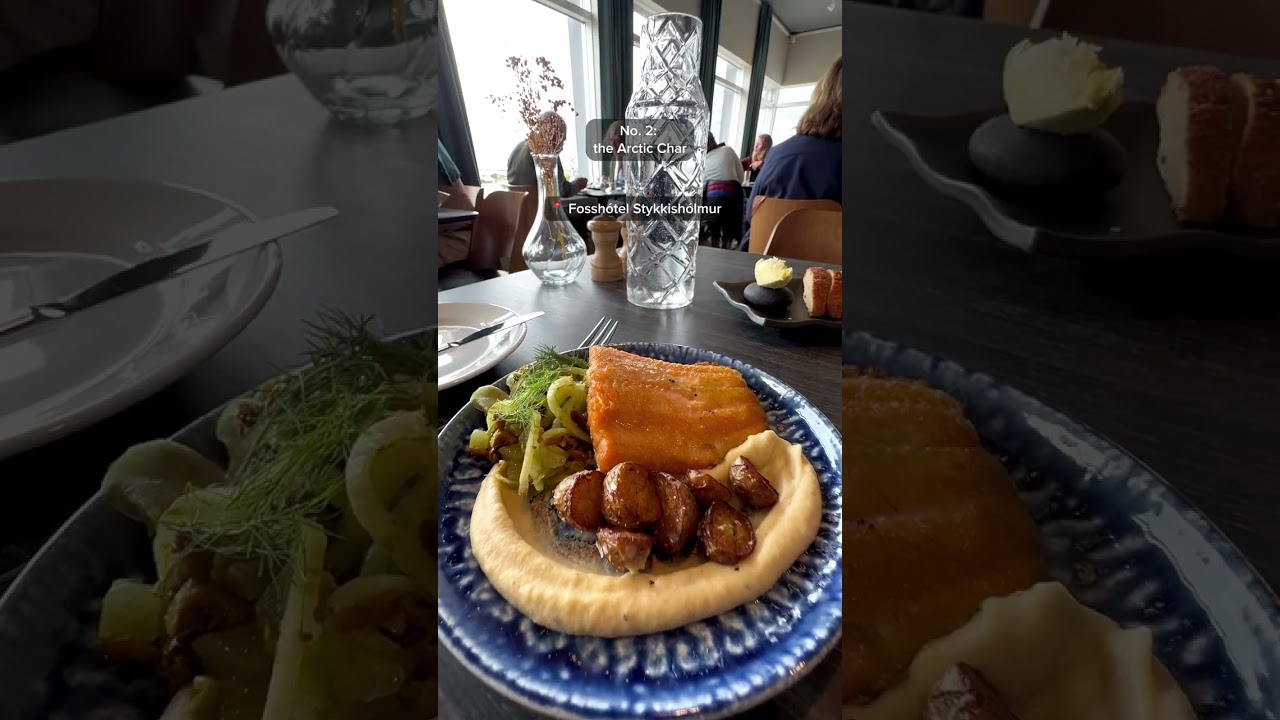
Seafood restaurants are easy to find across the country, with cod, haddock, salmon, and monkfish all well represented. Icelandic chefs are good at letting the fish speak for itself — fresh catches, simply prepared, with local herbs and spices doing the supporting work.
Beyond dining out, classic Icelandic fish dishes are also a must-try, including:
Hardfiskur – Stockfish
Hardfiskur is flatfish — typically haddock or cod — dried on wooden racks along the shoreline, using nothing but cold air and wind. You’ll find it in most grocery stores and at the Kolaportid Flea Market. Eat it straight from the bag, or spread it with butter. It’s less common than it once was, but it remains one of those foods that feels genuinely Icelandic.
Plokkfiskur – Fish Stew
White fish, potatoes, onions, milk, and seasoning — that’s Plokkfiskur at its core. Some versions now add chives, curry, or cheese, which works better than it sounds. Traditionally served with rye bread and butter, it was the kind of dish built from whatever was in the house. It still tastes like that in a good way.
Humar – Icelandic Lobster
Icelandic lobster is actually langoustine, caught mainly off the south coast. The meat is sweet and tender, and it turns up grilled, baked, and occasionally on pizza. Worth trying wherever you find it on a menu.
Icelandic Bread
Grain has never been easy to grow in Iceland, but bread has always been part of the diet. Bakeries and restaurants across the country offer a range of varieties worth trying:
Laufabraud – Leaf Bread
Laufabraud is a delicate flatbread cut with intricate geometric patterns — families traditionally make it together in the weeks before Christmas. The dough is fried quickly and served with butter at festive dinners. It’s sometimes called Icelandic Christmas bread, and the name fits.
Flatkaka – Rye Flatbread
Thin, round, and baked on hot stones or ember beds, Flatkaka has a history stretching back to around 1,000 AD. These days it’s usually served with butter and smoked lamb — a simple combination that holds up well as an afternoon snack.
Rugbraud – Icelandic Rye Bread
Dark, slightly sweet, and crustless, Rugbraud is traditionally baked in a pot left on embers overnight — sometimes buried near hot springs. Near the Golden Circle, a popular geothermal culinary tour lets you taste “hverabraud,” or hot-spring bread, pulled straight from the earth. It’s a memorable experience.
Icelandic Pastries and Sweets
Sugar reached Icelandic diets in the 19th century, and bakers made up for lost time. These are the contemporary favourites worth tracking down:
Kleina – Fried Dough
A twisted piece of deep-fried dough, crisp outside and soft in the middle. Kleina appears year-round at cafes — Saeta Svinid Gastropub does a good one — but it’s especially hard to avoid around the holidays. The twisted shape is functional: it cooks evenly all the way through.
Snudur – Icelandic Cinnamon Roll
Iceland’s take on the cinnamon roll, Snudur comes loaded with glaze — pink, chocolate, caramel, or whatever a bakery feels like experimenting with. The best ones are generously covered. Bakeries around Reykjavik each have their own version, and trying a few to compare is a perfectly reasonable way to spend a morning.
Ponnukokur – Icelandic Pancakes
Thin crepes, usually served rolled with sugar or folded around rhubarb jam and whipped cream. They’re a household staple, typically eaten with coffee or cold milk. Simple and good.
Vinarbraud – Icelandic Viennoiserie
Similar to a Danish pastry, Vinarbraud is layered with glaze, jam, almonds, and custard. Usually cut in thick slices. A reliable choice at any bakery counter.
Icelandic Lamb
Sheep have been central to Icelandic life since the late 9th century — providing wool through the winters and meat throughout the year. Brought over by the first settlers and raised in isolation ever since, Icelandic sheep are classified as “settlement breeds.”
Each spring the sheep are let out to roam free, grazing on pesticide-free grasses, angelica, berries, and seaweed. The result is meat that’s lean and distinctly flavoured. Smoked, broiled, slow-cooked — lamb shows up across the menu in Iceland, and it’s almost always worth ordering.
Hangikjot – Smoked Lamb
Hangikjot is the Christmas dish in Iceland — boiled and served hot or cold. The most common way to eat it is in a sandwich: thinly sliced smoked lamb on traditional flatkaka bread. It’s the kind of food that becomes a craving once you’ve had it a few times.
Islensk Kjotsupa – Icelandic Meat Soup
Tougher cuts of lamb, vegetables, and Icelandic herbs — slow-cooked into a thick, warming soup. It started out with very few vegetables, but as trade opened up, potatoes and carrots were added and stuck. On a cold day in Iceland, which is most days, it hits the spot.
Pylsa – Hot Dog
The Icelandic hot dog gets a lot of attention and earns most of it. Made from lamb, beef, and pork, it has a different texture and flavour from what you might be used to. Order “ein med ollu” — one with everything — and you’ll get crispy onions, raw onions, ketchup, sweet mustard, and remoulade. Baejarins Beztu Pylsur is the name you’ll hear most often, with stands around the country including the well-known one in Reykjavik. Don’t skip it.
Traditional Icelandic Food
Once a year, the midwinter festival Thorrablot brings traditional foods back to the table — dishes that connect modern Icelanders to a much older way of eating. Some of it is an acquired taste. Some of it is genuinely challenging. But eating through the menu at a Thorrablot, or at a restaurant that serves these dishes year-round, gives you a real sense of where this food culture comes from.
Skyr – Icelandic Yogurt
Technically a cheese, not a yogurt, skyr has been made in Iceland since the Vikings brought the culture over. It’s made from skim milk with live cultures added, and it comes in every flavour imaginable — vanilla, berry, plain. It all but disappeared from mainland Scandinavia but stayed on in Iceland, where it’s now a breakfast staple. Eat it with fruit, eat it plain, eat it at any time of day.
Skata – Fermented Skate
Skata is fermented ray, and the ammonia smell is not subtle. It’s traditionally served with potatoes, particularly around Christmas. It’s an acquired taste in the most literal sense — some Icelanders love it, others leave the house when it’s being cooked. Worth trying once.
Slatur – Icelandic Liver Pudding
Slatur is made from sheep’s blood or liver, mixed with oatmeal and spices. It comes in two forms: “blodmor,” which is close to black pudding, and “lifrarpylsa,” which sits somewhere near haggis. Served with boiled potatoes, it’s a direct window into how Icelandic households used to eat.
Hakarl – Fermented Shark
Hakarl is Greenland shark, fermented because the fresh meat is toxic. It gets buried for several weeks, then dried, then cut into small cubes. The smell is aggressive. The flavour is — memorable. The traditional move is to wash it down with Brennivin, Iceland’s national spirit, which helps. It’s a rite of passage for visitors with a certain appetite for the extreme end of Icelandic food.
Svid – Boiled Sheep Head
A sheep head, halved and boiled. It sounds more confronting than it is, and the practice comes from a straightforward place: when resources were scarce, nothing was thrown away. Svid is most commonly eaten at Thorrablot, though some restaurants serve it year-round.
Hrutspungar – Pickled Ram Testicles
Hrutspungar is pickled ram testicles, cured in whey. Again — nothing wasted. It’s another dish that represents early Icelandic pragmatism more than anything else. Some places serve it as a paté on rye bread, which makes it easier to approach.
Icelandic Sweets and Confectionery
Not everything in Icelandic food culture is a preservation challenge. There are sweets, and the Icelanders take them seriously.
Icelandic Ice Cream
Icelanders eat ice cream year-round, regardless of the weather. Ice cream parlors are everywhere, often right next to geothermal pools. Brynja Ice Cream, open since 1939, has a genuine reputation — people go out of their way for it. Try “bragdarefur,” a soft-serve creation covered in an assortment of candies. It’s as good as it looks.
Lakkris – Icelandic Licorice
Icelanders are serious about licorice. Grocery stores stock it in more varieties than most visitors expect — chocolate-covered, mixed with raisins or almonds, salted. There’s licorice ice cream. There’s licorice salt that turns up in savoury cooking. If you have any interest in the stuff, Iceland is the right place to be.
Icelandic Alcohol
The original settlers drank mead and ale. The range has expanded since. Vodka, schnapps, and locally produced spirits are all part of the picture now, and the bar scene in Reykjavik is livelier than you might expect given the latitude.
Brennivin
Brennivin has been produced since 1935. It’s a clear schnapps flavoured with caraway, sold under the nickname “Svarti Daudi” (Black Death) — a name that came from the deliberately stark black label designed to discourage people from drinking during Prohibition-era Iceland. It didn’t really work. The original recipe remains unchanged.
Icelandic Liquor
Local distilleries produce schnapps and liquors drawing on Iceland’s landscape — birch, rhubarb, crowberries. The bar scene in Reykjavik is a good place to work through them. If you want a more structured introduction, the Reykjavik beer & schnapps walking tour gives you some context alongside the drinks.
Icelandic Craft Beer
The craft beer scene has grown quickly and now offers a genuine range of quality local brews. Several breweries are worth visiting in person — most are happy to explain what they’re doing and why.
Non-Alcoholic Drinks in Iceland
Not everyone drinks, and Iceland has some decent non-alcoholic options beyond water — which, for what it’s worth, is excellent straight from the tap.
Collab
A sparkling drink combining caffeine and collagen, available in fruity flavours including lime and pineapple. It’s aimed at health-conscious consumers and positioned on its vitamin content. Easy to find in grocery stores and convenience shops.
Appelsin
Appelsin is Iceland’s answer to Fanta — an orange soda that’s been popular here for decades. Straightforward and good.
Malt og Appelsín
A mix of malt beer and Appelsin, this is the Icelandic Christmas drink. It’s sold premixed or people make it themselves, and it turns up at every festive gathering from late November onward. The flavour is hard to describe until you’ve tried it — sweet, malty, somehow very Icelandic.
What Do They Eat in Iceland?
Fish, lamb, and skyr form the backbone of the traditional diet, with roots going back to the earliest settlements. Early meals leaned heavily on meat because farming was so difficult. Today’s Icelanders eat broadly — locally grown vegetables have a more prominent place on the modern table, and chefs are finding ways to work them into traditional frameworks without losing what made those dishes last so long.
Modern-Day Icelandic Food
Refrigeration, global trade, and a generation of chefs who trained internationally have all changed what Icelandic food looks like. The foundations are the same, but the building on top of them is more ambitious than it used to be.
Reykjavik has fine dining, bistros, and food halls that pull in influences from around the world while staying grounded in local ingredients. Outside the capital, traditional restaurants still serve the dishes that have been on Icelandic tables for generations. Both are worth your time.
Frequently Asked Questions About Icelandic Food
A few questions that come up regularly from visitors planning their first food-focused trip to Iceland:
What is Iceland’s traditional food?
The heart of Icelandic cuisine revolves around fish, lamb, skyr, hearty soups, and various breads. Frequently found at local eateries and grocery stores, signature dishes include:
- Hardfiskur
- Rugbraud
- Hangikjot
- Laufabraud
- Svid
What is the national dish of Iceland?
Iceland’s national dish is hakarl — fermented shark. It’s bold, it’s strange, and if you’re the kind of traveller who eats first and asks questions later, it belongs on your list.
What is a typical breakfast in Iceland?
Oatmeal, skyr, and bread are the usual morning options — solid, filling, and easy to find across the country.
Can you find typical food in Iceland?
Yes. Reykjavik has plenty of restaurants serving burgers, pizza, and international food if traditional dishes aren’t what you’re after. You won’t go hungry.
Discovering the Best of Iceland’s Food Culture
Food is one of the more underrated reasons to look forward to an Iceland trip. The lamb is outstanding, the fish is as fresh as it gets, and even the more challenging dishes are worth trying at least once — they tell you something real about this place and the people who built a life here.
If you’re not ready to start with hakarl, a pylsa from Baejarins Beztu Pylsur or some rye bread at a local bakery is a perfectly good entry point. For a more guided introduction, Cafe Loki is reliable and unpretentious.
To get a proper sense of what Reykjavik’s food scene offers, the Reykjavik Food Walk Tour is worth booking.
Do you have more questions about Icelandic cuisine? Curious about the locals’ favorite spots? Join the conversation below for insights from our experts!