












Introduction
Iceland’s shoreline is one of the most dramatic in the North Atlantic. It is also one of the most unforgiving. Over the last hundred years, ships have been wrecked, torpedoed, driven ashore, or overturned in waters around Reykjanes, the Westfjords, and the Vestmannaeyjar archipelago. Some disasters became national traumas because entire crews and passenger lists vanished into winter seas. Others entered memory because, against all probability, someone survived. Taken together, these accidents reveal how closely Icelandic history is tied to the sea, and how often that same sea has exacted a deadly price.
The five incidents below were selected because they form a representative sequence across the past century. They span wartime sinkings, a peacetime storm loss, a famous grounding, and one of the most extraordinary survival stories in modern maritime history. They also offer a balance between heavy casualty events and one astonishing rescue, making them suitable for both an illustrated historical feature and a short documentary-style video.
Overview of the Selected Accidents
| Incident | Date | Location | Nature of accident | Men lost at sea |
| USCGC Alexander Hamilton | 29 January 1942 | Near Reykjavík / Faxaflói | Torpedoed in wartime | 26 |
| MS Þormóður | 17 February 1943 | Off Garðskagi, Reykjanes | Sank in a storm | 31 |
| SS Goðafoss | 10 November 1944 | Off Reykjanes, northwest of Garður | Torpedoed in wartime | 25 |
| FV Dhoon | 12 December 1947 | Látrabjarg, Westfjords | Ran aground beneath cliffs | 0 |
| Helga María disaster | 11 March 1984 | Off Heimaey, Vestmannaeyjar | Fishing boat capsized | 4 |
1. USCGC Alexander Hamilton: War Reaches Iceland
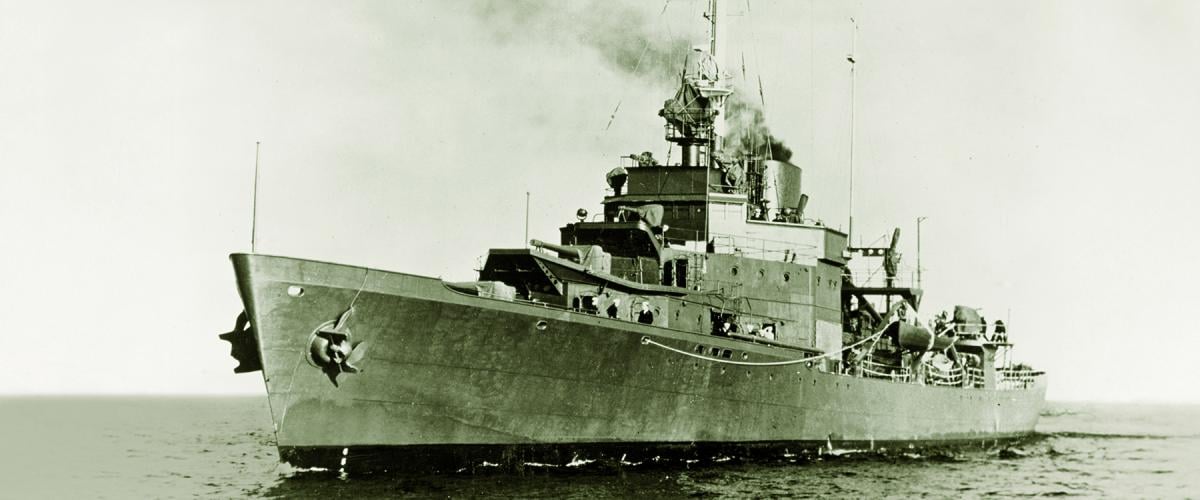
In January 1942, the war that had already transformed the North Atlantic struck directly in Icelandic waters. USCGC Alexander Hamilton, a Treasury-class cutter, was operating near Reykjavík when she was torpedoed by the German submarine U-132. The blast killed twenty men immediately. The damaged cutter could not be saved, and after failed salvage attempts she was sent to the bottom roughly 28 miles from the coast. The final death toll reached 26 men lost at sea.
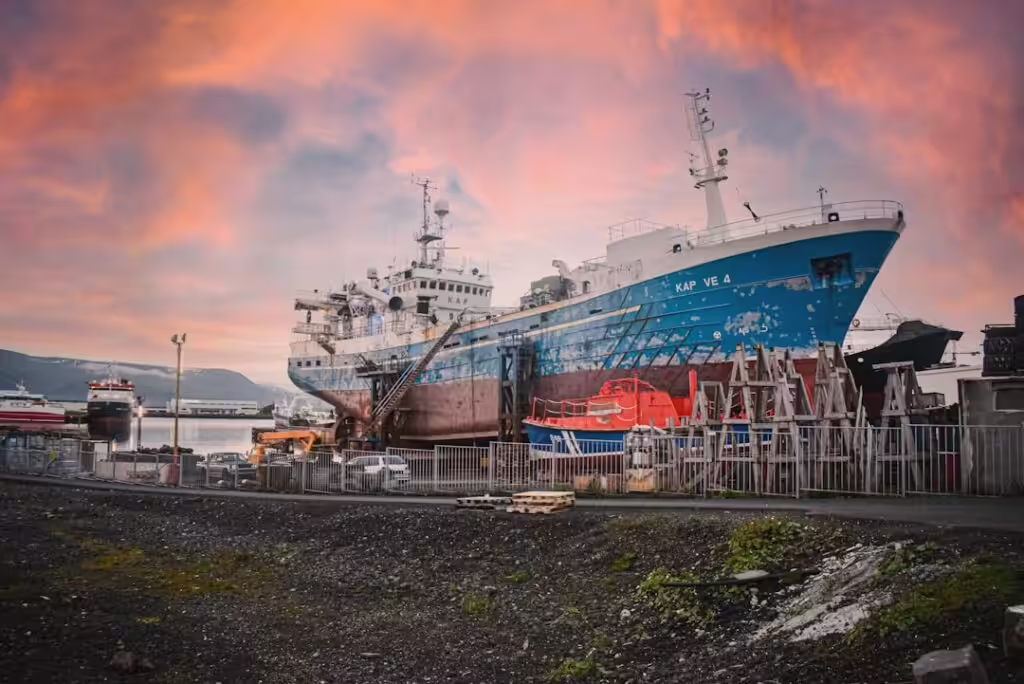
What makes the Alexander Hamilton disaster so haunting is not only its casualty count, but its setting. Iceland was a strategic wartime outpost, and ships in its surrounding waters moved through a zone where fog, darkness, and submarine attack overlapped. The cutter’s loss made clear that even the approaches to Reykjavík were no sanctuary. For American forces, it was a grave early wartime blow; for Icelandic waters, it was another reminder that the island’s shores were part of a much larger Atlantic battlefield.
The wreck would not simply disappear from memory. Decades later, it was located again in Faxaflói, and divers eventually treated it as both a historic site and a grave. That later rediscovery gives the story a second life: first as a wartime catastrophe, then as an underwater memorial to the men who never returned.
2. MS Þormóður: A National Shock off Garðskagi
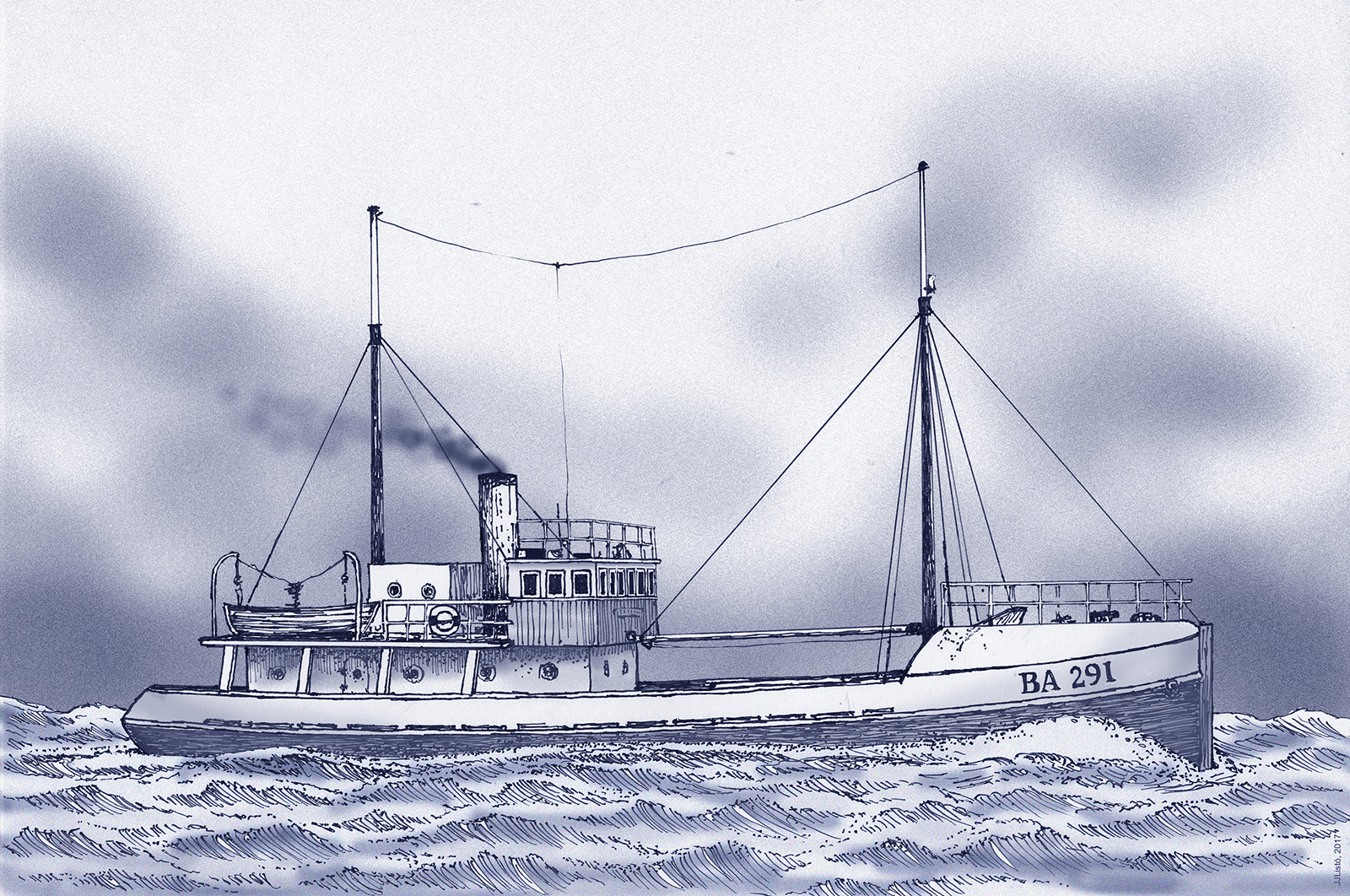
Only weeks after the loss of Alexander Hamilton, Iceland suffered one of its most painful domestic maritime tragedies. On 17 February 1943, MS Þormóður went down off Garðskagi on the Reykjanes peninsula during a storm while travelling from Patreksfjörður to Reykjavík. She was serving as a passenger and cargo vessel at the time. There were 24 passengers and 7 crewmen on board, and all 31 were lost.
The story of Þormóður is stark because it offers no heroic last-minute reversal and no survivor’s testimony. The sea closed over the ship and left Iceland with absence rather than narrative. Only one body was recovered during rescue operations, while others later washed ashore over subsequent months. The lack of survivors deepened the trauma, because there was no eyewitness to shape the public memory of the sinking.
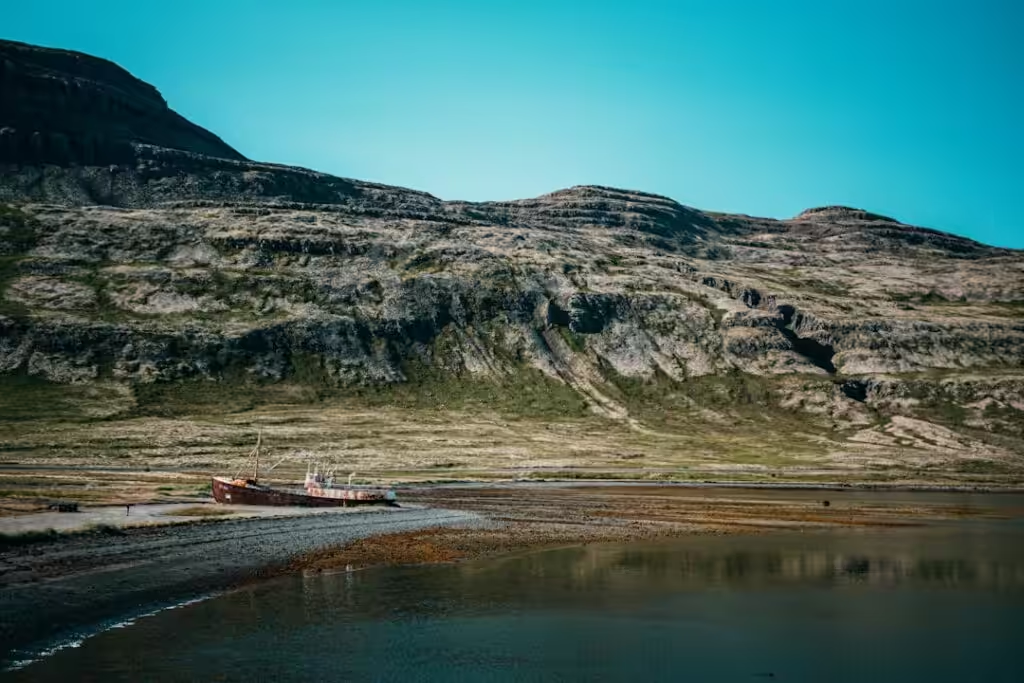
Yet the disaster had consequences beyond grief. Contemporary reporting and later retrospectives described a public uproar about maritime safety after the sinking. In that sense, Þormóður became more than a wreck. It became an argument, a warning, and a symbol of the price that inadequate safety at sea could demand from a small island nation dependent on coastal shipping.
3. SS Goðafoss: A Rescue Turned into Disaster
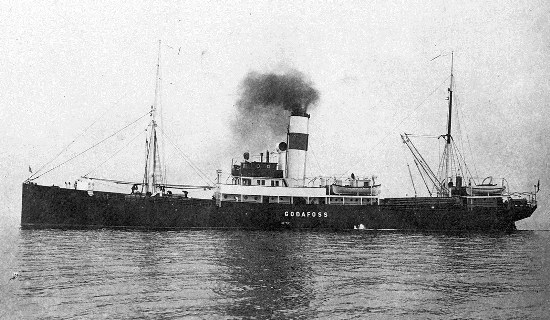
The sinking of SS Goðafoss on 10 November 1944 remains one of the most dramatic wartime maritime tragedies connected to Iceland. The Icelandic cargo ship was sailing from New York to Reykjavík when convoy disruption and bad weather placed vessels in danger near Reykjanes. Goðafoss stopped to help rescue survivors from the burning ship Shirvan. In that moment of rescue, she herself became a target. A torpedo from the German submarine U-300 struck the vessel, which sank in about seven minutes northwest of Garður. Twenty-five people were lost: 14 crewmen, one convoy signalman, and ten passengers.
The emotional force of the Goðafoss story lies in its reversal. The ship was not merely caught in passing; it had paused to save others. That act turns the sinking into a tragedy of interrupted mercy. The crew and passengers were not only victims of war, but victims of a moment when seamanship, duty, and compassion were answered by sudden destruction.
In Icelandic memory, Goðafoss has often carried the weight of a national maritime catastrophe. The ship linked Iceland to transatlantic wartime supply routes, and her loss showed how exposed even civilian and semi-civilian movement remained in the North Atlantic. The speed of the sinking also intensifies the story. There was hardly time to comprehend the attack before the ship was gone.
4. FV Dhoon: The Wreck with No Dead
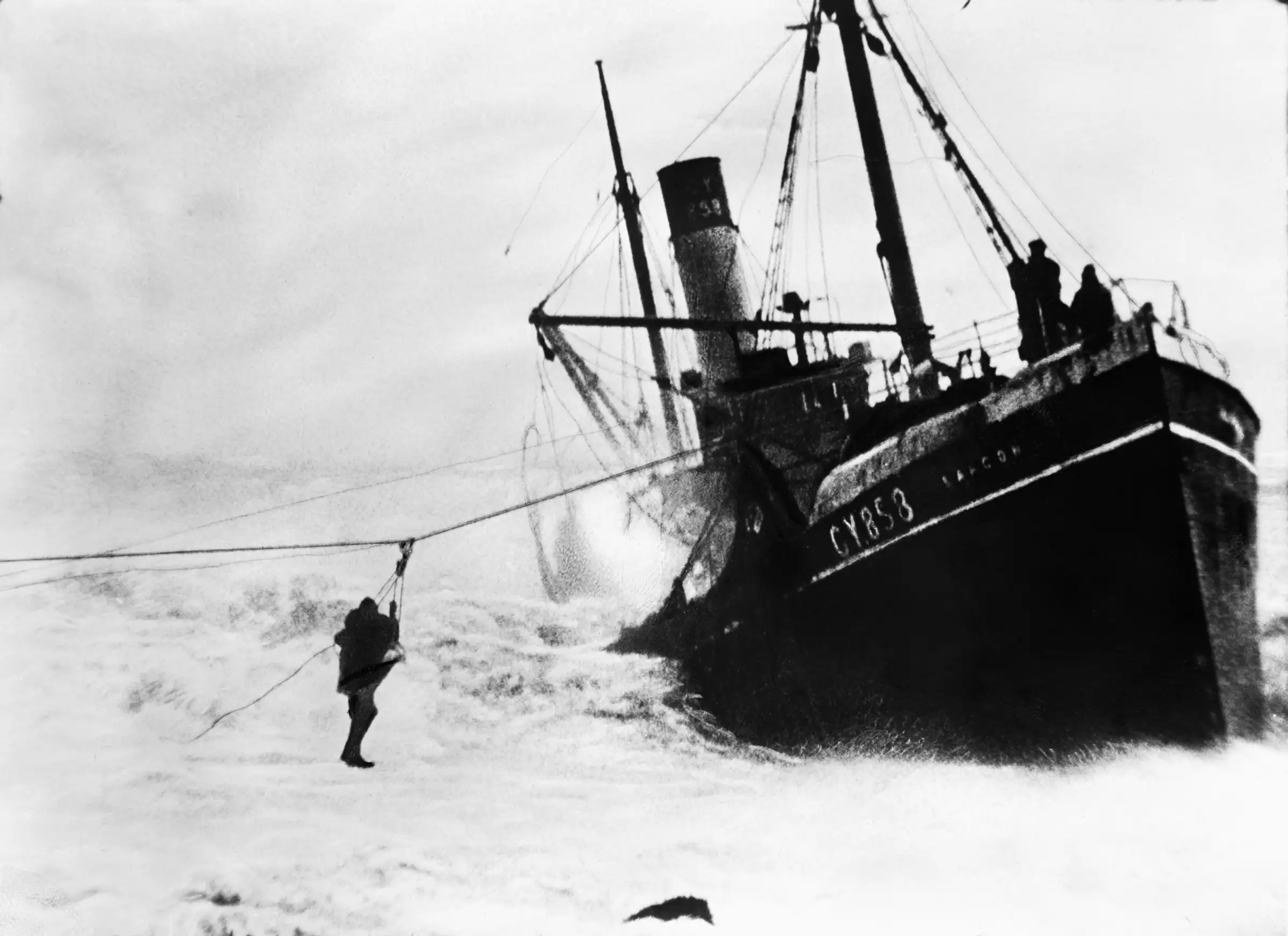
On 12 December 1947, the British fishing trawler Dhoon ran aground near Látrabjarg, beneath one of the most formidable cliff faces in Iceland. In most shipwreck histories, grounding against such a coast in winter would lead naturally to a death toll. Instead, Dhoon entered Icelandic memory because local rescuers achieved what seemed nearly impossible. Roads did not yet reach the area. Men had to travel in darkness, reach the cliff edge with limited equipment, descend by rope, and establish a rescue line to the stranded vessel. After a 75-hour ordeal, all twelve British sailors were brought safely ashore. The number of men lost at sea was therefore 0.
That zero matters. It gives Dhoon a different dramatic structure from the other accidents in this report. The danger was immense, the setting was terrifying, and the outcome could easily have become another entry in the long obituary of North Atlantic wrecks. Instead, the rescue itself became the story. Men clinging to cliff ropes, sailors hauled upward on a flotation buoy, and a winter operation stretched across multiple days transformed the wreck into one of Iceland’s greatest rescue legends.
For an illustrated history, Dhoon provides essential contrast. Without it, the history of Icelandic ship accidents would seem to move only from disaster to disaster. With it, one sees the other half of maritime life around Iceland: communal courage, improvisation, and the refusal to surrender sailors to the coast without a fight.
5. Helga María: The One-Man Survival Story
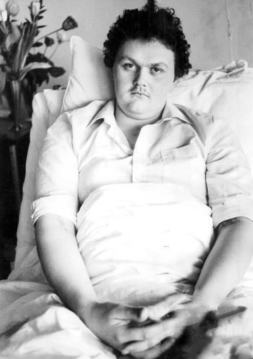
If Dhoon is Iceland’s great rescue story, the capsizing of Helga María near Heimaey in March 1984 is its great survival story. The fishing boat overturned at about 10 p.m. off the Vestmannaeyjar islands. Five fishermen were on board. Four died. One man, Guðlaugur Friðþórsson, survived.
The bare facts already sound impossible. After the boat capsized, Guðlaugur and some of the others managed to cling to the keel, but the freezing water soon overcame the rest. He then swam alone for five to six hours through water estimated at 5–6°C, covering roughly six kilometres to Heimaey. Reaching land did not end the ordeal: he still had to cross lava fields barefoot before finally reaching help. The final count was 4 men lost at sea, but the event entered history because a fifth man somehow refused to die.
This story occupies a special place in Icelandic cultural memory because it moves beyond maritime history into the limits of the human body. Doctors later examined Guðlaugur because his survival seemed medically extraordinary. Yet in historical storytelling terms, the power of the event lies not in physiology alone. It lies in the image of one exhausted fisherman climbing from the sea onto black volcanic rock while the Atlantic takes the rest of his crew. No other accident in this selection is so intimate, so physical, or so closely tied to the landscape of Iceland itself.
Conclusion
Over the past hundred years, ship accidents on Icelandic shores have taken many forms, but they are bound together by recurring elements: winter darkness, violent seas, exposure, isolation, and the thin line between rescue and loss. In the selected cases, the combined death toll reaches 86 men lost at sea. The deadliest among them in this report was MS Þormóður, with 31 lives lost, while the most miraculous outcome belonged to Dhoon, whose entire crew survived a wreck that should easily have become a mass fatality.
These stories also show that Iceland’s coast is not merely a backdrop. It is an active force in history. At Reykjanes, war and weather converged. At Garðskagi, a storm swallowed a passenger vessel. At Látrabjarg, cliffs that might have sealed twelve deaths instead became a stage for rescue. At Heimaey, black lava and icy surf framed one of the most extraordinary survival episodes in modern seafaring history. The shore, in every case, was part of the drama.
For that reason, the history of ship accidents on Icelandic shores should be read not only as a list of wrecks, but as a human archive of fear, endurance, sacrifice, and memory. The sea around Iceland has always been a road, a workplace, a battlefield, and a grave.
References
[1] Guðlaugur Friðþórsson – Wikipedia
[2] In Depth in Westfjords – Frommer’s