












A deadly Iceland apartment fire broke out on 1 July 2025, killing several people in a residential building in Reykjavík, Iceland’s capital. Emergency services responded rapidly, but the blaze caused multiple fatalities and left an unknown number of residents without homes. Investigations into the cause are ongoing, and authorities have not yet released a final casualty count.
Key takeaways
- A fatal apartment fire in Reykjavík killed several people on 1 July 2025.
- The exact death toll has not been officially confirmed; reports indicate multiple fatalities.
- The cause of the fire remains under active investigation by Icelandic authorities.
- Displaced residents are being assisted by emergency services and local authorities.
- International travellers in Reykjavík are not believed to be at direct risk, but should follow official updates.
Where did the apartment fire in Iceland break out?
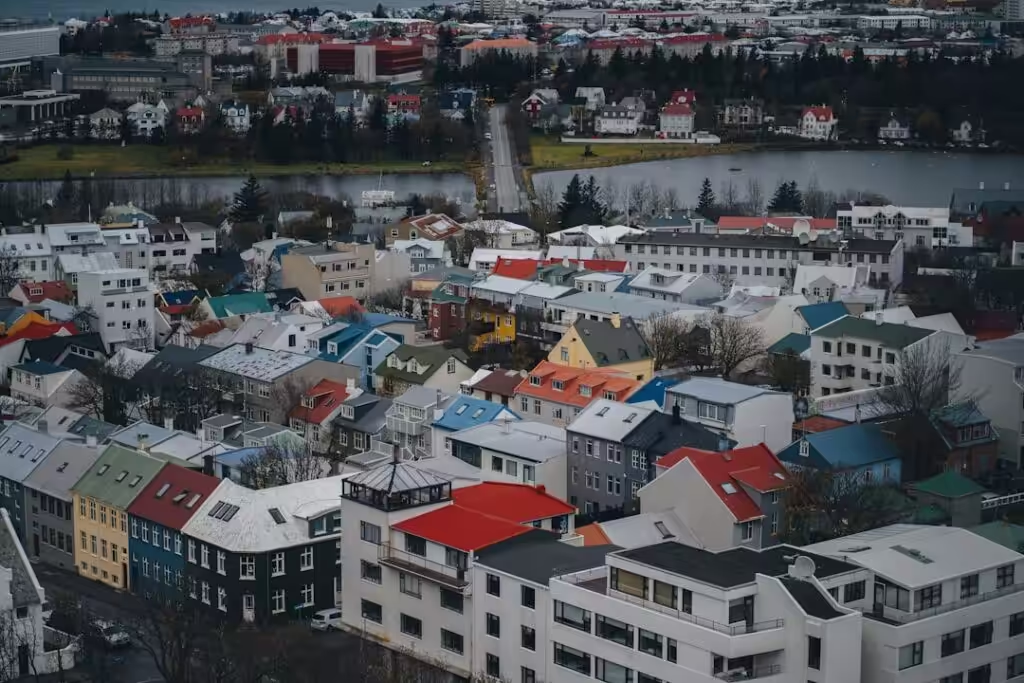
The fire broke out in a residential apartment building in Reykjavík, the capital and largest city of Iceland, home to roughly two-thirds of the country’s 380,000 residents. Reykjavík is a densely settled capital by Icelandic standards, and multi-storey residential blocks in the city’s inner and suburban districts house thousands of families. The precise street address and neighbourhood had not been officially confirmed at the time of publication, but Icelandic media reported the location as a residential area within the greater Reykjavík metropolitan zone, known locally as Höfuðborgarsvæðið.
Emergency vehicles, including units from Brunavarnir höfuðborgarsvæðisins — the Capital Area Fire and Rescue Service — were deployed to the scene. Reykjavík’s fire brigade, one of Iceland’s most well-resourced, is headquartered on Skúlagata and can reach most central districts within minutes.
How many people have died in the Iceland building fire?
Multiple fatalities have been reported in the Reykjavík building fire, though Icelandic authorities had not released a precise, confirmed death toll as this article was published. Reports from multiple Icelandic outlets, including RÚV — the national public broadcaster — indicated several people died in the blaze. Additional victims may have been hospitalised with serious injuries. Officials urged the public to avoid speculation and await formal confirmation from the police and emergency services.
Because this is a live and developing story, the figures reported in initial coverage may change. Readers should monitor official channels for the most current information.
What caused the fire in the Icelandic residential building?
The cause of the fire had not been officially determined at the time of reporting. Icelandic fire investigation teams — working alongside the national police, Lögreglan — typically conduct structural examinations once a blaze is fully extinguished and the scene is declared safe. That process can take hours to days after the initial incident.
Reports from early coverage did not point to a confirmed ignition source. Authorities had not, at this stage, ruled out any specific cause, whether electrical fault, gas, or other factors. Officials asked witnesses and building occupants to cooperate with investigators. No suggestion of deliberate intent had been made public as of publication.
Are residents displaced after the Iceland apartment fire?
Yes. A number of residents were displaced by the fire and could not return to their homes. Local authorities and emergency social services in Reykjavík activated support protocols for displaced occupants — standard procedure in Iceland for serious residential incidents. Displaced residents are typically offered temporary accommodation and practical support through Félagsþjónusta Reykjavíkurborgar, the city’s social services department.
The number of people displaced was not confirmed publicly in early reports. However, given that the fire involved a multi-unit residential building, the figure is likely significant. Neighbouring buildings were assessed by emergency services, and residents in immediately adjacent properties were asked to vacate as a precaution during active firefighting operations.
What is the emergency response situation?
Iceland’s emergency response to the fire was rapid and coordinated. The Capital Area Fire and Rescue Service dispatched multiple units, and Reykjavík Metropolitan Police — Lögregla höfuðborgarsvæðisins — secured a perimeter around the affected building. Ambulance crews from Slysavarnafélag Íslands and Landspítali, Iceland’s National University Hospital on Hringbraut, were placed on alert.
By the morning of 1 July, the active fire had been brought under control, according to early reports, though firefighters remained on scene to manage hotspots and prevent rekindling. A formal investigation into the cause and circumstances of the fire was opened immediately. Officials appealed for calm and accurate information sharing, cautioning the public against unverified social media reports circulating in the hours after the incident.
Iceland’s emergency number is 112 — for police, fire, and ambulance services nationwide. Visitors and residents should call this number in any emergency situation.
What travellers and international visitors should know
Reykjavík remains a functioning city, and this fire — devastating as it is — does not affect wider travel operations, Keflavík International Airport (KEF), or the Ring Road network. However, travellers staying near the affected neighbourhood should expect road diversions and a visible emergency service presence.
Those seeking accommodation in central Reykjavík should confirm bookings directly with their host or hotel. Travellers with questions about personal safety or insurance claims should contact their travel insurance provider and check the official Icelandic emergency services website at almannavarnir.is — the Directorate for Civil Protection and Emergency Management — for the latest official guidance.
Because this story is developing quickly, IcelandNow will update this article as confirmed information becomes available.
Frequently asked questions
Has the Reykjavík apartment fire been fully extinguished?
Reports from 1 July indicated the main blaze was brought under control by emergency services, but firefighters remained on scene to address residual hotspots. A full structural inspection and cooling process typically follows before the site is declared safe. Official confirmation of the fire being fully extinguished had not been issued at time of publication.
Is the Iceland apartment fire affecting flights or travel to Iceland?
No flight disruptions linked to the fire have been reported. Keflavík International Airport (KEF), located roughly 50 kilometres southwest of Reykjavík, was operating normally as of 1 July. Travellers should check their airline directly and monitor isavia.is for any airport updates.
How can I find out if someone I know was affected by the Reykjavík building fire?
If you are concerned about a specific person, contact the Reykjavík Metropolitan Police at their non-emergency line or reach Landspítali, Iceland’s National University Hospital, for information about hospitalised individuals. Iceland’s emergency number is 112. Authorities are expected to release formal victim information only after next-of-kin have been notified.
Is it safe to visit Reykjavík after this fire?
Yes. Reykjavík remains safe to visit. This was a localised residential fire, not a city-wide emergency. Normal civic activity continued across the capital on 1 July. Travellers should simply avoid the immediate area around the affected building out of respect for emergency operations and to avoid obstructing rescue workers.
Where can I follow live updates on the Iceland fire?
The most reliable Icelandic-language updates come from RÚV (ruv.is), Iceland’s national public broadcaster, and Vísir (visir.is). For English-language coverage, IcelandNow, Iceland Review, and The Reykjavík Grapevine are the leading sources. The Directorate for Civil Protection and Emergency Management publishes official alerts at almannavarnir.is.