












The Iceland Coast Guard — Landhelgisgæslan in Icelandic — is actively engaged in maritime patrol and enforcement operations in Icelandic waters in 2025, with renewed public attention following its high-profile tracking of the vessel Bandero and subsequent developments that suggest the agency is operating at elevated readiness. Officials have confirmed ongoing monitoring activity across Iceland’s 200-nautical-mile Exclusive Economic Zone (EEZ), one of the largest fishing and patrol zones in the North Atlantic.
Key takeaways
- The Iceland Coast Guard (Landhelgisgæslan) is conducting active patrol and enforcement operations in Icelandic waters right now.
- The Bandero tracking incident brought fresh international attention to Iceland’s maritime enforcement capabilities.
- Iceland’s Coast Guard has broad legal powers to board, inspect, and detain vessels inside the country’s 200-nautical-mile EEZ.
- Officials are currently monitoring multiple vessels; specific identities have not been publicly confirmed at time of publication.
- Iceland enforces its maritime zone through a combination of patrol vessels, aircraft surveillance, and cooperation with the Icelandic Coast Guard’s partner agencies.
What Is the Iceland Coast Guard Involved in Right Now?
The Landhelgisgæslan — Iceland’s coast guard, headquartered at Sæbraut in Reykjavík — is Iceland’s primary civilian maritime enforcement body. It operates around the clock, year-round, across some of the most demanding ocean conditions in the world. In 2025, the agency has been under renewed public and international scrutiny following a series of maritime incidents that have kept its patrol vessels at sea for extended periods.

The coast guard’s fleet currently includes Þór, Óðinn, and Ægir — three multi-role offshore patrol vessels — as well as surveillance aircraft operating out of Reykjavíkurflugvöllur (Reykjavík Airport) and Akureyrarflugvöllur (Akureyri Airport) in northern Iceland. These assets allow the agency to respond rapidly across Iceland’s vast maritime territory.
Reports indicate that coast guard activity has intensified in recent weeks, with increased patrol hours logged across the EEZ. Officials have not released full operational details, citing ongoing enforcement actions, but the agency has confirmed it is tracking vessels of interest in Icelandic waters.
Is There a New Development After the Bandero Tracking Story?
Yes. The Bandero pursuit — in which the Landhelgisgæslan tracked and ultimately boarded a foreign vessel suspected of fishing violations inside Icelandic waters — generated significant coverage both domestically and internationally. But that case now appears to be one chapter in a broader, ongoing story.
Multiple Icelandic-language sources have since reported increased signal traffic related to landhelgisgæslunnar (of the coast guard), suggesting follow-on enforcement operations are underway. The spike in search interest around the term reflects genuine public curiosity about whether further vessel interceptions have taken place or whether the original Bandero case has produced legal consequences.
At time of publication, no new vessel name or incident has been officially confirmed by the coast guard. However, the pattern of elevated patrol activity is consistent with a sustained enforcement campaign rather than a single isolated event. Icelandic state broadcaster RÚV continues to follow the story and is the most reliable source for breaking updates in Icelandic.
What Powers Does the Iceland Coast Guard Have in Icelandic Waters?
The Landhelgisgæslan operates under Icelandic law with extensive powers inside the country’s maritime zones. Those zones are defined as follows:
- Territorial sea: 12 nautical miles from the baseline — full Icelandic sovereignty applies.
- Contiguous zone: 24 nautical miles — Iceland may enforce customs, fiscal, immigration, and sanitary laws.
- Exclusive Economic Zone (EEZ): 200 nautical miles — Iceland has sovereign rights over all natural resources, including fish stocks.
Within these zones, coast guard officers are legally authorised to stop and board any vessel, demand documentation, conduct inspections of catches and equipment, issue fines, and detain vessels pending judicial review. In cases of suspected illegal fishing, the vessel and its catch can be seized and escorted to an Icelandic port — typically Reykjavíkurhöfn (Reykjavík Harbour) or Hafnarfjörður.
These powers were codified and strengthened following the so-called Þorskastríðin — the Cod Wars of the 1950s through 1970s — when Iceland successfully extended its fishing limits against fierce opposition from British and German trawler fleets. That history gives the coast guard’s enforcement mandate deep political legitimacy in Iceland.
Which Vessels Is the Coast Guard Currently Monitoring?
The coast guard has not publicly named all vessels currently under observation, which is standard practice during active enforcement operations. Naming vessels prematurely can compromise legal proceedings and alert crews to imminent boarding actions.
What is known is that the patrol vessels Þór and Ægir have both been reported at sea during the current operational period. Aircraft from the coast guard’s fixed-wing fleet have also been observed conducting low-altitude passes over the EEZ’s western and southern sectors, areas historically associated with unauthorised fishing activity.
Officials said that any vessel entering Iceland’s EEZ without proper authorisation, or found fishing without a valid licence, is subject to immediate interception. Foreign fishing vessels must carry documentation proving their right to fish in Icelandic waters before entering the zone.
How Does Iceland Enforce Its Maritime Exclusion Zone?
Iceland’s enforcement model is layered and has evolved significantly since the Cod Wars era. Today, the Landhelgisgæslan uses a combination of tools:
- Vessel Monitoring Systems (VMS): Licensed fishing vessels are required to carry transponders that transmit their position continuously to the Icelandic Fisheries Directorate (Fiskistofa).
- AIS tracking: Commercial traffic is monitored via Automatic Identification System signals, allowing coast guard analysts to flag anomalies — such as vessels drifting into fishing grounds with AIS switched off.
- Aerial surveillance: Fixed-wing aircraft cover areas too distant for immediate vessel response, generating photographic and positional evidence used in prosecutions.
- Rapid boarding teams: Coast guard officers are trained in at-sea boarding operations, including in high-sea conditions — a necessity given Iceland’s North Atlantic weather.
- International cooperation: Iceland coordinates with NATO partners, the Norwegian Coast Guard, and the European Fisheries Control Agency (EFCA) where cross-border violations are suspected.
When a violation is confirmed, the vessel is typically escorted to port, its catch is weighed and assessed, and a case is referred to Icelandic prosecutors. Fines can run into the tens of millions of Icelandic króna (ISK), and repeat offenders risk permanent bans from Icelandic waters.
What This Means for Travellers and Residents
For most visitors to Iceland, coast guard operations have no direct practical impact. The agency’s work takes place far offshore, and civilian maritime traffic — including whale-watching tours operating out of Elding at Reykjavík’s Old Harbour and ferry services to the Westfjords — is not affected by enforcement patrols targeting commercial fishing vessels.
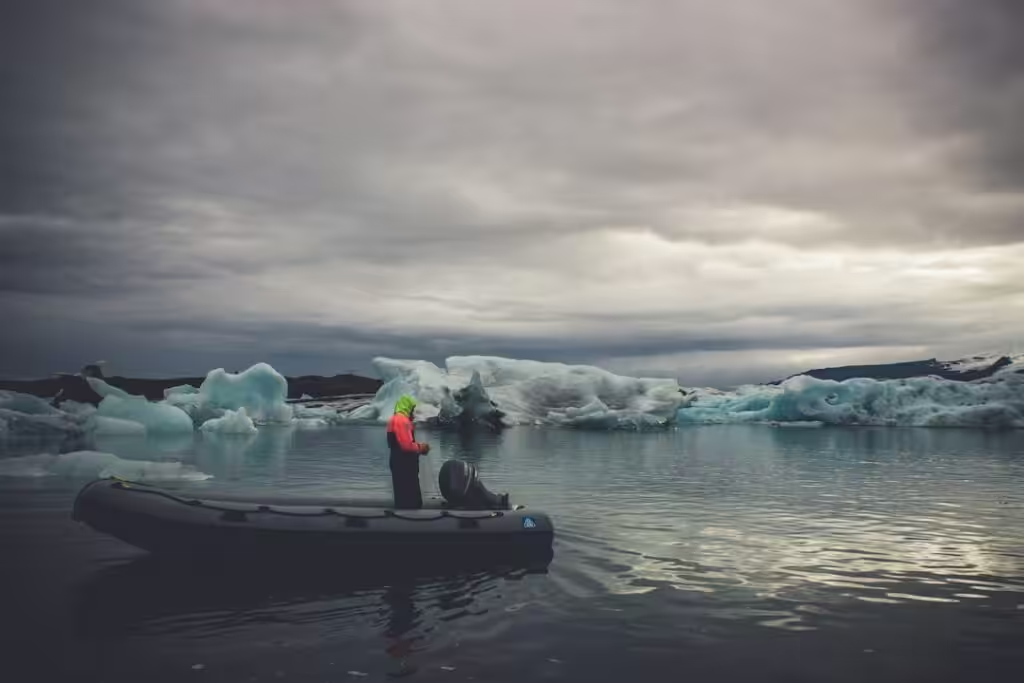
However, anyone planning a private sailing voyage into Icelandic waters should be aware that the coast guard actively monitors all traffic. Yachts and private vessels are required to comply with Icelandic maritime law, carry valid documentation, and — if entering from abroad — clear customs at a designated port of entry such as Reykjavíkurhöfn.
Residents and those following the story should check RÚV’s live news feed for the latest official updates, as the situation is developing and formal statements from the Landhelgisgæslan can arrive without advance notice.
Frequently asked questions
What is Landhelgisgæslan?
Landhelgisgæslan is the Icelandic Coast Guard, the civilian agency responsible for maritime law enforcement, search and rescue, and fisheries protection in Icelandic waters. It operates under the Icelandic Ministry of Justice and is headquartered in Reykjavík. The agency runs a fleet of offshore patrol vessels and surveillance aircraft capable of covering Iceland’s entire 200-nautical-mile Exclusive Economic Zone.
What happened with the Bandero and the Iceland Coast Guard?
The Bandero case involved the Iceland Coast Guard tracking and boarding a foreign vessel suspected of operating in violation of Icelandic fishing laws inside the country’s EEZ. The incident attracted significant domestic and international media attention and highlighted the coast guard’s willingness to pursue enforcement actions against non-compliant vessels. The legal outcome of the case had not been fully resolved at time of publication.
Can Iceland stop foreign ships in its waters?
Yes. Iceland has full legal authority to stop, board, and inspect any vessel inside its 200-nautical-mile EEZ, and unrestricted authority in its 12-nautical-mile territorial sea. Coast guard officers can seize vessels and catches, issue fines, and escort ships to Icelandic ports for prosecution. These powers are grounded in both Icelandic domestic law and the United Nations Convention on the Law of the Sea (UNCLOS).
How do I follow Iceland Coast Guard news in real time?
The most reliable Icelandic-language source is the state broadcaster RÚV at ruv.is. For English-language coverage, IcelandNow and Iceland Review both follow maritime stories closely. The Landhelgisgæslan does not maintain a public-facing social media account with operational updates, so news agency reports are the fastest way to track developments.
Are private boats safe to sail in Icelandic waters during enforcement operations?
Enforcement operations target commercial fishing vessels suspected of violations and do not pose any risk to legitimate private or recreational vessels. Sailors planning to enter Icelandic waters should carry all required documentation, clear customs at an approved port of entry, and monitor Icelandic Meteorological Office (Veðurstofa Íslands) forecasts at vedur.is, as weather — not coast guard activity — is the primary safety concern in these waters.


















 is running active maritime patrols in 2025. Here's what's happening, what powers it holds, and what comes after Bandero.)