













Iceland wind gusts reaching potentially severe levels are forecast to sweep across multiple regions this weekend, with Veðurstofa Íslands — Iceland’s Met Office — tracking a series of strong gusts that could affect road safety, outdoor activities, and travel plans for both tourists and residents. Authorities are urging anyone planning to drive or hike to monitor conditions closely before setting out.
Key takeaways
- Strong wind gusts are forecast across Iceland this weekend, with some areas expecting conditions serious enough to trigger weather warnings.
- The south, southwest, and highland interior are expected to be the worst-affected regions.
- Veðurstofa Íslands and Vegagerðin (the Icelandic Road and Coastal Administration) are the authoritative sources for live updates.
- Several highland roads and exposed mountain trails may be closed or restricted — check before you travel.
- Tourists driving camper vans or high-sided vehicles face the greatest risk and should delay travel if warnings are in place.
How Strong Are the Wind Gusts Forecast for Iceland This Weekend?
Conditions this weekend are expected to bring sustained winds and repeated bursts of strong gusts across Iceland, with some forecasts indicating gusts in excess of 20–30 metres per second in exposed highland and coastal areas. In Icelandic meteorology, gusts at that level typically accompany an orange or red weather warning — classifications that Veðurstofa Íslands issues when conditions pose a real risk to people and vehicles.
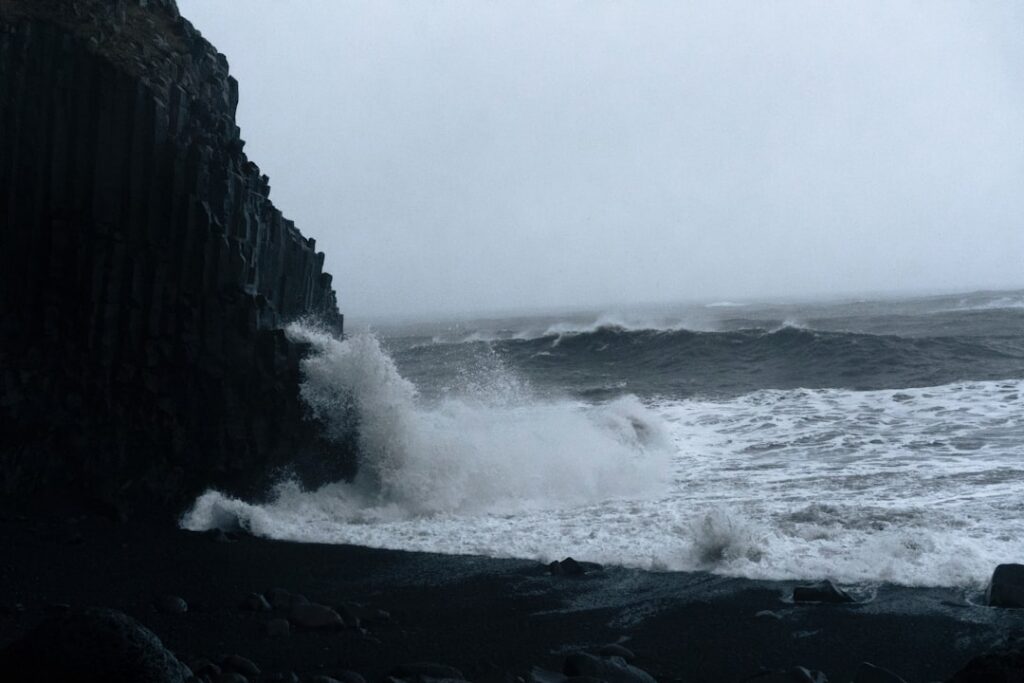
The Icelandic word gust translates directly, but locals often talk about hvassviðri — sharply gusty weather — as a fact of seasonal life. However, weekend forecasts referencing multiple gusts arriving in sequence, particularly in the evening hours (kvöld), and returning again (aftur) by Sunday, suggest a more active pattern than typical summer breezes.
For reference, gusts above 20 m/s can flip lightweight tents, push camper vans off course on exposed roads, and make walking at ridge-level trailheads genuinely dangerous. Winds above 28 m/s are classified as storm-force. Check the Veðurstofa Íslands English-language forecast directly for the latest hour-by-hour gust data for your specific location.
Which Parts of Iceland Will Be Worst Affected?
Based on the pattern of active weekend weather events in Iceland, the areas most likely to face the strongest gusts include:
- The South Coast — including the stretch of Route 1 between Vík í Mýrdal and Höfn, where side-winds are notorious and sandstorms can appear without warning near Mýrdalssandur and Skeiðarársandur.
- The Reykjanes Peninsula — low, flat, and fully exposed to Atlantic weather systems pushing in from the southwest.
- The Highlands (Hálendið) — mountain roads including the Kjölur route (F35) and Sprengisandur (F26) channel wind across open terrain with no natural shelter.
- The Westfjords — fjord geography can funnel and amplify gusts significantly above regional averages.
- North Iceland — particularly around Akureyri and the Eyjafjörður fjord, where katabatic winds can descend fast from surrounding mountains.
Coastal headlands such as Dyrhólaey, near Vík, and Reykjanestá at the southwestern tip of the Reykjanes Peninsula, are especially vulnerable because there is no terrain to break incoming gusts from the open ocean.
Is It Safe to Travel Around Iceland This Weekend?
Safety depends entirely on where you are going, what you are driving, and what warning level is in place for that specific area. Iceland’s weather system is highly localised — it can be calm in Reykjavík while a yellow or orange warning is active just 80 kilometres east along the South Coast.
As a general rule, travel is not recommended during active orange or red warnings. Yellow warnings require caution and preparation, but do not necessarily require cancelling plans. Veðurstofa Íslands assigns colour-coded warnings to specific regions, so travellers should check the map rather than a single national headline.
High-sided vehicles — including camper vans and motorhomes, which are extremely popular with summer tourists — are particularly vulnerable to crosswinds on open roads. Road 1 (Þjóðvegur 1) near the sandurs on the South Coast, and highland F-roads, carry the highest risk. Rental companies typically advise against driving high-sided vehicles when gusts exceed 15 m/s. Some companies include wind-related damage clauses in their insurance, so reading your rental agreement before the weekend is worth doing.
Are Any Roads or Hiking Trails Being Closed?
Vegagerðin, the Icelandic Road and Coastal Administration, has authority to close roads at any time due to weather. Closures this weekend, if conditions deteriorate as forecast, are most likely to affect:
- Highland F-roads, which are already restricted to four-wheel-drive vehicles and close seasonally — high winds accelerate closures.
- Exposed sections of Route 1 on the South Coast, particularly around the sandur plains.
- Mountain passes such as Öxnadalsheiði in the north and Heiðarsporður in the East Fjords.
For hiking, trails at Þórsmörk, Landmannalaugar, and the Fimmvörðuháls ridge — all popular South Iceland destinations — can become hazardous when strong gusts arrive. The ridge trail between Skógar and Þórsmörk crosses fully exposed terrain above 1,000 metres. Hiking there during an active gust warning is strongly discouraged by Ferðafélag Íslands (the Icelandic Touring Association).
Live road closures are listed at road.is, the official English-language portal run by Vegagerðin. The site updates in near-real-time and is the single most reliable source for closure information.
What Should Tourists Do During Strong Gusts in Iceland?
Experience of covering weather events in Iceland repeatedly confirms that the biggest danger to tourists is not the wind itself — it is underestimating it. Here is what to do if strong gusts are forecast for the area you are visiting:
- Check conditions before 07:00 each morning. Forecasts update overnight and morning checks at vedur.is or road.is give you the clearest picture before you commit to a route.
- Pull over safely if gusts hit while driving. Do not stop on the road itself — find a marked lay-by. Sudden gusts on the South Coast sandurs can push a vehicle sideways in under a second.
- Secure all loose equipment at campsites. Tent poles, camp chairs, and gas canisters become dangerous projectiles. Campsite staff at sites like Skaftafell and Vík often warn guests directly — take those warnings seriously.
- Keep car doors controlled when opening. A gust of 20 m/s can rip a car door off its hinges. Hold the door firmly and open it slowly, particularly on the driver’s side facing the wind.
- Postpone coastal and cliff walks. Dyrhólaey and the black sand beaches near Vík are notorious for rogue waves as well as wind. The combination in gusty conditions has caused fatalities.
- Contact your tour operator proactively. Most reputable tour operators in Iceland will reschedule or refund highland day tours when warnings are in place. Ask in advance rather than on the morning of the tour.
Why Is This Happening? Iceland’s Summer Wind Patterns Explained
Iceland sits at the meeting point of Arctic and Atlantic air masses, making it one of the most meteorologically active countries in Europe year-round. Summer does not mean calm — low-pressure systems continue to cross the North Atlantic through June, July, and August, sometimes bringing weekend gust events that rival those in autumn.
The pattern flagged this weekend — multiple gusts arriving in sequence, with a second wave returning on Sunday evening — is consistent with a deep low tracking across the North Atlantic and skirting Iceland’s southern or western coast. As the system moves, gusts arrive in pulses rather than as a single sustained blow. Each pulse can be as strong as the last, making the conditions deceptive: a calm hour does not mean the worst has passed.
Icelanders call this kind of weather hvassviðri and have lived with it for centuries. The landscape itself reflects it — notice how few tall trees grow in Iceland, even in sheltered valleys. What surprises visitors is how quickly conditions change. A morning of sunshine in Reykjavík can precede an afternoon of 25 m/s gusts on the South Coast just 120 kilometres away.
Practical Travel Notes for This Weekend
If your flights are affected, Icelandair and other carriers operating through Keflavík International Airport (KEF) update disruption information on their websites and via app notifications. Keflavík is exposed and windy by design — the airport rarely closes due to wind alone — but strong crosswinds can delay arrivals and departures. Domestic flights to Akureyri, the Westfjords, and the East Fjords operated by Ernir Air or smaller regional operators are more susceptible to wind-related delays.
For real-time updates throughout the weekend, bookmark these three sources:
- en.vedur.is — Veðurstofa Íslands, Iceland’s official Met Office (English version)
- road.is — Vegagerðin road closure and condition map
- safetravel.is — Safe Travel Iceland, which aggregates warnings and travel advisories for tourists
The 112 Iceland app, available free on iOS and Android, also allows users to register their travel plans with the Icelandic emergency services — a practical step anyone venturing into the highlands or on remote coastal roads should take regardless of the weather.
Frequently Asked Questions
What wind speed is considered dangerous in Iceland?
Veðurstofa Íslands typically issues a yellow warning for sustained winds or gusts above roughly 15 m/s and an orange warning above 20–25 m/s. Gusts above 28 m/s are classified as storm-force. At those speeds, walking in exposed areas becomes dangerous and high-sided vehicles face a real risk of being pushed off course. Even at yellow-warning levels, tourists driving camper vans or walking on cliff tops should exercise significant caution.
Will Iceland’s hiking trails close during a wind warning?
Formal trail closures are less common in Iceland than road closures, but rangers and park wardens at popular sites like Þórsmörk, Landmannalaugar, and Skaftafell can advise against or restrict access to specific paths. High-altitude ridge routes — including Fimmvörðuháls — are effectively impassable during strong gusts. Travellers should check directly with Ferðafélag Íslands or the relevant national park visitor centre before setting out.
Should I cancel my South Coast day trip this weekend?
If Veðurstofa Íslands has issued a yellow or higher warning for South Iceland, it is worth contacting your tour operator before making that decision yourself. Many operators will proactively reschedule. If you are self-driving, the South Coast sandur plains east of Vík are particularly hazardous in high gusts — sand and gravel can sandblast paintwork and reduce visibility to near zero within seconds. Postponing by even half a day can make a significant difference if a gust pulse is forecast to pass through.
Are Iceland’s wind gusts in summer unusual?
No. Iceland experiences strong wind events throughout the year, including summer. The country sits on one of the most active meteorological corridors in the Northern Hemisphere. What makes summer events feel surprising to tourists is the contrast with long, light evenings that can appear calm and inviting even as active weather approaches. Always check the forecast regardless of how the morning looks.
What is the 112 Iceland app and should I download it?
The 112 Iceland app is a free emergency response application operated by the Icelandic Association for Search and Rescue (ICE-SAR). It allows users to send their GPS location to rescue services in an emergency and to register travel plans so that search and rescue teams know where to look if something goes wrong. Downloading it before any outdoor activity in Iceland — especially in uncertain weather — is one of the simplest and most effective safety steps a traveller can take.