













Homes in Iceland are sitting on the market significantly longer than before, with nearly a quarter of all properties listed for sale in early June having been available for more than twelve months, according to Morgunblaðið (mbl.is).
The trend points to a cooling in buyer activity across the residential property market. At the same time, a notable shift is under way in how Icelanders are choosing to finance their purchases, with demand for non-indexed — or unindexed — mortgages rising steadily.
Listing times have been creeping upward for some time now. Estate agents and market watchers have noted that properties which once moved within weeks are increasingly sitting unsold well into their second year on the market. That kind of extended exposure was once rare in Reykjavík’s historically fast-moving housing market, where demand from a growing population and a tight supply of new builds kept sellers firmly in control.
What Rising Listing Times Mean for Iceland’s Housing Market
The figure of nearly one in four homes listed for over a year is striking in a small market like Iceland’s. The country’s total population sits at around 380,000, and the housing stock — particularly in the capital region — has long struggled to keep pace with demand. When properties begin to accumulate on the listings pages of sites like mbl.is for months on end, it typically signals a mismatch between asking prices and what buyers are willing — or able — to pay.
High interest rates have weighed on affordability throughout much of the past two years. Iceland’s central bank, Seðlabankinn, has maintained an elevated policy rate as part of its effort to bring inflation under control. That has made borrowing more expensive and pushed some would-be buyers to the sidelines.
Still, the market has not frozen entirely. Reports indicate that buyers who are actively looking are showing a clearer preference for unindexed loan products, where repayments are fixed in nominal terms rather than linked to the consumer price index. In Iceland, indexed mortgages have historically been the norm — a legacy of the high-inflation decades of the late twentieth century — but many borrowers have grown wary of seeing their outstanding loan balance rise even as they make regular payments.
Growing Demand for Unindexed Mortgages as Buyers Reassess Risk
The appeal of unindexed loans is straightforward: borrowers know exactly what they owe and what they will pay each month, regardless of where inflation goes. In an environment where price pressures have been persistent, that certainty carries real value for households trying to plan their finances.
Icelandic lenders have been offering unindexed products with greater visibility in recent years, and the uptick in inquiries and applications suggests that shift is gaining traction among buyers. Whether this reflects a lasting change in borrowing culture or a temporary response to current conditions remains to be seen.
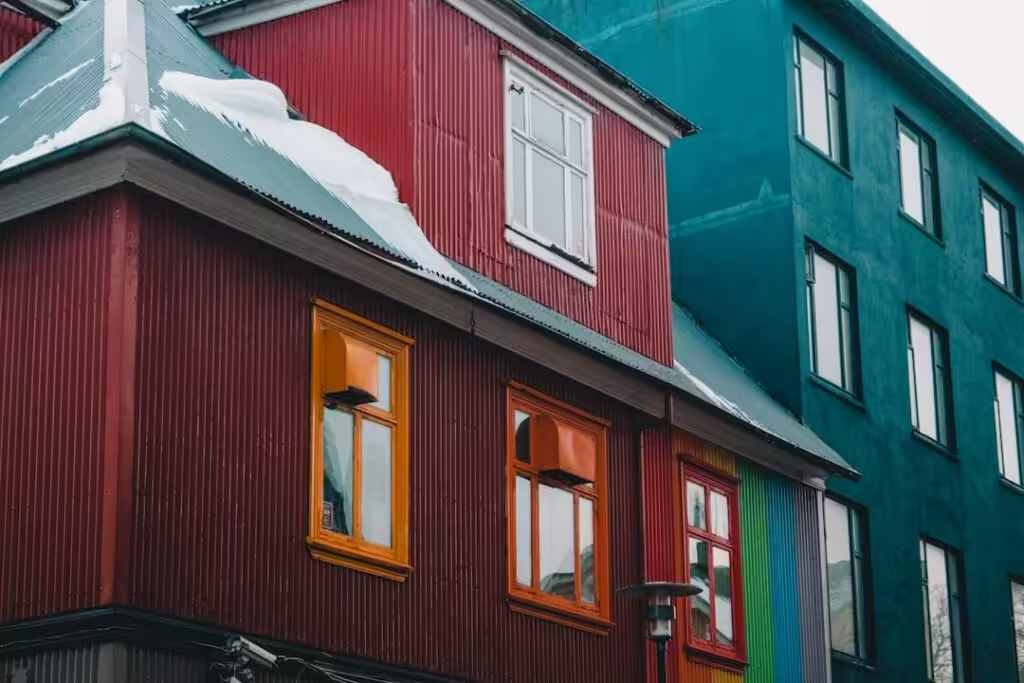
The combination of longer listing times and changing mortgage preferences paints a picture of a market in transition. Sellers who priced their homes at the peak of the cycle two or three years ago are now confronting a buyer pool that is both more cautious and more cost-conscious.
Outlook: Will Sellers Adjust Their Prices?
The key question now is whether extended listing times will eventually push sellers toward price reductions. In a market as small and interconnected as Iceland’s, sentiment can shift quickly — a few high-profile price cuts in Reykjavík’s inner neighbourhoods, or along the commuter corridors toward Kópavogur and Garðabær, can reset expectations across the board.
For now, the data suggests a standoff. Sellers are holding on, hoping conditions improve. Buyers, meanwhile, are watching rates and inflation figures closely before committing.
How Seðlabankinn responds to the latest economic data in the months ahead is likely to determine whether Iceland’s housing market finds a new equilibrium — or continues its slow drift toward a more pronounced correction.
Original source: Morgunblaðið (mbl.is)