












What are the best things to do near Reykjavik? If you’re planning a visit to Iceland’s capital, you’re in good hands. There’s no shortage of day trip options and nearby sights — Reykjavik is the ideal base for getting out into the landscape and culture of this remarkable island.
For most visitors, Reykjavik is where the Iceland trip begins. It’s a lively city with its own culture, history, and natural quirks, but it also sits within easy striking distance of some of the country’s most dramatic scenery. Guided tours, self-drive routes, rental cars — the options for getting out and exploring are genuinely plentiful.
As the most trusted travel platform in Iceland, Guide to Iceland has helped millions of visitors plan their journeys each year. All our content is crafted and reviewed by local experts who know Iceland intimately, ensuring you receive accurate and current travel insights.

Whether you’ve booked a guided tour or plan to rent a car and go at your own pace, Reykjavik is your starting point for an Iceland worth remembering. Read on for the top-rated activities and essential destinations near the capital — adventure, culture, and relaxation all included.
Things To Know
The city and its surroundings pack in a surprising variety — geothermal beaches, relaxing spas, world-class museums, and much more.
Major attractions such as Thingvellir National Park, Gullfoss Waterfall, and the Geysir Geothermal Area are all within easy reach for day trips.
If you want something more active, snorkeling in the Silfra Fissure, snowmobiling on Langjokull Glacier, or horseback riding through the Icelandic countryside are all realistic day-trip additions.
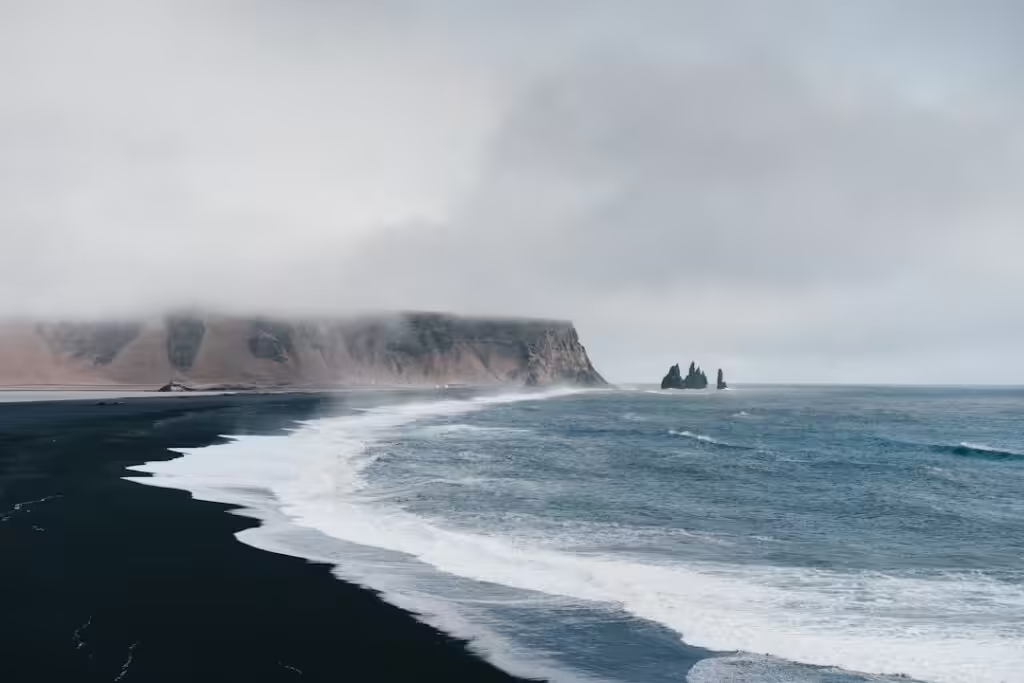
Photo: “Black sand beach, Iceland” by Adam Jang on Unsplash The Snaefellsnes Peninsula — dramatic cliffs, iconic Kirkjufell Mountain — is only a short drive from Reykjavik and well worth the effort.
The Reykjanes Peninsula, with its geothermal fields and the renowned Blue Lagoon Spa, is practically on the city’s doorstep.
The areas around Reykjavik are some of the country’s best spots for northern lights hunting, with guided tours available to maximise your chances.
Things To Do Around Reykjavik
Before heading out of town, it’s worth seeing what Reykjavik itself has to offer. Many visitors rush straight to the day trips — and miss some genuinely worthwhile things right in the capital.
Visit the Top Cultural and Historical Attractions in Reykjavik
A good way to get around the city efficiently is with the Reykjavik City Card, which covers entry to a wide range of museums, attractions, and geothermal pools. It also includes public transport within the capital and ferry rides to Videy Island.
Available for 24, 48, or 72 hours, the card opens up the following top attractions:
Hallgrimskirkja Church — Iceland’s largest church — is an architectural landmark with panoramic views of the city from its tower.
Harpa Concert Hall pulls in visitors with its striking glass facade and a busy calendar of cultural events.
The National Museum of Iceland gives a thorough look at the country’s history through a well-curated collection of artifacts.
Perlan Museum is a futuristic building with interactive exhibits on Icelandic nature, a planetarium, and an observation deck with sweeping views.
The Reykjavik Art Museum spreads contemporary works across several venues around the city.
At the Saga Museum, lifelike figures bring Iceland’s Viking heritage to life in a way that’s genuinely engaging for all ages.
Nature Activities in Reykjavik
You don’t have to leave the city to get a feel for Iceland’s natural world. There are solid outdoor options right here:
Whale-watching tours leave from Reykjavik’s Old Harbor and regularly spot minke and humpback whales, often surprisingly close to shore.
Hljomskalagardur Park sits beside Reykjavik’s City Pond and is a pleasant spot for a walk or a picnic, with a good variety of freshwater birds to watch.
Videy Island is just a short ferry ride away and offers hiking trails, fine views, and the thought-provoking Imagine Peace Tower.
The Seltjarnarnes Peninsula is a natural reserve popular for birdwatching, especially during the northern lights season. Don’t overlook the charming Grotta Lighthouse at its tip.
Bathing and Spa Activities in Reykjavik
Soaking in a geothermal pool is a genuine Icelandic institution, not a tourist gimmick. Reykjavik has several public pools, and Laugardalslaug is the best place to experience the real local version of this tradition.
For something more scenic, the Sky Lagoon in nearby Kopavogur is a strong alternative to the famous Blue Lagoon. Easy to reach by public transport or taxi, it features an infinity-edge design looking out over the North Atlantic Ocean — hard to beat on a clear evening.
If a beach walk appeals, Nautholsvik Geothermal Beach offers a compact man-made cove with heated seawater. On a sunny day, it draws locals in numbers.
Culinary Experiences in Reykjavik
Reykjavik has developed into a serious food destination over the past decade. From proper fine dining to casual spots, the range is wide and the quality is generally high.
A food walk through the city is one of the more sensible ways to sample both traditional and contemporary Icelandic cooking — you cover ground, eat well, and get a feel for the city at the same time.
And whatever else you do, stop at Baejarins Beztu Pylsur. The hot dogs here are made from lamb and have been a Reykjavik institution for decades. Don’t skip them.
Once you’ve eaten well and seen the city, the rest of Iceland is right there waiting.
The Golden Circle and Golden Circle Activities Near Reykjavik
The Golden Circle is Iceland’s most well-known tourist route, taking in Thingvellir National Park, Gullfoss Waterfall, and the Geysir Geothermal Area. It’s a genuine one-day circuit that gives a solid introduction to what Iceland is about.
Roads on the Golden Circle are well-maintained even in winter, so it’s generally manageable year-round. Booking a Golden Circle tour takes the planning off your plate entirely:
For those who want more than sightseeing, the route lends itself well to combining with some of the more active excursions on offer:
Thingvellir National Park
Just 29 miles (47 kilometers) from Reykjavik, Thingvellir National Park is the first stop on the Golden Circle and one no Iceland itinerary should be without. You can walk between the North American and Eurasian tectonic plates through a landscape that feels genuinely ancient.
The park has canyons, rivers, and some striking rock formations. The Silfra Fissure is the standout — a crack between the plates where visibility underwater can reach extraordinary distances, and a Silfra snorkeling tour is one of the more memorable things you can do in Iceland.
Culturally, Thingvellir is the site of Althingi, the world’s oldest parliament, which was established in the 10th century. That alone makes it worth a few extra minutes of your time.
Geysir Geothermal Area
The second stop on the Golden Circle sits 37 miles (59 kilometers) from Thingvellir, in the Haukadalur Valley. The star here is the Strokkur Geyser, which erupts reliably every 5 to 10 minutes and shoots water up to 66 feet (20 meters) into the air.
The Great Geysir — the one that gave all geysers their name — is right nearby. It’s been mostly dormant in recent years, but it has a long and impressive history of its own.
Gullfoss Waterfall
A further 6 miles (10 kilometers) along the road, Gullfoss — the Golden Falls — is one of those places that photographs simply don’t do justice. It drops 105 feet (32 meters) and throws up a mist that catches rainbows on sunny days. Spectacular in every season.
If you’re driving the Golden Circle yourself, consider adding a snowmobiling trip on Langjokull Glacier. Tours typically leave from Gullfoss, so it slots naturally into the day.
Best Golden Circle Detours
If you have extra time, a handful of detours along the Golden Circle are well worth the small diversion:
The Kerid Crater Lake is visually striking — vivid red volcanic rock around a deep blue pool.
Faxi Waterfall sees fewer visitors than its famous neighbours. It’s 23 feet (7 meters) high and stretches 262 feet (80 meters) wide across the Tungufljot River.
Bruarfoss Waterfall has been called Iceland’s bluest waterfall. It’s a bit of a hidden gem along the route, and easiest to see as part of a guided tour.
The Secret Lagoon makes for a relaxed geothermal soak, or you can add a scuba diving session in Silfra if you want to go deeper — literally.
Things To Do Near Reykjavik in South Iceland
South Iceland is big on scenery and activity. Hiking, Icelandic ATV excursions, paragliding — this stretch of coastline and highlands has something for most tastes.
Discover the Waterfalls, Beaches, and Villages of South Iceland
Selfoss is the largest town in the region, ringed by geothermal valleys and volcanic craters. Its New Old Town area has a pleasant mix of shops and restaurants along the Golden Circle route.
Seljalandsfoss Waterfall is famous for the walkway that takes you behind the curtain of falling water — a simple but memorable experience. Just a short distance away is Gljufrabui Waterfall, which gets far fewer visitors despite being equally worth the detour. Both sit approximately 80 miles (128 kilometers) from Reykjavik.
Skogafoss rises nearly 200 feet (60 meters) and is impressive from the base, but climb the staircase alongside it for the panoramic views and you’ll understand why people make the effort.
For something genuinely unusual, a shuttle ride to the Solheimasandur Plane Wreck brings you to the remains of a US Navy aircraft that went down on a black sand beach in the early 1970s — later made famous by Justin Bieber in a music video.
Reynisfjara Beach is one of the more dramatic spots on the South Coast — black sand, towering basalt columns, and the Reynisdrangar Sea Stacks rising from the surf, wrapped in Icelandic folklore. It’s 116 miles (187 kilometers) from Reykjavik and a popular day trip destination.
Vik, the small village near the beach, is a good stopping point before heading east toward Skaftafell Nature Reserve and Jokulsarlon Glacier Lagoon. Those two are further from Reykjavik — a long day trip is possible, but two days makes for a much more comfortable pace.
Skaftafell Nature Reserve is surrounded by glaciers and waterfalls, a proper hiker’s destination, located 203 miles (326 kilometers) from Reykjavik. Jokulsarlon Glacier Lagoon, with its floating icebergs, lies 25 miles (57 kilometers) further east and ranks among Iceland’s most recognised sights.
Summer Puffin Watching in South Iceland
Dyrholaey Peninsula is the place to be for puffins in summer. Large colonies nest along the cliffs, and the Dyrholaey Lighthouse gives an excellent vantage point over the ocean and the coastline below.
Explore Glaciers, Ice Caves, and Hot Springs
The Reykjadalur Valley is a geothermal area with good hiking and the chance to bathe in natural hot springs — a combination that works well for an afternoon out of the city.
Solheimajokull Glacier is a regular starting point for guided glacier tours from Reykjavik, with fine views of the South Coast on clear days.
For ice caves, the Katla Volcano Ice Cave at Myrdalsjokull Glacier is notably accessible year-round, which sets it apart from most others. The Crystal Blue Ice Cave in Vatnajokull Glacier is the one that tends to end up on people’s highlight reels — it’s best in winter, and genuinely worth the trip.
Those with more time and energy might also consider a hike on Skaftafell Glacier. It’s a fair distance from Reykjavik, but the variety of ice formations makes it an exceptional glacier hiking experience.
Visiting the Reykjanes Peninsula From Reykjavik
The Reykjanes Peninsula looks, in places, like something from another planet — bare lava fields, steaming vents, and an otherworldly quiet. It’s also home to the renowned Blue Lagoon, and it sits just outside Reykjavik, making it one of the most accessible detours on the island.
Tours are available for exploring the volcanic terrain or spending time at the Blue Lagoon — or both, if you plan the day well.
Blue Lagoon
The Blue Lagoon Geothermal Spa is one of Iceland’s best-known attractions and consistently draws visitors from all over the world. Located 31 miles (50 kilometers) southwest of Reykjavik, it offers a genuinely relaxing experience in milky geothermal water. Celebrities like Kim Kardashian and Justin Timberlake have made the trip.
The Comfort Ticket covers entry to the main spa, towel service, a silica mud mask, and a drink. The Premium Ticket adds two more masks, bathrobe service, and a complimentary glass of sparkling wine at the onsite Lava restaurant.
Transfers to and from Reykjavik or the airport make visiting the Blue Lagoon convenient.
Fascinating Landmarks and Geothermal Areas
The Bridge Between the Continents is a symbolic crossing point above the rift between the North American and Eurasian tectonic plates, set against a stark lava landscape.
In the southwestern part of the peninsula, the Gunnuhver Geothermal Area has bubbling mud pools and steaming fumaroles. Krysuvik is another geothermal site close by, with hot springs and active vents worth a look.
Lake Kleifarvatn, the largest lake on the peninsula, is a fine spot for photography on a still day. The Reykjanesviti Lighthouse — the oldest in the country — stands at the southernmost tip, looking out over what Icelanders call the land of ice and fire.
All of these sites are within 43 miles (69 kilometers) of Reykjavik.
Volcano Eruption Sites on the Reykjanes Peninsula
Few places in Iceland feel as raw as the recent eruption sites on the Reykjanes Peninsula. Just 45 minutes from Reykjavik, the terrain here is all lava fields and active geothermal vents.
The most recent eruption occurred at Sundhnukagigar Crater Row, which has been active multiple times since December 2023, with the latest event in July 2025.
A newly opened trail to Sundhnukagigar lets visitors see recently formed lava fields and active craters up close. A guided tour is the recommended way to do this — these are dynamic landscapes, and safety is the priority.
Check Loftgaedi.is for air quality updates and SafeTravel.is for current safety alerts before you go.
Visiting the Snaefellsnes Peninsula From Reykjavik
The Snaefellsnes Peninsula, northwest of Reykjavik, gets called “Iceland in Miniature” for good reason — the variety of landscapes packed into a relatively short stretch of coastline and mountains is genuinely impressive. It’s also steeped in myth, with the glacier at its tip featuring in one of the world’s most famous adventure stories.
A self-drive through the peninsula takes one to two days and covers a lot of ground. Guided tours are available if you’d rather leave the route-planning to someone else.
Snaefellsjokull National Park
Built around the Snaefellsjokull Glacier, Snaefellsjokull National Park is home to some of Iceland’s more ecologically diverse terrain. Hellnar Village, the Songhellir Cave, and the Londrangar Sea Stacks are all highlights worth stopping for.
Sitting approximately 122 miles (197 kilometers) from Reykjavik, it’s the furthest point on the peninsula — and also the one most people say they’re glad they made the effort to reach.
The Snaefellsjokull Glacier
Jules Verne used the Snaefellsjokull Glacier as the entry point to the Earth’s interior in “A Journey to the Center of the Earth,” and standing at its base, you can understand the choice. The glacier is 700,000 years old, sitting atop a dormant volcano — fire and ice in the most literal sense.
A snowcat glacier tour gives you the best views from the top, and it’s a memorable way to spend a few hours.
Mount Kirkjufell
Mount Kirkjufell is one of Iceland’s most photographed mountains, and the view is easy to understand — the conical shape is striking, especially with Kirkjufellsfoss Waterfall in the foreground. In summer it’s lush and green; in winter it’s blanketed in snow. Both versions are worth a shot.
The mountain stands 1,519 feet (463 meters) tall. It also appeared as a filming location in Season 7 of “Game of Thrones,” which has only added to the crowds it draws.
Churches and Villages
The black Budir Church against its mountain backdrop is one of the most photographed subjects on the Snaefellsnes Peninsula — simple, striking, and worth the short stop.
Arnarstapi, at the foot of Mount Stapafell, has some excellent coastal walks along its rugged shoreline. Stykkisholmur, further north, is a colourful and historically interesting town that serves as the main hub of the region, well-placed for exploring nearby attractions.
Beaches and Wildlife
Ytri Tunga Beach is unusual for Iceland in having golden sand rather than black, and a resident seal colony makes it one of the better year-round spots for watching these animals at close range.
The Snaefellsnes Peninsula also offers whale watching and puffin spotting. Cruises can be arranged from Olafsvik or Stykkisholmur and give a solid overview of the area from the water.
Visiting West Iceland From Reykjavik
West Iceland is where the crowds thin out and the landscape quietly rewards those who make the effort. History, natural scenery, and a genuine sense of space — it has all three.
Renting a car is the most flexible option, though small group tours are available for those who prefer a guided approach.
Things To Do Near Reykjavik in West Iceland
West Iceland’s proximity to Reykjavik means a good number of its highlights are comfortably within day-trip range — and the list of worthwhile sites is longer than most visitors expect.
The Northern Lights Outside Reykjavik
The northern lights are one of the main reasons people choose Iceland for a winter trip. The aurora borealis is visible between September and March, when the nights are dark enough for a proper show.
In the height of summer, Iceland has around-the-clock daylight, which makes the aurora impossible to see. Spring and autumn are often too bright as well. Winter is cold and sometimes snowy, but it’s when the lights are at their best.
You can occasionally catch a faint display from Reykjavik itself, but the real experience happens away from city lights. A northern lights tour is the most reliable way to improve your odds — guides know the dark spots and can adapt the route based on conditions each night.
Tours leave regularly from Reykjavik, chasing clear skies and staying flexible with their routes. Budget options, private tours, and boat cruises all give different ways to experience Iceland’s winter nights.
For the full treatment, a multi-day northern lights tour that pairs aurora hunting with visits to the country’s major sights is hard to beat.
Your Gateway to Iceland
Whether you’re heading out on day trips or taking your time through the regions that surround Reykjavik, the options are genuinely varied and reliably impressive. The capital sets you up well — from there, the Snaefellsnes Peninsula, West Iceland, South Iceland, and the Reykjanes Peninsula are all within reach, each with their own character and their own reasons to visit.