













Iceland’s Coast Guard, Landhelgisgæslan, is facing growing public and political criticism over its handling of the Bandero standoff, with a new wave of scrutiny focused on an incident involving an elderly man that critics say exposed serious failures in the agency’s decision-making. The controversy is reshaping the domestic conversation around maritime enforcement and state accountability in Iceland.
Key takeaways
- Iceland’s Coast Guard (Landhelgisgæslan) is under increasing fire for its response to the Bandero vessel standoff.
- An 80-year-old man was reportedly involved in an incident during the standoff, raising serious welfare and proportionality concerns.
- Icelandic politicians and public figures have called for answers, with pressure building on the government to respond.
- The Coast Guard holds specific legal powers to intercept and board foreign vessels within Iceland’s exclusive economic zone.
- Public reaction in Iceland has been sharp, with the story trending heavily across Icelandic-language media and social platforms.
Why is Iceland’s Coast Guard being criticised over Bandero?
Criticism of Landhelgisgæslan centres on the way the agency managed the standoff involving the vessel Bandero. Critics argue that the Coast Guard’s response was disproportionate, poorly co-ordinated, or both. Reports indicate that the operation raised questions about the chain of command, the use of resources, and whether proper procedures were followed when the situation escalated.
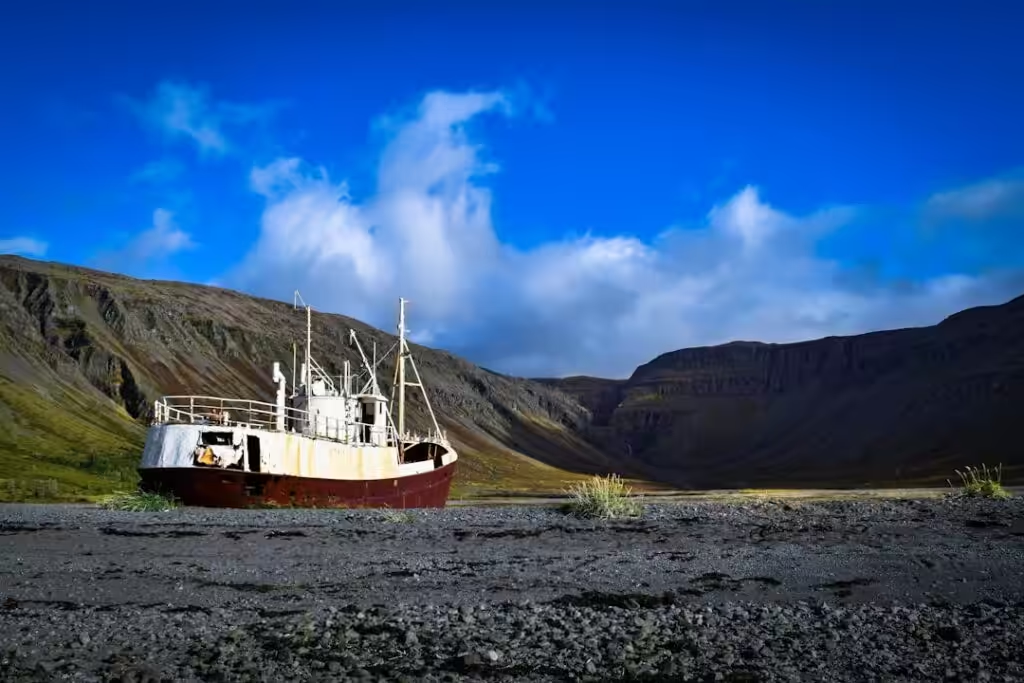
For international readers: Iceland’s Coast Guard is not a branch of the military but a civilian agency operating under the Ministry of Justice. It is responsible for law enforcement within Iceland’s territorial waters and exclusive economic zone (EEZ), which extends 200 nautical miles from Iceland’s coastline — one of the largest in Europe. The agency is highly visible in Iceland and generally commands strong public trust, which makes episodes of criticism unusually significant when they emerge.
The Bandero case appears to have become a flashpoint because it combines questions of legal authority, use of force, and the welfare of at least one vulnerable individual — a combination that tends to generate sustained public attention in a country where transparency in state institutions is a core civic value.
What happened to the 80-year-old man during the Bandero standoff?
Reports indicate that an elderly man, described as approximately 80 years old, was caught up in the Bandero incident in circumstances that critics have described as alarming. While full details remain unconfirmed as this is a developing story, accounts suggest the man was present during the Coast Guard’s intervention and that his treatment — or the conditions he was exposed to — became a focal point of subsequent public anger.
Officials have not yet released a comprehensive account of what occurred. However, the incident involving the elderly man has given the story a human dimension that has accelerated its spread across Icelandic media and social networks. Opposition voices have pointed to this case as evidence that the Coast Guard lacked adequate protocols for dealing with civilian bystanders or passengers who were not themselves subjects of enforcement action.
This detail in particular has resonated with Icelandic audiences, where elderly welfare and state duty of care carry significant political weight.
Has the Icelandic government commented on the Coast Guard response?
The government’s response has so far been measured. Officials have not issued a full public statement defending or criticising Landhelgisgæslan‘s handling of the Bandero case at the time of writing. Reports indicate that members of Alþingi — Iceland’s parliament, one of the world’s oldest legislative assemblies — have raised questions and called for a formal explanation from the relevant ministry.
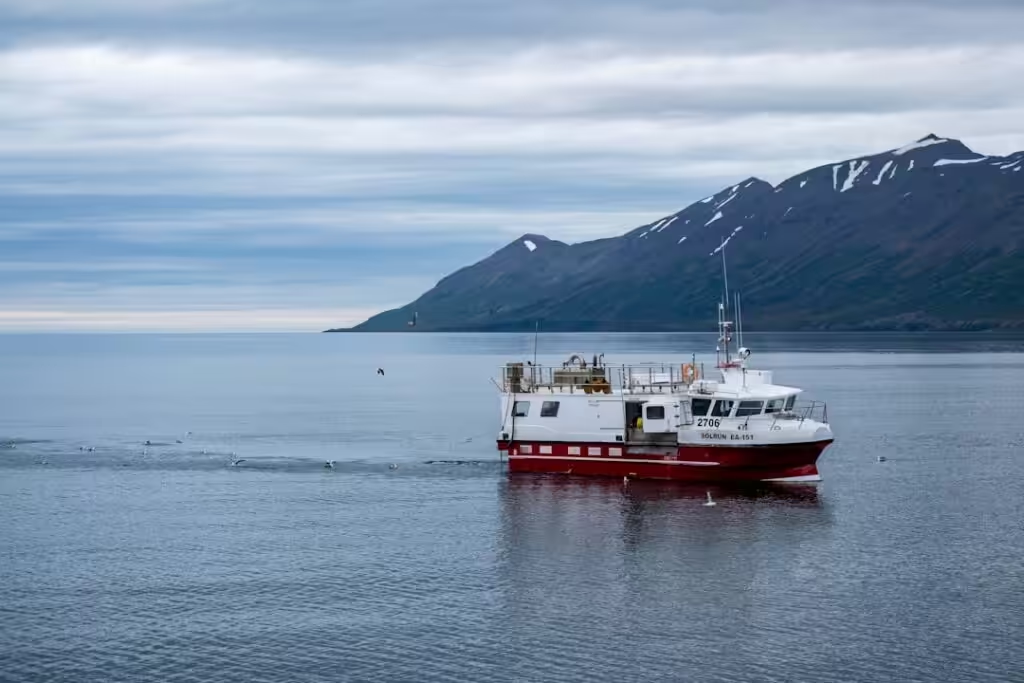
The Ministry of Justice, which has supervisory responsibility over the Coast Guard, has acknowledged the public interest in the case but has not confirmed details of an internal review. In Iceland, parliamentary oversight of agencies like Landhelgisgæslan is taken seriously, and formal queries from MPs can compel written ministerial responses within set timeframes — a mechanism that critics are expected to use if a satisfactory public account is not forthcoming.
This political dimension is what elevates the story beyond a local maritime dispute and into a question of institutional accountability.
What powers does the Iceland Coast Guard have to stop foreign vessels?
Iceland’s Coast Guard operates under a clear legal framework that grants it broad authority at sea. Its principal powers include:
- Right of hot pursuit: The ability to chase and board a vessel that has violated Icelandic law, even if it has left territorial waters, provided pursuit began within those waters.
- Boarding and inspection: Coast Guard officers may board any vessel within Iceland’s 12-nautical-mile territorial sea without a warrant if they have reasonable grounds to suspect a violation.
- EEZ enforcement: Within the 200-nautical-mile EEZ, the Coast Guard can enforce fisheries law, environmental regulations, and customs requirements against both Icelandic and foreign vessels.
- Detention of vessels and persons: The agency can detain a vessel and its crew pending investigation and can escort vessels to an Icelandic port for further proceedings.
- Use of proportionate force: Icelandic law permits the use of proportionate force where a vessel fails to comply with lawful orders — a provision that is now central to the Bandero debate.
These powers are broadly consistent with the United Nations Convention on the Law of the Sea (UNCLOS), to which Iceland is a signatory. The question in the Bandero case is not whether the Coast Guard had legal authority to act, but whether it exercised that authority appropriately and proportionately.
What is the public reaction in Iceland to the Coast Guard’s handling of the situation?
Public reaction has been notably strong. The term landhelgisgæslunnar — the genitive form of Coast Guard, meaning “of the Coast Guard” — has spiked sharply across Icelandic-language news sources and social media, a clear signal that the story is dominating domestic conversation.
Many Icelanders are expressing frustration and concern rather than outright condemnation, reflecting the generally high baseline trust the public places in Landhelgisgæslan. However, the involvement of an elderly person and the perceived lack of transparency have moved opinion. Commentary across Icelandic platforms ranges from demands for an immediate independent review to calls for those responsible for the operation’s planning to be named publicly.
International attention has also added pressure. Iceland is a small country of roughly 380,000 people, and cases that attract external scrutiny tend to accelerate domestic political responses. Journalists and commentators outside Iceland have picked up the story, particularly the angle involving the 80-year-old man, framing it as a question of proportionality and human rights in maritime enforcement.
For travellers or those with vessels in Icelandic waters, the practical position remains unchanged: Landhelgisgæslan continues normal operations. Anyone seeking official updates should monitor the Coast Guard’s own channels or the Icelandic government portal at island.is.
Frequently asked questions
What is the Bandero and why was the Iceland Coast Guard involved?
The Bandero is a vessel that became the subject of a Coast Guard enforcement operation in Icelandic waters. The specific nature of the alleged violation that triggered the intervention has not been fully confirmed in public reporting at this stage. Landhelgisgæslan has authority to act against vessels suspected of breaching fisheries, customs, or maritime law within Iceland’s territorial sea and EEZ.
Is the Iceland Coast Guard the same as the Icelandic navy?
No. Iceland has no military navy. Landhelgisgæslan is a civilian law enforcement and search-and-rescue agency operating under the Ministry of Justice. It performs coast guard functions that in other countries might be split between naval and civilian agencies. Its vessels and aircraft also conduct environmental monitoring and assist distressed vessels.
Can the Iceland Coast Guard board a foreign-flagged vessel?
Yes, under defined circumstances. Within Iceland’s 12-nautical-mile territorial sea, the Coast Guard can board any vessel with reasonable suspicion of a legal violation. Within the broader 200-nautical-mile EEZ, boarding rights are more specific but still apply to fisheries and environmental enforcement. These powers derive from both Icelandic domestic law and UNCLOS.
What should travellers or yacht crews in Icelandic waters know about Coast Guard encounters?
Vessels operating in Icelandic waters should carry all registration, fishing, and customs documentation. Coast Guard vessels are clearly marked and will typically hail a vessel by radio on VHF Channel 16 before approaching. Compliance with Coast Guard instructions is a legal requirement. For current entry requirements and maritime regulations, consult the Icelandic Maritime Administration (Samgöngustofa).
Where can I follow official updates on the Bandero case?
The most reliable official sources are the Icelandic government portal at island.is, the Ministry of Justice website, and Landhelgisgæslan‘s own communications. For Icelandic-language news coverage, RÚV (the national broadcaster) and Morgunblaðið are primary sources. International coverage is available through Iceland Review in English.