












The Icelandic Coast Guard vessel Þór is still shadowing the Sea Shepherd ship Bandero in Icelandic waters, as of the latest reports, with no boarding or seizure carried out. The standoff — rooted in Iceland’s efforts to question those aboard in connection with the international arrest warrant for Paul Watson — has now forced the Coast Guard to cancel its own anniversary ceremony, drawing global attention to a confrontation that shows no immediate sign of resolution.
Key takeaways
- The Bandero remains in or near Icelandic waters, still shadowed by Coast Guard vessel Þór.
- Iceland has not boarded or seized the Bandero as of the latest available reports.
- The standoff is linked to a Japanese-requested Interpol red notice for Sea Shepherd founder Paul Watson.
- The Icelandic Coast Guard (Landhelgisgæslan) cancelled its anniversary ceremony because of the ongoing operation.
- The legal situation is complex — Watson’s nationality and flag-state rules complicate any boarding action.
Where is the Bandero ship right now?
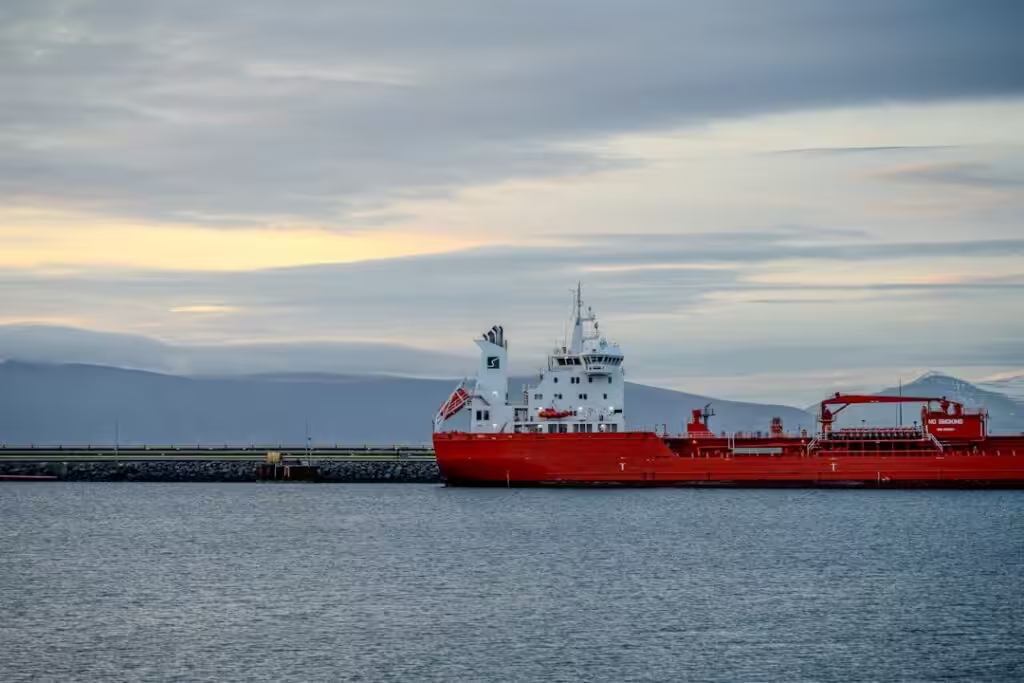
The Bandero’s precise position changes by the hour, and the Icelandic Coast Guard has not publicly confirmed exact coordinates. Reports indicate the vessel has been operating in or near Iceland’s Exclusive Economic Zone (EEZ) — the 200-nautical-mile band of ocean where Iceland holds sovereign rights — in the waters to Iceland’s northwest and north. The Coast Guard vessel Þór has maintained a close shadow, keeping the Bandero within sight and within range of any potential intervention order.
Sea Shepherd has not publicly disclosed the ship’s GPS position, which is standard operational practice for the organisation during active confrontations. Observers tracking the standoff through maritime AIS data have noted the vessels moving together at low speed, consistent with a deliberate shadowing pattern rather than pursuit.
Why is Iceland Coast Guard still following the Bandero?
Iceland’s Coast Guard — formally the Landhelgisgæslan, the agency that patrols Iceland’s vast ocean territory and enforces fisheries and immigration law at sea — is shadowing the Bandero because Icelandic authorities want to question individuals aboard the vessel in connection with an Interpol red notice issued at Japan’s request for Paul Watson, the veteran anti-whaling activist and Sea Shepherd co-founder.
Watson was arrested in Greenland in July 2024 and held for months before being released. He was not extradited to Japan. He has since resumed activity aboard Sea Shepherd vessels. Japan issued the red notice over Watson’s alleged role in damaging a Japanese whaling vessel decades ago — charges Watson has consistently denied and which his supporters argue are politically motivated.
Iceland currently conducts fin whale hunts, which Sea Shepherd actively opposes. That context makes Icelandic waters a natural flashpoint. The Landhelgisgæslan is not acting on whaling grounds alone — it is following a formal legal obligation triggered by the Interpol notice — but the backdrop of Iceland’s whaling season gives the confrontation an added layer of tension.
Has Iceland boarded or seized the Bandero yet?
No. As of the latest available reports, Icelandic authorities have not boarded or seized the Bandero. The Coast Guard has maintained its shadow operation without escalating to a physical intervention.
Boarding a foreign-flagged vessel on the high seas or even within an EEZ is legally constrained under international maritime law, specifically the UN Convention on the Law of the Sea (UNCLOS). A coastal state generally cannot stop and board a foreign ship simply because a person of interest may be aboard, unless certain conditions — such as suspected drug trafficking, piracy, or a flag-state agreement — are met. This legal complexity is a key reason the standoff has continued rather than resolved quickly.
Officials have not publicly stated whether a boarding order has been sought or denied at a political level. The situation remains fluid.
Why was the Coast Guard anniversary ceremony cancelled because of Bandero?
The Landhelgisgæslan had a scheduled anniversary ceremony — a formal event marking the organisation’s founding — that was cancelled because key personnel and at least one major vessel, including Þór, were committed to the active Bandero operation. The Coast Guard confirmed the cancellation was directly linked to the ongoing maritime standoff.
This detail matters beyond symbolism. It signals that the Bandero operation is consuming significant operational resources and command attention. The Landhelgisgæslan is a relatively small organisation responsible for patrolling one of the world’s largest EEZs — roughly 758,000 square kilometres of ocean. Committing Þór to a sustained shadowing mission is not a minor deployment. The cancellation of a formal internal ceremony underscores that this is being treated as a serious, resource-intensive operation, not a routine patrol.
What happens next legally for the Bandero and Paul Watson?
The legal path forward is genuinely uncertain, and multiple outcomes remain possible.
- The Bandero leaves Icelandic waters: If the ship exits Iceland’s EEZ without incident, the immediate standoff ends — but the Interpol red notice remains active, and Watson faces potential arrest in any of the roughly 195 Interpol member countries that choose to act on it.
- Iceland seeks flag-state consent: If the Bandero flies the flag of a cooperating nation, Iceland could request permission from that flag state to board. That process takes time and political will on both sides.
- Diplomatic resolution: Iceland’s government could decide — at a political level — not to pursue boarding, effectively allowing the ship to depart. This would likely trigger criticism from Japan.
- Watson is not confirmed aboard: Reports have not confirmed that Watson himself is currently on the Bandero. If he is not aboard, the legal justification for sustained shadowing weakens considerably.
- Icelandic courts intervene: An Icelandic judge could issue or decline an order authorising specific action. No such ruling has been publicly reported as of the latest available information.
The case also has implications beyond this single ship. International animal-rights and maritime-law organisations are watching closely, and legal advocates for Sea Shepherd have indicated they are prepared to challenge any detention in Icelandic or international courts.
What this means for travellers and residents
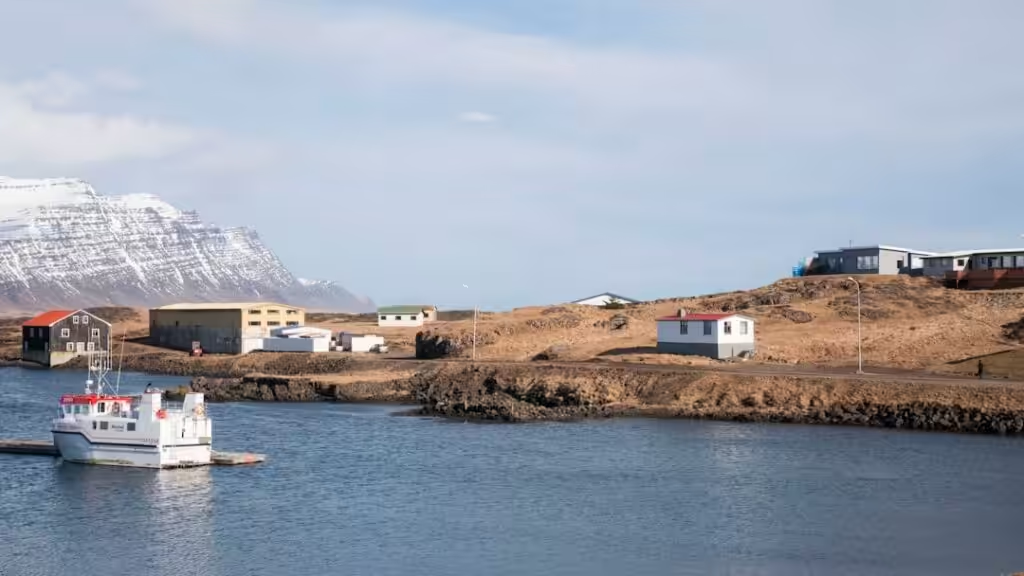
This standoff does not directly affect flights, tourism, or everyday movement in Iceland. Travellers visiting Reykjavík or heading to the West Fjords (Vestfirðir) — the region closest to where much of the activity is believed to be centred — will not encounter any disruption on land.
However, whale-watching boat operators and those on fishing vessels in northern and northwestern waters should monitor Coast Guard communications channels, as heightened naval activity in the area is confirmed. The Landhelgisgæslan publishes official notices at lhg.is — the most reliable Icelandic-language source for operational updates.
International visitors interested in Iceland’s whaling debate — a topic that surfaces regularly on the Reykjavík waterfront, where whale-watching tours depart from the Old Harbour (Gamla höfnin) just minutes from the city centre — will find this story gives that local tension a sharper, immediate context.
Frequently asked questions
Is Paul Watson actually on the Bandero right now?
It has not been publicly confirmed by Icelandic authorities or Sea Shepherd that Paul Watson is currently aboard the Bandero. Reports indicate Icelandic officials want to question individuals on the vessel in connection with the Interpol red notice issued against Watson, but his precise location has not been officially confirmed. Sea Shepherd typically does not disclose crew locations during active operations.
What is the Interpol red notice against Paul Watson for?
Japan requested the Interpol red notice against Paul Watson in connection with alleged offences during Sea Shepherd’s anti-whaling campaigns decades ago, including alleged damage to a Japanese whaling vessel. Watson and his legal team deny the charges and argue they are politically motivated. A red notice is not an international arrest warrant — it is a request to member countries to locate and provisionally arrest a person pending extradition.
Can Iceland legally board the Bandero?
Under international maritime law, particularly UNCLOS, Iceland’s ability to board a foreign-flagged vessel is limited unless specific legal conditions are met — such as flag-state consent, evidence of certain crimes, or an applicable treaty. The complexity of these rules is a central reason the standoff has continued without a boarding. Icelandic legal authorities have not publicly confirmed whether they have sought or obtained the necessary authorisations.
What is the Landhelgisgæslan and why does it matter here?
The Landhelgisgæslan is Iceland’s Coast Guard — the government agency responsible for patrolling Iceland’s 758,000-square-kilometre Exclusive Economic Zone, enforcing fisheries law, conducting search and rescue, and implementing Iceland’s obligations under international maritime law. It operates several ocean-going vessels, including Þór. Its involvement in the Bandero standoff reflects the seriousness with which Icelandic authorities are treating the situation.
Does this affect Iceland’s whaling season?
Directly, no — Iceland’s fin whale hunt operates under separate government permits and is not legally connected to the Bandero standoff. However, the confrontation is intensifying international scrutiny of Iceland’s whaling practices, and Sea Shepherd has historically used such high-profile operations to build public and political pressure on whaling nations. Whether that pressure translates into policy change depends on decisions made in Alþingi, Iceland’s parliament, not at sea.