












Sea Ice May be Declining, but Risks Remain for Icelandic Seafarers
Sea ice around Iceland has become a rare sight, but that doesn’t mean it can be ignored. It still poses real hazards in key fishing areas, and researchers and maritime authorities keep a close eye on ice movements — especially when weather shifts could push floes toward Icelandic waters.
Ingibjörg Jónsdóttir from the University of Iceland points to the role modern technology has played in changing how ice is tracked. Satellite data and radar imaging now make near real-time observation possible. The Icelandic Coast Guard’s aircraft, TF-SIF, is a key part of that picture, able to map ice quickly and feed information back to those who need it.
“Back in the day, we relied on ship reports. When vessels encountered sea ice, they would alert the Met Office,” Jónsdóttir recalls. “If the ice encroached dangerously close to usual routes, warnings would be issued.”
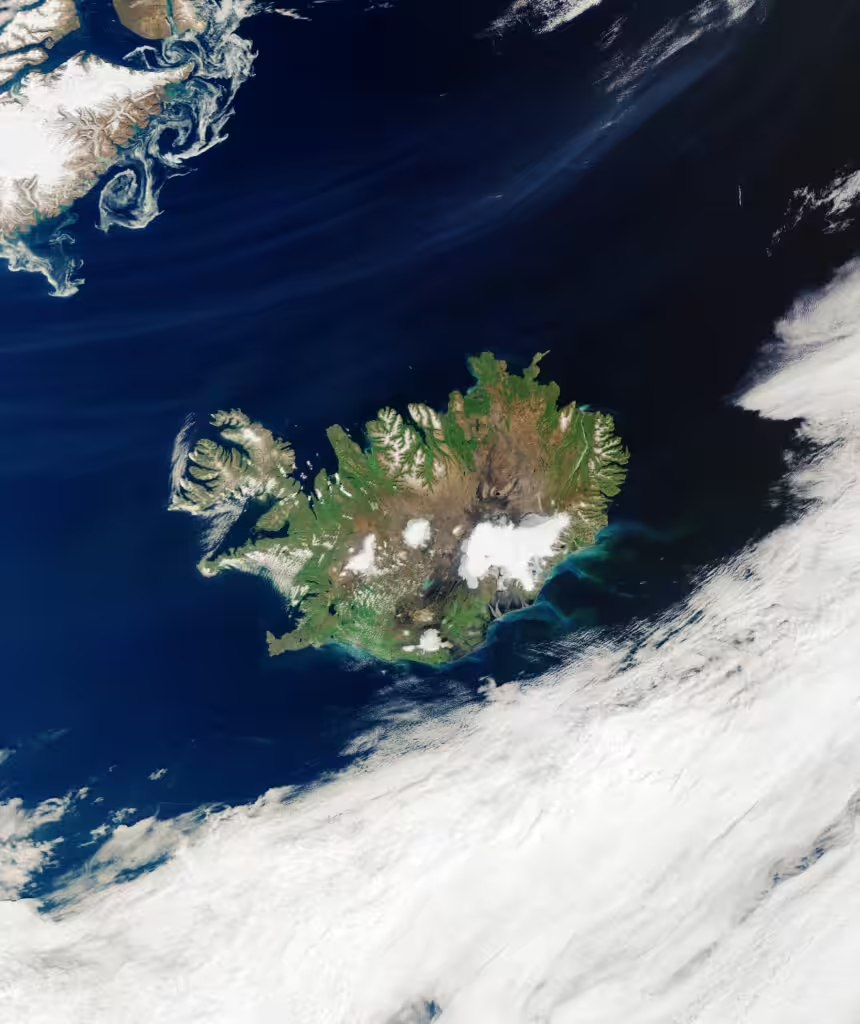
Over recent decades, sea ice reaching Iceland has become noticeably less frequent. The shift is tied to broader changes in the Arctic, where multi-year ice has shrunk considerably. What drifts toward the coast these days tends to be smaller fragments, and it mostly turns up near the Westfjords.
Even so, monitoring hasn’t stopped being important. “It’s certainly inconvenient when fishing grounds are covered in ice,” Jónsdóttir explains. “The real dangers arise when icebergs or thick floes mix in, or if visibility and sea conditions deteriorate.”
For more insights into environmental issues affecting Iceland, further coverage can be found at Iceland Review.