












Discovering North Iceland: A Journey Through Nature’s Masterpieces
North Iceland does not ease you in gently. From the moment you arrive, the landscape makes its presence felt — steaming hot springs, sheer canyons, whale-watching boats heading out at dawn, and in winter, the Northern Lights doing their slow, silent thing above it all. This is a remote and largely unspoiled part of the country, and it shows. The scenery here is not subtle.
How to Navigate This North Iceland Itinerary
This guide is built as a flexible two-part journey you can trim or extend depending on how much time you have:
- Diamond Circle: A two- to four-day loop covering North Iceland’s most celebrated natural and historical highlights — think majestic waterfalls, bubbling geothermal fields, and a whale-watching capital that punches well above its weight.
- Arctic Coast Way: A 900-kilometer (559-mile) extension that pulls you away from the Ring Road and into quiet coastal villages, saga country, and some of the most peaceful Arctic scenery you will find anywhere.
Getting to North Iceland
First, you need to get there. You have a few options depending on where you are coming from and how much time you want to spend in transit.
Travelers flying from the UK can take direct easyJet flights to Akureyri during the winter months, from October to April.
If the road trip is the point, the Ring Road (Route 1) runs from Reykjavík to Akureyri — 385 kilometers (240 miles) — and takes around five hours. It is a genuinely beautiful drive, especially as the landscape shifts from south to north.
Short on time? A domestic flight from Reykjavík (RKV) to Akureyri (AEY) takes just 45 to 60 minutes and gets you straight into it.
Day 1: Akureyri — The Capital of the North
Most people start in Akureyri, and for good reason. It is the region’s main hub — the logical base for the Diamond Circle and a pleasant place to spend a first day shaking off travel fatigue.
The town holds one of the northernmost botanical gardens in the world, the Akureyri Botanical Garden — worth a wander even if gardens are not usually your thing. The Akureyri Church, sitting high on a hill above the town, is hard to miss, and the Arctic Art Museum makes for a solid hour or two indoors.
Days 2–4: Exploring the Diamond Circle Loop
The Golden Circle in the south gets all the attention, but the Diamond Circle is what brings people back to Iceland. This 250-kilometer (155-mile) loop covers some of the most dramatic terrain in the country — waterfalls, geothermal fields, and the whale-watching town of Húsavík.
Goðafoss Waterfall
Leaving Akureyri, Goðafoss is usually the first stop. The name means “Waterfall of the Gods,” and there is a story behind it: around the year 1000, a lawspeaker named Þorgeir Ljósvetningagoði threw his pagan idols into the falls after Iceland converted to Christianity. Whether or not you know the history, the curved cascade is striking enough on its own terms.
Lake Mývatn
At Shipyards, you can walk among pseudo craters formed when ancient lava flows rolled over waterlogged ground — they look genuinely otherworldly. Close by, the Hverir geothermal area bubbles and hisses with mud pots and fumaroles that smell of sulphur and feel faintly prehistoric. End the day at the Mývatn Nature Baths, which offer a quieter, less crowded experience than the Blue Lagoon and feel well-suited to where you are.
Dimmuborgir
Dimmuborgir — often translated as “Dark Castles” — is a lava field of twisted rock formations and natural arches, shaped when ancient lava flows crossed wetlands. Local folklore claims it as home to the Yule Lads and their formidable mother, Grýla, which gives the place a certain atmosphere even in broad daylight.
Dettifoss & Selfoss Waterfalls
Dettifoss is often described as Europe’s most powerful waterfall, and standing at the edge of Jökulsárgljúfur canyon watching it drop, that claim does not feel like an exaggeration. The force of the water is something you feel as much as see. Just upstream, Selfoss is wider and gentler — a different kind of impressive.
Ásbyrgi Canyon
Ásbyrgi Canyon is shaped like a horseshoe, and legend holds that it was formed from the hoofprint of Sleipnir, the eight-legged horse of the Norse god Odin. These days it is part of Vatnajökull National Park and is excellent for hiking, with birch woodland and towering cliff walls enclosing the bowl of the canyon.
Húsavík
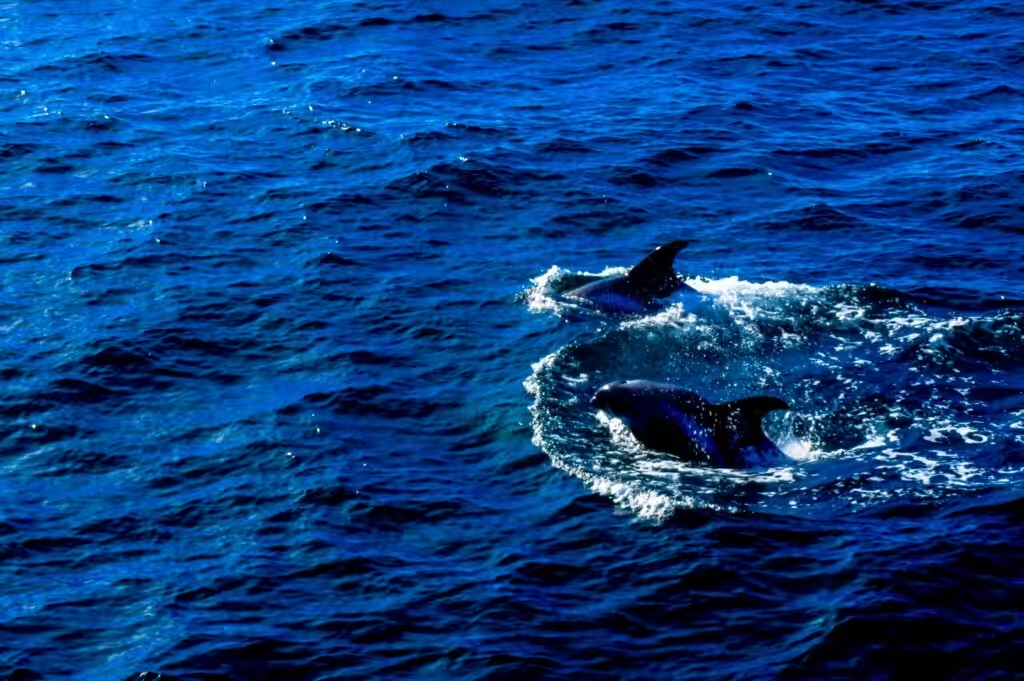
The Diamond Circle ends in Húsavík, Iceland’s whale-watching capital. Boats head out into Skjálfandi Bay regularly, and sightings of humpback whales, minke whales, and dolphins are common. Before you leave, the Whale Museum in town is worth your time — it gives good context for what you have just seen out on the water.
Days 5–7: The Arctic Coast Way Extension
If you have the days to spare, the Arctic Coast Way is the natural next step. This 900-kilometer (559-mile) route leaves the Ring Road behind and follows the coast through hidden fjords and small fishing villages. A week would not be too long to spend on it, but even a few days gives you a real taste.
Here are the highlights worth prioritising.
Trollaskagi Peninsula
The Tröllaskagi Peninsula has some of the best coastal driving in North Iceland — winding roads, deep fjords, fishing villages that look like they have not changed much in decades. Dalvík is a working port town with ferry connections to Grímsey Island. Ólafsfjörður is good for a shoreline walk. Siglufjörður, at the end of the road, is known for its harbour and the Herring Era Museum, which tells the story of the boom years when this small town was one of the busiest fishing ports in the North Atlantic.
Skagafjörður & Hofsós
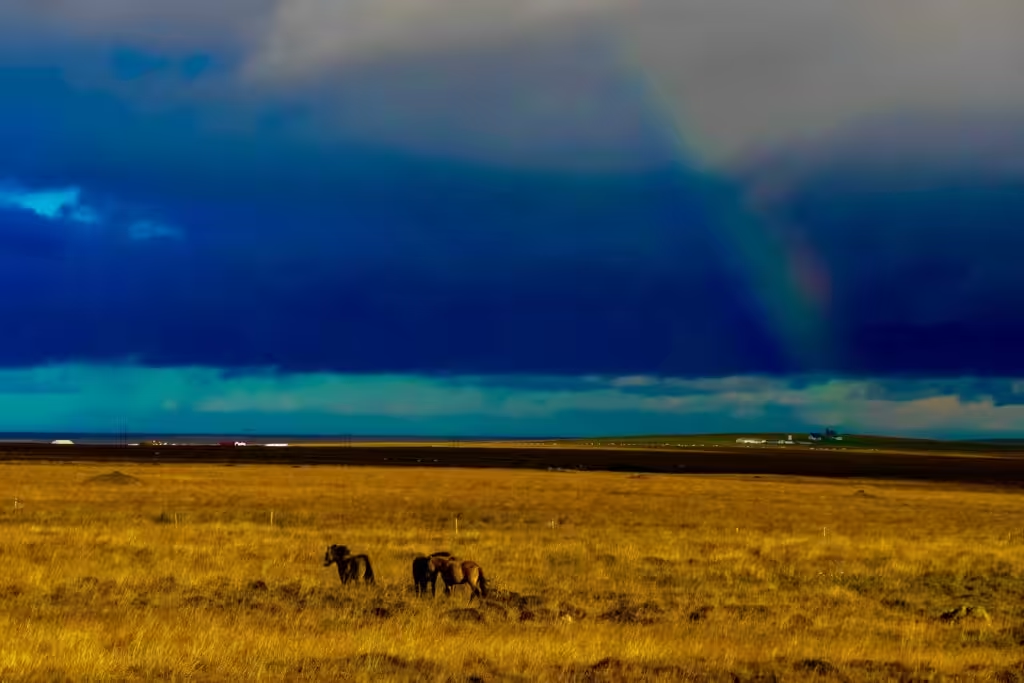
Skagafjörður is horse country — the farms here breed some of Iceland’s finest Icelandic horses, and the landscape of rolling farmland and old turf churches reflects a way of life rooted in saga history. A short detour to the coast brings you to Hofsós, where the Hofsós Infinity Pool sits above Skagafjörður with views that make it difficult to get out of the water.
Vatnsnes Peninsula & Seal Coast
The Vatnsnes Peninsula is one of the better places in Iceland to watch seals. Illugastaðir has designated viewing areas where colonies haul out regularly, and nearby stands Hvítserkur — a sea stack shaped like a drinking rhinoceros, though locals call it the “Troll of the North.” The village of Hvammstangi is the sensible base for this part of the trip.
As the road curves around Húnaflói Bay, the farms thin out and seabirds work the cliff edges. It is quiet in a way that feels earned.
Optional: Grímsey Island
For anyone who wants to say they have stood on the Arctic Circle, Grímsey Island delivers that and more. Accessible by ferry or flight from Dalvík, this small, windswept island is full of puffins in summer and not much else — which is precisely the point.
Essential Driving Tips for Your North Iceland Journey
Roads in North Iceland can be unforgiving if you are not prepared. Keep these in mind before you set off:
-
Choose Your Time Wisely: Summer (June to early September) gives you the best conditions — most roads open, including the full Arctic Coast Way, and nearly 24-hour daylight. Winter driving is doable but demands a 4×4 and genuine experience with cold-weather roads.
-
Fuel Up Often: Petrol stations get scarce quickly outside major towns like Akureyri, Húsavík, and Sauðárkrókur. Top up before your tank drops below half-full — do not assume there is a station around the next bend.
-
Stay Informed: Conditions can change fast. Check road.is for road updates and vedur.is for weather forecasts before you head out each morning. The SafeTravel app is worth having on your phone for emergencies.
-
Opt for a 4×4: A 4×4 is legally required on F-roads (mountain roads) and strongly advisable anywhere outside summer or on remote gravel routes.
-
Prepare for Toll Roads: The Vaðlaheiðargöng Tunnel, just east of Akureyri, is a toll road. Pay online before or shortly after you drive through to avoid additional fees.
FAQs About Traveling in North Iceland
Is Northern Iceland worth visiting?
Yes — genuinely. The north offers landscapes and experiences that the south simply does not have, and it is far less crowded at most times of year.
What are the best activities in Northern Iceland?
Driving the Diamond Circle and Arctic Coast Way covers the main ground. Whale-watching in Húsavík and an evening at the Mývatn Nature Baths both belong on the list too.
Where is the best place to see the Northern Lights?
Remote areas away from light pollution work best — around Lake Mývatn and along the Arctic Coast Way are both reliable spots when conditions cooperate.
Which part of Iceland is the prettiest?
It depends who you ask, but Jökulsárlón Glacier Lagoon in the south and the geothermal country around Lake Mývatn in the north both come up consistently at the top of that conversation.
How long should I spend in North Iceland?
Three to four days covers the Diamond Circle at a reasonable pace. Add the Arctic Coast Way and five to seven days is more realistic — and worth every one of them.