












Easter in Iceland is a time for old traditions, family meals, cultural celebrations, and getting out into the landscape. Here’s what to expect in 2026 — from church services and shop closures to waterfalls, hot springs, and a last shot at the northern lights.
Easter, known as “páskar” in Icelandic, is one of the country’s most important public holidays. It has Christian roots, but over time it has grown into something broader — a long weekend built around family meals, chocolate eggs, and the first real hint of spring.
In the weeks leading up to the holiday, shop shelves fill with chocolate Easter eggs in every size imaginable. Restaurants put together special menus, and towns around the country host events, concerts, and small festivals.
Easter is also one of the better times of year to take a self-drive trip around Iceland. It falls in early spring, which means longer days than winter, roads that are generally in better shape, and crowds that are nowhere near summer levels. Guided tours run throughout the holiday too, and for those who prefer to set their own pace, a rental car opens up hot springs, thundering waterfalls, and even some lingering ski slopes. On clear nights in early April, the northern lights are still a real possibility.
This guide covers the Easter 2026 dates, what Icelanders actually do during the holiday, which shops and services close, and the best things to see and do while you’re here.
When Is Easter in Iceland in 2026?
In 2026, Easter in Iceland runs from April 2 (Maundy Thursday) to April 6 (Easter Monday), with Easter Sunday falling on April 5. If you’re planning a spring trip, these are the dates to note — the country takes a meaningful pause across all four days.
Worth knowing: Easter doesn’t fall on fixed dates. It’s calculated as the first Sunday after the first full moon following March 21, which puts it anywhere between late March and late April depending on the year.
Here are the key Easter dates for Iceland in 2026:
Maundy Thursday – April 2, 2026
Maundy Thursday, or Skírdagur, commemorates the Last Supper and marks the start of the Easter holiday in Iceland. Alongside its religious significance, the day carries real weight for many families — it’s a popular time for confirmation ceremonies within the National Church, typically followed by gatherings with elaborately decorated cakes and a proper sit-down meal.
Most schools and workplaces close for the day. Liquor stores also shut, as they do on all public holidays. Some shops run reduced hours, but restaurants, cafés, and major attractions in Reykjavik generally stay open with modified schedules.
Good Friday – April 3, 2026
Good Friday, or Föstudagurinn langi — “the Long Friday” — marks the crucifixion of Jesus and is traditionally the most solemn day of the Easter period. Iceland has become a largely secular country, but Good Friday still tends to feel quieter and more contemplative than a typical day.
Most retail shops, shopping centres, banks, and public offices will be closed. Restaurants outside the main tourist areas often run limited hours. Guided tours and natural attractions stay open, making it a natural day for visitors to head out of the city and into the landscape.
In Isafjordur, the Aldrei fór ég suður music festival opens on Good Friday and runs through Holy Saturday. In 2026, this community-driven event brings Icelandic artists to the Westfjords for a free weekend of music.
Easter Sunday – April 5, 2026
Easter Sunday, or Páskadagur, celebrates the resurrection of Christ and is the centrepiece of the Christian calendar. Churches across Iceland hold special services, and families gather for festive meals — roasted lamb is the traditional centrepiece, usually with local seasonal sides.
Most supermarkets and local shops stay closed on this day. A handful of restaurants, mainly in Reykjavik and larger towns, will be open for Easter lunch or dinner. Booking ahead is strongly recommended.
Easter Monday – April 6, 2026
Easter Monday, known as Annar í Páskum, is an official public holiday in Iceland. Many Icelanders use the day to visit family, rest, or take a short countryside trip before the working week resumes.
It’s also the day when traffic heading back into Reykjavik tends to build up, as families return from summer houses. Some shops reopen with reduced hours, and restaurants in the capital are more likely to be operating normally. Hot springs, scenic drives, and guided tours all continue without interruption.
Planning an Easter Trip to Iceland in 2026
Easter is a busy travel period in Iceland, for locals and tourists alike. Demand for accommodation, rental cars, guided tours, and self-drive packages picks up noticeably, so if you’re considering a trip in 2026, booking well in advance is genuinely worth it — not just advisable.
With many Icelanders heading to summer houses for the holiday, expect heavier traffic out of Reykjavik on Maundy Thursday and back in on Easter Monday. If you’re road tripping during this stretch, give yourself extra time and check weather and road conditions before you set off.
Reduced opening hours across shops and services actually make Easter a good excuse to focus on Iceland’s natural attractions. Waterfalls, glaciers, geothermal areas, and coastal landscapes are all accessible regardless of the holiday calendar. Routes like the Golden Circle, the South Coast, and the Snaefellsnes Peninsula are solid choices for long-weekend exploration.
For museums, restaurants, swimming pools, and shopping centres, checking hours in advance will save you arriving at a locked door.
With daylight stretching longer, road conditions improving, and the season tipping from winter into spring, Easter 2026 is a genuinely good window to experience Iceland — the traditions, the landscape, and everything in between.
Why Easter in Iceland Is a Good Time to Visit
Easter sits right at the turning point between winter and spring in Iceland. The days are getting noticeably longer, which gives you more time to be out on the road. Waterfalls, mountains, glaciers, coastal roads — the scenery is very much still there. Snow still caps the Highlands, but lower areas are beginning to show the first green of the year.
Visitor numbers are well below the summer peak, which matters at popular sites. Whether you’re doing a five-day self-drive through the Golden Circle and Jokulsarlon Glacier Lagoon or sticking to the South Coast, you’ll generally have more room to breathe than you would in July.
The towns and shops have a festive feel — chocolate eggs everywhere, families loading up cars for the countryside, a general sense that something is happening. It’s one of those times when Iceland feels like a place people actually live in, not just visit.
Easter also falls just before the northern lights season winds down. In late March and early April, the nights are still dark enough, particularly outside the city, for a real aurora display. Add a soak in a hot spring and a meal built around Icelandic lamb, and the holiday offers a satisfying mix of winter’s tail end and the first proper taste of spring.
Weather During Easter in Iceland
Iceland’s weather doesn’t follow a script. Sunshine, a sudden snow shower, and blue skies again — sometimes all in the same afternoon. Locals will tell you to pack for every season in a single day, and in April that’s not much of an exaggeration.
That said, Easter does fall at a recognisable transition point. March is still very much winter, with snow and icy conditions on many roads. April brings milder weather, clearer roads, and longer days.
Daytime temperatures during the Easter period typically sit between 32°F (0°C) and 45°F (7°C). There’s a local concept of the “Easter Cold Spell” — a brief dip in temperature that occasionally arrives right around the holiday, so don’t be surprised if it shows up.
On the upside: days are lengthening fast, the northern lights are still possible on clear evenings, and migrating birds and whales are beginning to reappear along the coast. Sitting in one of Iceland’s hot springs with cool air overhead is a particular pleasure at this time of year.
How Easter Is Celebrated in Iceland
Easter in Iceland combines religious tradition with family customs and the slow arrival of spring. The Christian calendar shapes the holiday’s structure, but in practice it revolves just as much around shared meals, family time, and the feeling that winter is finally loosening its grip.
One of the most visible features is the confirmation season. Many Icelandic teenagers are confirmed around Easter, making it a significant milestone for families. In the weeks before the holiday, shops carry formal wear, bakeries put out elaborately decorated cakes, and florists prepare for a wave of family celebrations. The atmosphere in the run-up is genuinely festive.
Icelandic homes fill with daffodils, candles, and budding branches. Extended family meals bring relatives together, centred on traditional lamb dishes and seasonal desserts. Children look forward to opening their Easter eggs and reading the proverb tucked inside — a málsháttur, or Icelandic saying — before getting into the chocolate. It’s a small but distinctly Icelandic touch to the tradition.
Concerts, art exhibitions, and community events fill the long weekend. Iceland’s relationship with organised religion has shifted over generations, but Easter still holds a reflective, festive quality — rooted in tradition and family, with spring arriving quietly in the background.
Iceland’s Easter Eggs
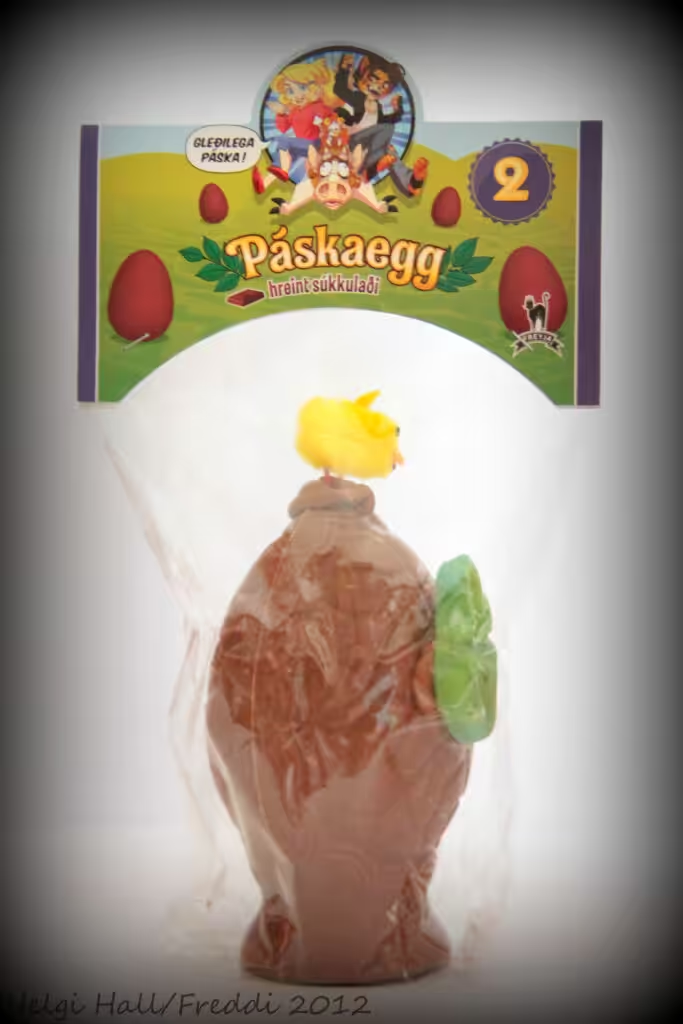
The Icelandic Easter egg — páskaegg — is its own institution. Shops start stocking them weeks before the holiday in every size from small pocket-friendly treats to eggs so large you need both hands to hold one. By Easter weekend, entire aisles are dedicated to them, and there’s a general understanding that the holiday hasn’t really started until you’ve picked yours out.
They’re made from milk or dark chocolate, often with a hint of liquorice, and filled with Icelandic candies — caramel balls, jelly beans, chocolate drops, that sort of thing. But the real detail is the slip of paper inside: a proverb.
Each egg contains a málsháttur, which families read aloud before anyone gets into the chocolate. These Icelandic sayings range from genuinely wise to completely baffling to laugh-out-loud funny, and arguing about which category they fall into is half the point.
On Easter morning, chocolate for breakfast is an accepted tradition — one of the few occasions where adults embrace it as freely as children. Many parents also hide chocolate eggs around the house for their kids to find, turning Easter Sunday into a low-key treasure hunt.
These family egg hunts tend to be smaller and more informal than the large public events you might see elsewhere, though community hunts are growing in popularity — local municipalities and public organisations sometimes organise them, so it’s worth checking what’s on in your area.
For your chocolate supply, grocery stores like Krónan carry an excellent range during the holiday season. In Iceland, no one is considered too old for a páskaegg. Pick up a few for yourself.
Easter Food in Iceland
The heart of the Easter meal in Iceland is roasted lamb, traditionally served on Easter Sunday. Icelandic lamb has a genuinely distinctive flavour — the animals graze freely on wild herbs and grasses — and it’s treated with a level of pride that shows in the cooking.
A typical spread centres on a slow-roasted leg of lamb with caramelized potatoes, red cabbage, green beans, and rich gravy. Rhubarb jam often makes an appearance on the table as well.
The Easter meal is usually unhurried — a late lunch or early dinner where the focus is on good food and company rather than anything elaborate. Coffee comes after, alongside cakes, ice cream, or themed desserts.
The drink of choice alongside the meal is often Malt og Appelsín, the sweet malt and orange soda blend most associated with Christmas in Iceland. It’s become a firm Easter fixture too, and if you haven’t tried it, this is a good occasion to do so.
Easter Beer in Iceland
Páskabjór, or Easter beer, is one of the things many Icelanders quietly look forward to each spring. Breweries release limited-edition seasonal varieties for the holiday, typically leaning toward richer styles — porters, stouts, and malt-forward ales with notes of caramel, chocolate, and coffee.
The Easter beer tradition mirrors Iceland’s Christmas beer culture: both established breweries and smaller artisan operations put something out, and there’s genuine interest in what each year brings.
Páskabjór pairs well with roasted lamb or an evening with family, but the practical thing to know is that state-run liquor stores — Vínbúðin — close on public holidays, so stock up beforehand.
In Reykjavik, bars like Skúli Craft Beer are lively spots during Easter, with locals and visitors working their way through the year’s seasonal taps. For tourists, it’s a chance to try Icelandic brews that won’t be available for the rest of the year.
Attending Easter Mass in Iceland
For those who want to engage with Easter on a spiritual level, Iceland’s Lutheran churches hold services throughout Holy Week. Visitors are welcome to attend, though observing the service respectfully is expected.
Hallgrimskirkja in Reykjavik, one of Iceland’s most recognisable landmarks, hosts several gatherings during Easter 2026:
-
Palm Sunday, March 29: 11 AM Mass featuring children’s activities, followed by a 5 PM concert
-
Maundy Thursday, April 2: 8 PM Evening Mass and Gethsemane Hour
-
Good Friday, April 3: 11 AM service and reading of Passion hymns from 1 PM to approximately 6 PM
-
Easter Sunday, April 5: Services at 8 AM and 11 AM
-
Easter Monday, April 6: 11 AM service
General visitor access to Hallgrimskirkja may be restricted during worship. On Good Friday in particular, sightseeing opportunities inside the church are limited.
Churches across the country hold Easter services beyond the capital. In Reykjavik, Domkirkjan — the historic Reykjavik Cathedral near Austurvollur Square — offers a more intimate setting for traditional Lutheran worship.
Catholic visitors will find Landakotskirkja, also known as the Basilica of Christ the King, in western Reykjavik. As the seat of the Roman Catholic Church in Iceland, it celebrates Holy Week and Easter Sunday according to Catholic liturgy, often in Icelandic, English, and Polish. Schedules can vary year to year, so checking the official parish timetable ahead of time is a good idea.
Outside Reykjavik, smaller churches worth seeking out include Grafarkirkja in North Iceland and Budakirkja on the Snaefellsnes Peninsula — both beautiful wooden buildings set against landscapes that make the experience feel quite different from a city service.
What To Do During Easter in Iceland
Easter is an excellent time to get out of Reykjavik and into the country, especially on days when downtown shops are closed. Day trips on Good Friday or Easter Sunday sidestep the limited opening hours and make the most of the longer daylight. Spring crowds are a fraction of summer’s, and the air has that particular crispness that makes being outdoors genuinely good.
Golden Circle tours remain among the most popular options. The Grand Golden Circle & Kerid Crater tour takes you through Thingvellir National Park, Gullfoss Waterfall, and the Geysir Geothermal Area, with a stop at the Kerid volcanic crater.
For something longer, South Coast experiences and glacier lagoon tours cover cascading waterfalls, black sand beaches, and the floating icebergs at Jokulsarlon Glacier Lagoon — a full day that tends to stay with people.
Geothermal pools sit naturally alongside sightseeing in Iceland. The Blue Lagoon is the best-known option, but the Sky Lagoon near Reykjavik has built a strong following with its spa-like setting. For something more rural and low-key, the Secret Lagoon in the countryside is worth the detour.
Easter also marks the start of whale watching and puffin tour season. As various coastal tours get going again, visitors might spot humpbacks, minkes, or orcas, while puffins return to their nesting cliffs around this time — a reliable sign that spring has genuinely arrived.
Northern lights tours are still running in early April for those after nighttime aurora. Dark rural skies away from the city make a real difference to visibility, and the guides monitor forecasts closely to give you the best chance.
Self-drive tour packages are worth looking at if you want to keep logistics simple — they typically bundle car rental, accommodation, and a suggested itinerary, so you can focus on the driving rather than the planning.
Festivals and Events During Easter in Iceland
Easter in Iceland is a cultural weekend as much as a religious one. Live music, concerts, nightlife, and community events run across the country, and while some shops close for the holiday, there’s no shortage of things to do.
-
Aldrei Fór Ég Suður Music Festival (Isafjordur): This free music festival, held annually since 2004 in the Westfjords town of Isafjordur, is one of the highlights of the Easter weekend. It showcases Icelandic artists across rock, indie, folk, and alternative genres in a relaxed, community-oriented atmosphere.
-
Skíðavikan (Isafjordur): Running alongside Aldrei Fór Ég Suður, this local ski week brings winter sports events and community activities to the Westfjords, celebrating the outdoor spirit of Easter as winter gives way to spring.
-
Easter Concerts at Hallgrimskirkja (Reykjavik): Alongside regular services, Hallgrimskirkja hosts musical performances throughout Holy Week and on Easter Sunday — choirs, organ recitals, and classical pieces in a setting that adds considerably to the experience.
-
Live Music and Nightlife in Reykjavik: The Wednesday evening before Maundy Thursday is reliably one of the busier nights in Reykjavik, with concert venues and bars hosting performances. Many people have the next day off, and the energy reflects it — before the quieter Good Friday arrives.
-
Local Choir Performances and Church Concerts: Communities across the country put on Easter-themed concerts and choir performances during Holy Week, drawing on a strong choral tradition found in both Reykjavik and smaller towns.
-
Family Easter Events and Egg Hunts: Reykjavik and surrounding areas sometimes organise family activities including seasonal egg hunts and social gatherings. These vary from year to year, adding a cheerful community dimension to the holiday weekend.
What To Do During Easter in Reykjavik
Reykjavik during Easter is quieter than usual in some ways and livelier in others. Museums, geothermal swimming pools, whale watching from the Old Harbour, cultural events, and a good number of restaurants all remain options across the long weekend.
Good Friday and Easter Sunday see the most closures. Museums such as the National Museum of Iceland and the Reykjavik Art Museum usually open in limited capacity, though some may close entirely on recognised holiday days — checking their hours in advance is worth the two minutes it takes.
Reykjavik’s public swimming pools are a dependable option during Easter. Most neighbourhood pools run limited hours but keep the hot tubs, steam rooms, and heated outdoor areas going. Whale watching tours leave from the Old Harbour with good chances of spotting humpback and minke whales. If conditions hold, northern lights excursions may still run in early April.
Cafés and restaurants in central Reykjavik stay open through the long weekend, particularly on Maundy Thursday and Easter Monday. Concerts, art exhibitions, and family events fill the gaps left by public holiday closures, making it easy to put together a full few days without leaving the city.
Day Trips from Reykjavik
When downtown Reykjavik goes quiet for Easter, guided day trips are an obvious and genuinely good answer. The Golden Circle, the Blue Lagoon, the South Coast, and the Snaefellsnes Peninsula are all within reach, and northern lights tours run in the evenings.
-
Golden Circle Minibus Day Tour from Reykjavik: A small-group tour covering Thingvellir National Park, the Geysir Geothermal Area, Gullfoss Waterfall, and Kerid Volcanic Crater in a single day. Travelling by minibus keeps the group size manageable and the commentary personal.
-
Golden Circle & Blue Lagoon Day Tour: The Golden Circle route combined with entry to the Blue Lagoon — waterfalls, geysers, and rift valleys in the morning, mineral-rich warm water in the afternoon. A full day with variety built in.
-
South Coast Full Day Tour from Reykjavik: Seljalandsfoss and Skogafoss waterfalls, Reynisfjara Black Sand Beach, and glacier views near Solheimajokull. One of the most varied single-day routes in Iceland.
-
Northern Lights Super Jeep Tour: An evening trip out of Reykjavik chasing the aurora under dark, calm skies. Guides track forecasts and position the group in the best spot available on the night.
-
Snaefellsnes Peninsula Small-Group Tour: Kirkjufell Mountain, lava fields, coastal cliffs, and views of Snaefellsjokull Glacier across a route that’s often called “Iceland in Miniature” — a lot of landscape variety packed into one day.
All of these tours run through Easter, making them well-suited to Good Friday or Easter Sunday when city shops may be closed but Iceland’s natural landscape is as open as ever.
What To Know More About Easter in Iceland
As a public holiday, Easter means reduced or suspended services across Iceland. Grocery stores like Krónan publish special holiday hours: Good Friday and Easter Sunday typically see full closures, while Maundy Thursday and Holy Saturday often run on reduced hours.
Shops, museums, restaurants, and malls may close for parts of the weekend. Reykjavik retains the most options for dining and services; smaller towns have considerably fewer. Most businesses publish their holiday hours in the days before Easter, so a quick check before heading out will save you a wasted trip.
The slower pace of the holiday is actually one of its advantages for visitors. Guided tours, day trips, and scenic self-driving routes are all unaffected. Waterfalls, hot springs, and coastal drives stay accessible throughout the holiday, and with summer crowds still weeks away, you get to enjoy them without the queues.