Iceland whale watching means different things depending on where you do it. In Húsavík, it means sailing out into Skjálfandi Bay on a wooden schooner with humpbacks surfacing so close you can hear them breathe. In Reykjavík, it means a boat leaving from the Old Harbour, the city skyline behind you, and — if you’re lucky — minke whales and dolphins on Faxaflói Bay. Both are real experiences. But they are not the same experience, and the choice you make will shape your trip.
I’ve done both. More than once. Here’s what I actually think.
Why Húsavík is Iceland’s whale watching capital
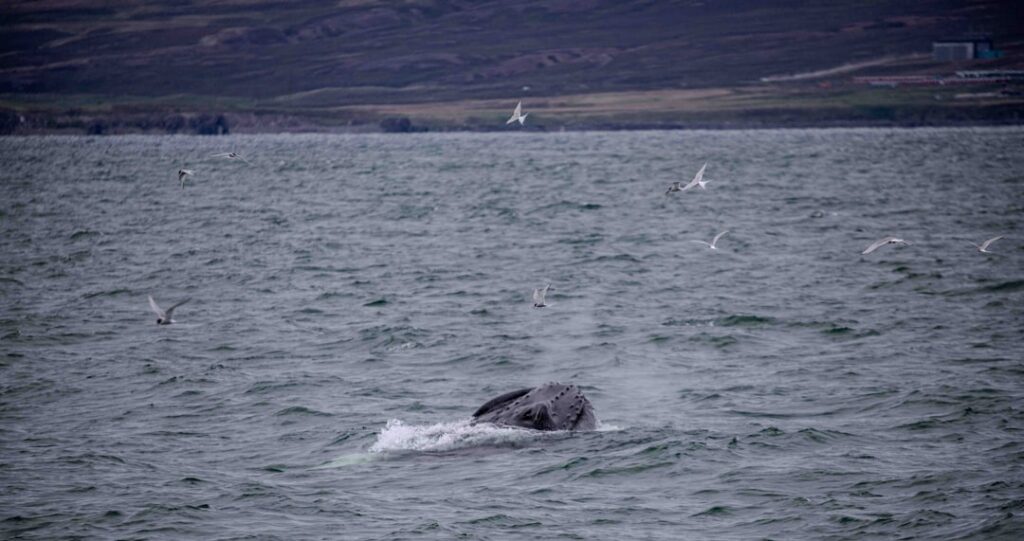
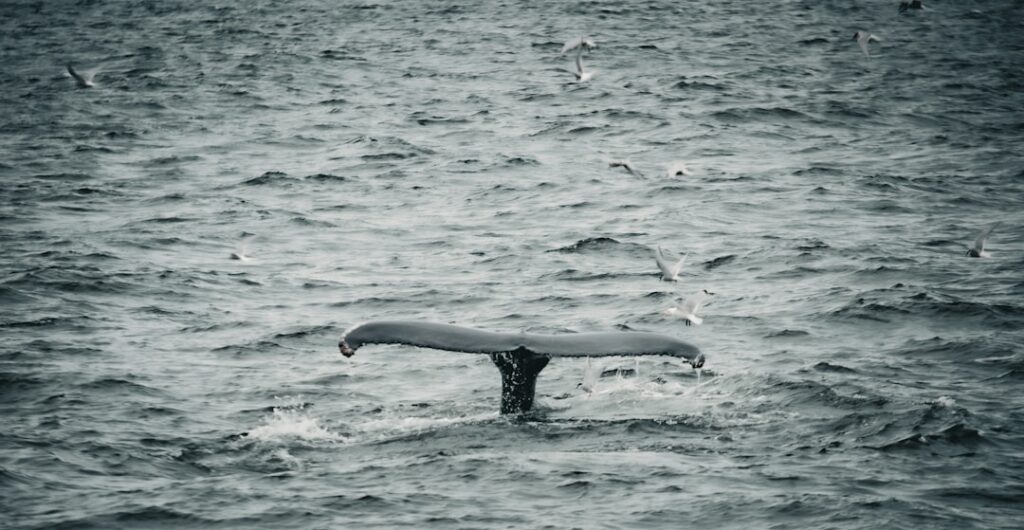
Húsavík has been running whale watching tours since 1995, which makes it one of the oldest whale watching destinations in Europe. The town sits on the north coast, about 75 km northeast of Akureyri, and Skjálfandi Bay is genuinely one of the best feeding grounds in the North Atlantic. Humpback whales come here in numbers from June through August, drawn by the dense Arctic krill and capelin that concentrate in the bay’s cold waters.
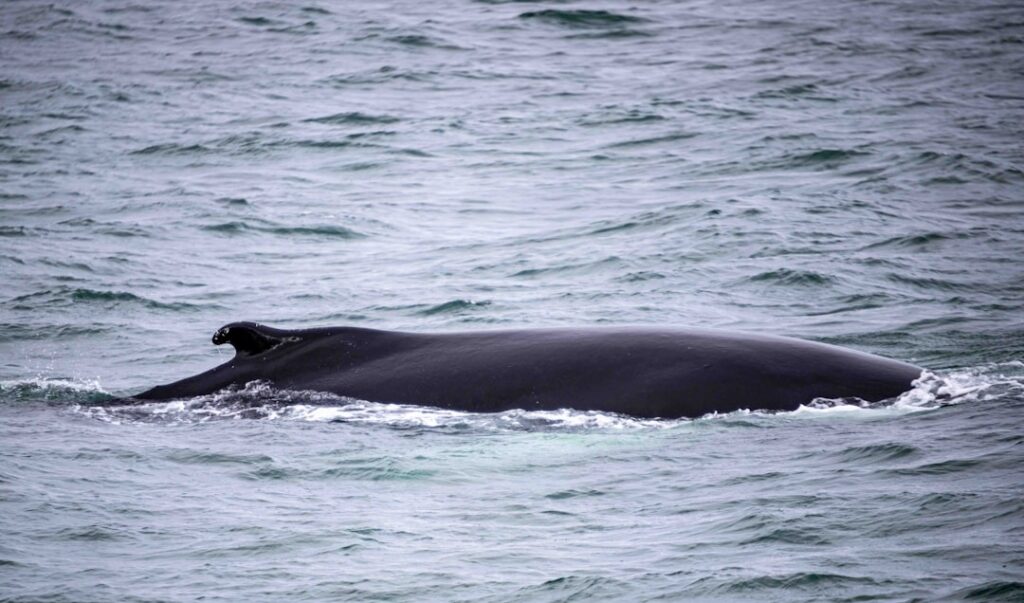
The sighting rate is remarkable. North Sailing, the most established operator in town, quotes success rates above 98% in peak season. I’m normally sceptical of that kind of statistic, but having been out there in June and July, I believe it. On my last trip, we saw four humpbacks within 20 minutes of leaving the harbour. One of them breached twice, full body out of the water, maybe 50 metres from the boat.
That doesn’t happen every time. But it happens often enough that Húsavík has earned its reputation.
The boats make a difference
North Sailing operates traditional oak schooners — Hildur, Opal, and a few others — which sit lower in the water and feel closer to the sea than the big catamaran-style vessels you find in Reykjavík. There’s something about being on a wooden boat that changes the atmosphere. It’s quieter. You’re not fighting engine noise. When a whale surfaces nearby, the silence makes it land differently.
Gentle Giants, the other main operator in Húsavík, runs a mix of boat types including RIBs (rigid inflatable boats) for those who want something faster and more exposed. The RIB tours are excellent if you want a wilder ride and you’re comfortable with sea spray. Not great if you’re prone to seasickness.
Tour prices in Húsavík run around 11,990–14,990 ISK (roughly €80–€100 / $85–$105) for a standard 2.5 to 3 hour tour. The puffin combo tours, which take you out past Lundey island, cost a little more but are genuinely worth it in June and July when the puffin colony is at full strength.
What Húsavík the town adds to the trip
Húsavík isn’t just a boat dock. It’s a town of about 2,200 people with a genuinely good whale museum (Hvalasafnið á Húsavík), a harbour full of colourful fishing boats, and some of the best fish soup I’ve eaten in Iceland at Gamli Baukur, the restaurant right on the water. The church — Húsavíkurkirkja — is the one on every postcard, with its red roof and pointed spire. It looks exactly like it does in the photos, which is more than you can say for most tourist landmarks.
If you’re driving the Ring Road and planning to stop in the north, building a night or two around Húsavík makes real sense. You’re also well positioned from there for Mývatn, Dettifoss, and the Ásbyrgi canyon — some of the most dramatic landscapes in the entire country.
Whale watching in Reykjavík: what you should know before you book
Reykjavík’s whale watching scene has improved significantly over the past decade. The Old Harbour area — Gamla Höfnin — is now home to several operators, and Faxaflói Bay does have whales. Minke whales are the most common sighting, along with white-beaked dolphins and harbour porpoises. Humpbacks appear occasionally, usually in late summer.
The honest truth is that Reykjavík whale watching is more variable. Sighting rates are lower than Húsavík — operators typically quote around 80–90% — and when the weather turns (which it can, rapidly, on Faxaflói), the tours can feel rough without delivering much in the way of wildlife. I’ve been out from Reykjavík on a trip where we saw three minkes and a large pod of dolphins, and it was genuinely exciting. I’ve also been out on a grey afternoon in September and seen almost nothing.
That variability is just the reality of the bay. It’s not a sheltered feeding ground the way Skjálfandi is.
The operators in Reykjavík
The main players are Elding, Whale Safari, and Special Tours. Elding is the largest and most established, running multiple daily departures from the harbour. Their boats are bigger and more stable in rough conditions, which matters if you’re going in shoulder season. Whale Safari tends to have smaller groups, which I prefer. Special Tours does combo trips that pair whale watching with puffin watching at the Lundey and Akurey islands just outside the harbour mouth — good value if you want both in one go.
Prices run around 9,990–12,990 ISK (roughly €65–€85 / $70–$90) for a standard tour, which is slightly cheaper than Húsavík. Tours typically run 3 hours.
The one real advantage Reykjavík has
Convenience. If you’re spending most of your trip in the capital and you’re not making it to the north, Reykjavík whale watching lets you tick the experience without a dedicated detour. The harbour is walkable from the city centre. You can be back for dinner at Snaps or Messinn without reorganising your whole trip.
For families with young kids, or travellers on a tight schedule doing the Golden Circle route and not venturing further, Reykjavík makes sense. It’s a solid experience. Just don’t expect it to be Húsavík.
Best time of year for Iceland whale watching
Peak season is June through August. This is when the feeding is richest, the sighting rates are highest, and the daylight gives you long, clear windows for being out on the water. In Húsavík, July is probably the single best month — humpbacks are consistent, puffins are still around, and the weather in Skjálfandi is at its most stable.
April and May are shoulder season. Whales start arriving, the boats are less crowded, and prices can be slightly lower. September still works, particularly in Reykjavík where minkes tend to linger, but the weather gets unpredictable and you start losing reliable daylight.
Winter whale watching exists — mainly from Reykjavík — but the conditions are hard and the sighting rates drop significantly. Unless you’re already going to be here in winter and you’re curious, I wouldn’t plan a trip around it.
Husavik vs Reykjavik: which should you choose?
If you have the option to go to Húsavík, go to Húsavík. It’s not a close call. The combination of consistently excellent whale sightings, the traditional boats, the character of the town, and the surrounding landscape makes it one of the genuinely great wildlife experiences you can have in Iceland. People travel from across Europe specifically for this. There’s a reason it was chosen as a filming location for the Netflix film Eurovision Song Contest: The Story of Fire Saga — Húsavík has a quality that the camera picks up.
Reykjavík whale watching is a good option if you can’t make it north. It’s not a disappointment if you go in with calibrated expectations. Minke whales are real whales. Dolphins are genuinely exciting. The harbour setting with Esja in the background has its own appeal.
But if you’re building an itinerary and trying to decide whether to include the north, whale watching in Húsavík is one of the strongest arguments for doing it. Pair it with Mývatn, the Krafla volcanic area, and a stop at Goðafoss on the way, and you’ve got three or four days that most people come home calling the best part of their Iceland trip.
Practical details worth knowing
- Book Húsavík tours in advance in July — North Sailing especially fills up fast.
- Dress warmer than you think necessary. Even in summer, the bay is cold once you’re moving.
- Both operators in Húsavík and most Reykjavík operators offer free rebooking if no whales are sighted — check the policy when you book.
- If you get seasick easily, take medication before you board, not after you feel ill.
- The Húsavík Whale Museum is worth an hour of your time, especially if you’re going with kids.
Getting to Húsavík from Reykjavík is around 490 km by road — roughly a 5 to 6 hour drive without stops, typically along Route 1 and then Route 85 north from Akureyri. Alternatively, there are domestic flights from Reykjavík Domestic Airport to Akureyri, which takes about 45 minutes, and you can rent a car there and drive the remaining 75 km to Húsavík.
One last thought
Whale watching is one of those things that sounds like a tourist checkbox until you’re actually out there with a humpback the size of a bus surfacing twenty metres away. Then it stops being a checkbox. The best version of that experience in Iceland is in Húsavík. Plan accordingly.